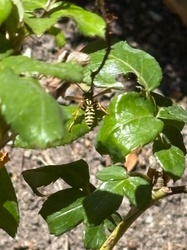
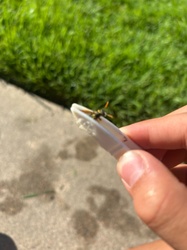
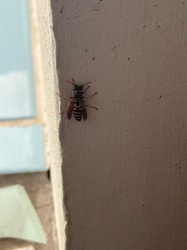
European Paper Wasp Identification Guide
Recognize this slender, orange-antennaed wasp by its dangling legs in flight and open umbrella-shaped paper nests.
Read the full European Paper Wasp encyclopedia entry →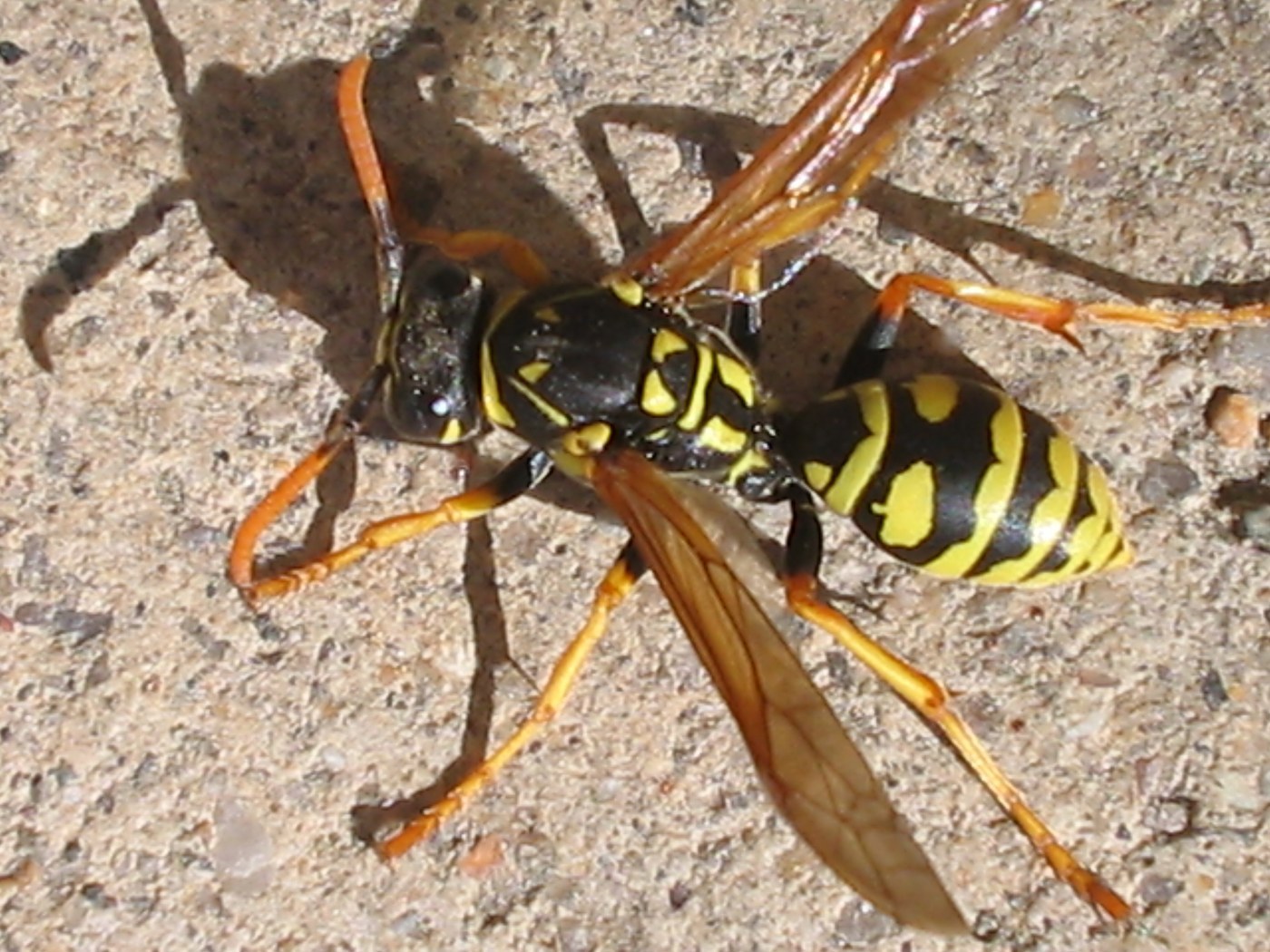
Key Visual Features
The European paper wasp is slimmer and more elongated than typical yellowjackets, with a few distinctive field marks.
- Size: Around 13–18 mm (0.5–0.7 inches) long.
- Color: Yellow-and-black banded abdomen, generally narrower banding than a common wasp, giving a more streamlined look.
- Body shape: Slender thorax and abdomen with a pronounced narrow waist.
- Antennae: A key identification feature — the antennae are orange for most of their length, tipped with black, standing out against the darker head.
- Legs: Long and yellow-orange, trailing noticeably below the body during flight, unlike the more tucked legs of many yellowjackets.
- Wings: Clear to smoky, folded lengthwise along the back at rest.
Where and When You'll See One
This species is common around human dwellings and open structures.
- Nests are open, umbrella- or paddle-shaped combs made of gray papery material, without an outer envelope, hanging from eaves, gutters, sheds, and plant stems.
- Individual hexagonal cells and developing larvae are often visible from below since the nest lacks a protective covering.
- Adults are active from spring through fall, with nest size increasing steadily through summer.
- Frequently seen perched on the nest itself, legs dangling, or foraging on foliage and flowers nearby.
Similar-Looking Bugs
- Common wasp and German yellowjacket: Both build enclosed, covered paper nests rather than the open comb typical of paper wasps, and have black antennae rather than orange.
- Red paper wasp: A close relative with a more reddish-brown body tone and darker wings, versus the more classic yellow-and-black of the European paper wasp.
- Potter wasps: Build small individual mud pots rather than an open paper comb, and are generally smaller and more solitary.
- Hover flies: Mimic the yellow-and-black pattern but have a single pair of wings and no dangling legs or narrow waist.
Quick ID Checklist
- Slender body with narrower black-and-yellow banding
- Orange antennae tipped in black
- Long legs dangling visibly during flight
- Open, uncovered umbrella-shaped paper nest with visible cells
- Common on eaves, sheds, and plant stems near buildings
Frequently asked questions
What makes the antennae a useful identification feature?
This species has antennae that are orange for most of their length with black tips, a color combination that helps distinguish it from yellowjackets, which have entirely black antennae.
How is the nest different from a yellowjacket nest?
European paper wasp nests are open, umbrella-shaped combs with visible hexagonal cells and no outer paper envelope, while yellowjacket nests are fully enclosed with a single entrance hole.
Why do the legs look like they're dangling in flight?
This species characteristically flies with its long legs trailing below the body rather than tucked in, which is a helpful behavioral clue when watching wasps in flight.
Where are European paper wasp nests usually found?
Common locations include house eaves, gutters, shed rafters, and sturdy plant stems, generally in sheltered spots protected from direct rain.
European Paper Wasp identified by the community
Recent European Paper Wasp finds identified with Bug Identifier.