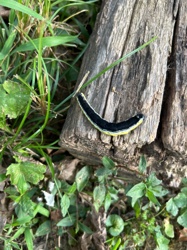
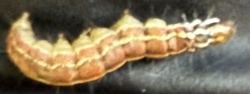
Fall Armyworm Identification Guide
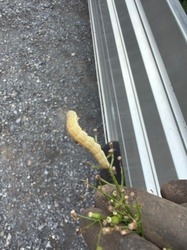
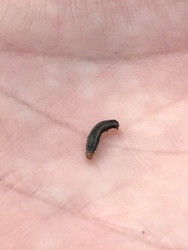
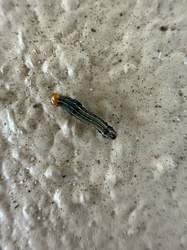
A striped caterpillar marked with a distinctive square of four spots near its tail, often seen moving in large numbers through grasses and corn.
Read the full Fall Armyworm encyclopedia entry →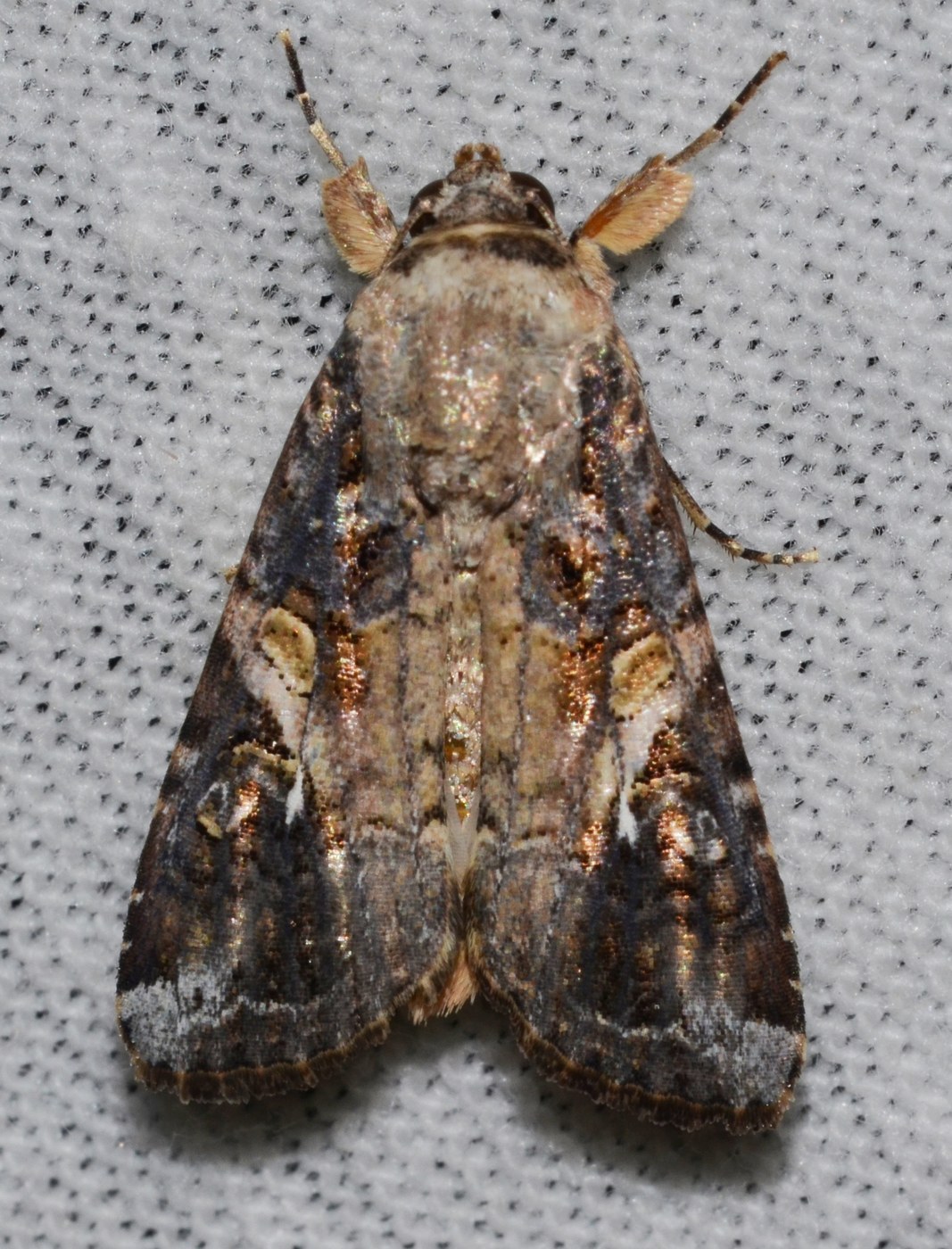
Key Visual Features
The fall armyworm reaches about 1.5 inches at full size and shows several dependable field marks.
- Color: Base color varies from light green in young caterpillars to brown, tan, or nearly black in older ones
- Stripes: Multiple thin, light stripes run the length of the body, often bordered by darker lines
- Head marking: A pale, upside-down "Y" is usually visible on the front of the dark head capsule
- Rear marking: Four dark spots arranged in a square pattern sit on top of the second-to-last body segment — the single most reliable feature for this species
- Body shape: Smooth, cylindrical, without spines or long hairs
Where and When You'll See It
Fall armyworms feed on a wide range of grasses and crops, with a strong preference for corn whorls, sorghum, and turfgrass. Despite the name, they can appear from spring through fall in warmer regions, with populations building rapidly and moving into new fields once local vegetation is stripped down — the behavior that gives the group its "army" name. They tend to feed at night and early morning, hiding down in the whorl of corn plants or in thatch during the day, so damage often appears before the caterpillars are easily seen.
Similar-Looking Bugs
- True armyworm: Nearly identical striping but lacks the four-spot square on the rear segment
- Corn earworm: Rougher, spinier skin texture and usually found singly inside the ear tip rather than in groups on leaves
- Beet armyworm: Smaller, often with a pale stripe along the side and a small dark spot near the first pair of prolegs, but lacks the four-spot square
Quick ID Checklist
- Striped caterpillar with pale Y-mark on the head
- Four dark spots forming a square near the tail end
- Found in groups on grasses, corn whorls, or turf
- Feeds mainly at night, hides in whorls or thatch by day
- Body smooth, without spines or hair tufts
Frequently asked questions
What is the easiest way to identify a fall armyworm?
Look for four dark spots arranged in a square on top of the segment near the tail end; this pattern is the most distinctive and reliable feature separating it from similar striped caterpillars.
How does the fall armyworm differ from the true armyworm?
They look very similar overall, but the fall armyworm has the characteristic square of four spots near its tail, which the true armyworm lacks.
Where do fall armyworms hide during the day?
They typically hide down inside the whorl of corn plants or in grass thatch during daylight hours, coming out to feed at night and in the early morning.
What plants do fall armyworms prefer?
They favor grasses and grass-family crops, especially corn whorls, sorghum, and turfgrass, though they can feed on a wide variety of plants when populations are large.
Fall Armyworm identified by the community
Recent Fall Armyworm finds identified with Bug Identifier.