Fall Webworm Moth Identification Guide
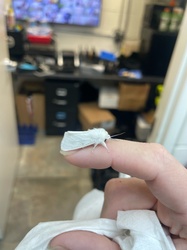
Identify this fuzzy white moth by its orange-yellow legs and its association with large communal silk webs on tree branches.
Read the full Fall Webworm Moth encyclopedia entry →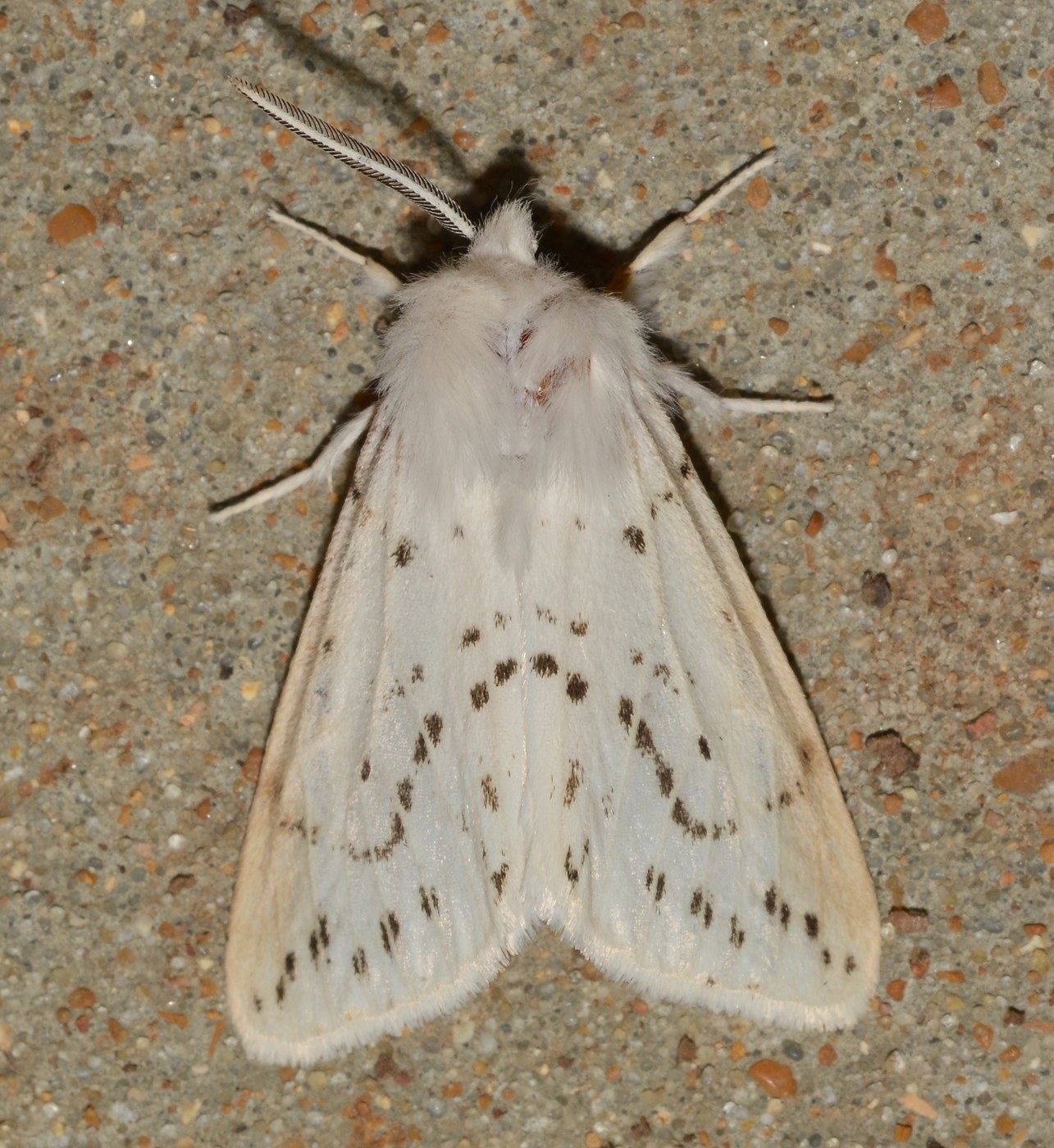
Key Visual Features
The fall webworm moth is a small to medium moth whose adult form is fairly plain, but whose associated silk webs make it easy to recognize indirectly.
- Size: Wingspan of about 25-42mm, quite variable between individuals and generations.
- Color and pattern: Typically pure white wings, though some individuals, especially in southern populations, show scattered small black or brown spots across the forewings.
- Body shape: White and densely furry body, giving it a soft, rounded appearance at rest.
- Wings: Broad and rounded, held roof-like at rest.
- Legs and antennae: Legs are often orange-yellow with black markings, a helpful identification clue when the moth is at rest. Antennae are thread-like in females and more feathery, comb-like in males.
Where and When You'll See It
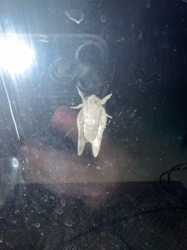
This species is found in deciduous woodlands, orchards, roadsides, and gardens across North America, with introductions to parts of Europe and Asia where it has become established. Its caterpillars build large, conspicuous silken webs enclosing leaves and branch tips of host trees such as walnut, cherry, and mulberry, most noticeably in late summer when the webs can grow to enclose entire branch ends. Adults are nocturnal and fly from late spring through summer, with one or two generations depending on region, and are commonly drawn to outdoor lights after dark.
Similar-Looking Moths
Other white moths, such as the fall cankerworm moth or white satin moth, can appear similar at a glance, particularly in poor lighting. The fall webworm moth is best distinguished by its often lightly spotted wings, its distinctive orange-yellow leg coloring, and — most conclusively — the large communal silk webs its caterpillars construct on tree branches in late summer, a behavior not shared by these other similarly colored white moths.
Quick ID Checklist
- White (sometimes lightly black-spotted) fuzzy-bodied moth
- Wingspan of about 2.5-4cm
- Orange-yellow legs with black markings
- Nocturnal, often drawn to outdoor lights
- Associated caterpillars build large communal silk webs on branches in late summer
Frequently asked questions
How can I identify a fall webworm moth just from the adult?
Look for a white, fuzzy-bodied moth with orange-yellow legs marked in black; some individuals also show light black spotting on the wings.
What is the easiest way to confirm this species indirectly?
Look for large communal silk webs enclosing leaves and branch tips on trees in late summer, which are produced by its caterpillars.
Is the fall webworm moth active during the day?
No, it is nocturnal and is often seen near outdoor lights at night.
What trees are commonly associated with this species?
Walnut, cherry, mulberry, and many other deciduous trees serve as hosts for its web-building caterpillars.
Fall Webworm Moth identified by the community
Recent Fall Webworm Moth finds identified with Bug Identifier.