Fall Webworm Identification Guide
Learn to spot the pale, fuzzy caterpillar that spins loose silk webs over the tips of tree branches in late summer.
Read the full Fall Webworm encyclopedia entry →
Key Visual Features
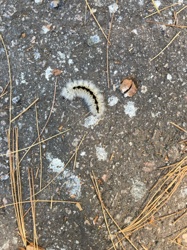
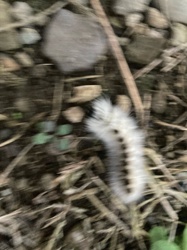
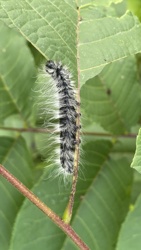
- Pale yellow-green to nearly white body covered in tufts of long, soft hair that can look almost fluffy
- Two rows of small black or dark spots running down the back, each spot sprouting a tuft of hair
- Head can range from black to reddish depending on the regional color form
- Grows to about 1 to 1.25 inches long at maturity
- Body appears slender and long compared to its hair covering, giving a "hairy caterpillar" silhouette
- Found in groups, often dozens together inside a shared web
Where and When You'd See Them
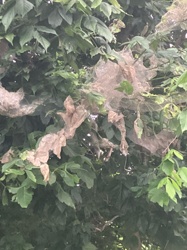
- Builds loose, messy silk webbing that encloses the leaves at the very tips of branches, unlike the tighter tent built in branch forks by other species
- Appears in mid-to-late summer through early fall, later in the season than most tent-building caterpillars
- Found on a wide range of hardwood trees including walnut, cherry, birch, and many ornamental and shade trees
- Webbing tends to grow larger and more visible as the season progresses and the caterpillars enclose more foliage
Similar-Looking Bugs
- Eastern tent caterpillars build a tighter, denser tent in the fork of branches in spring, while fall webworms build looser webbing over leaf tips later in summer.
- Gypsy moth (spongy moth) caterpillars are darker with paired blue and red spots and do not spin enclosing webs at all.
- Tussock moth caterpillars have distinct dense hair tufts or "toothbrush" tufts on the back but do not build communal tents around foliage.
- Yellownecked caterpillars are smoother, darker, and feed in groups without producing silk webbing.
Quick ID Checklist
- Pale, fuzzy body with two rows of small dark spots
- Loose, messy silk webbing enclosing leaves at branch tips
- Found in groups within the same web
- Appears in late summer into fall, later than spring tent-builders
- About 1 to 1.25 inches long
Frequently asked questions
How is fall webworm webbing different from eastern tent caterpillar webbing?
Fall webworms enclose the leaves at the very ends of branches in a loose, baggy web, while eastern tent caterpillars build a tighter, denser tent in the fork where branches meet, and appear earlier in spring rather than late summer.
What color are fall webworm caterpillars?
They are typically pale yellow-green to whitish with rows of small dark spots and long hair tufts, though head color can vary from black to reddish depending on the regional form.
What time of year should I look for fall webworms?
They are most visible from mid-summer through early fall, which is later in the season than most other web-building caterpillars.
What kinds of trees do fall webworms use?
They feed on a broad range of hardwood trees, commonly including walnut, cherry, birch, and various shade and ornamental trees.
Fall Webworm identified by the community
Recent Fall Webworm finds identified with Bug Identifier.