Fig Beetle Identification Guide
Recognize this large green scarab by its metallic sheen, coppery edges, and heavy buzzing flight in warm-climate gardens.
Read the full Fig Beetle encyclopedia entry →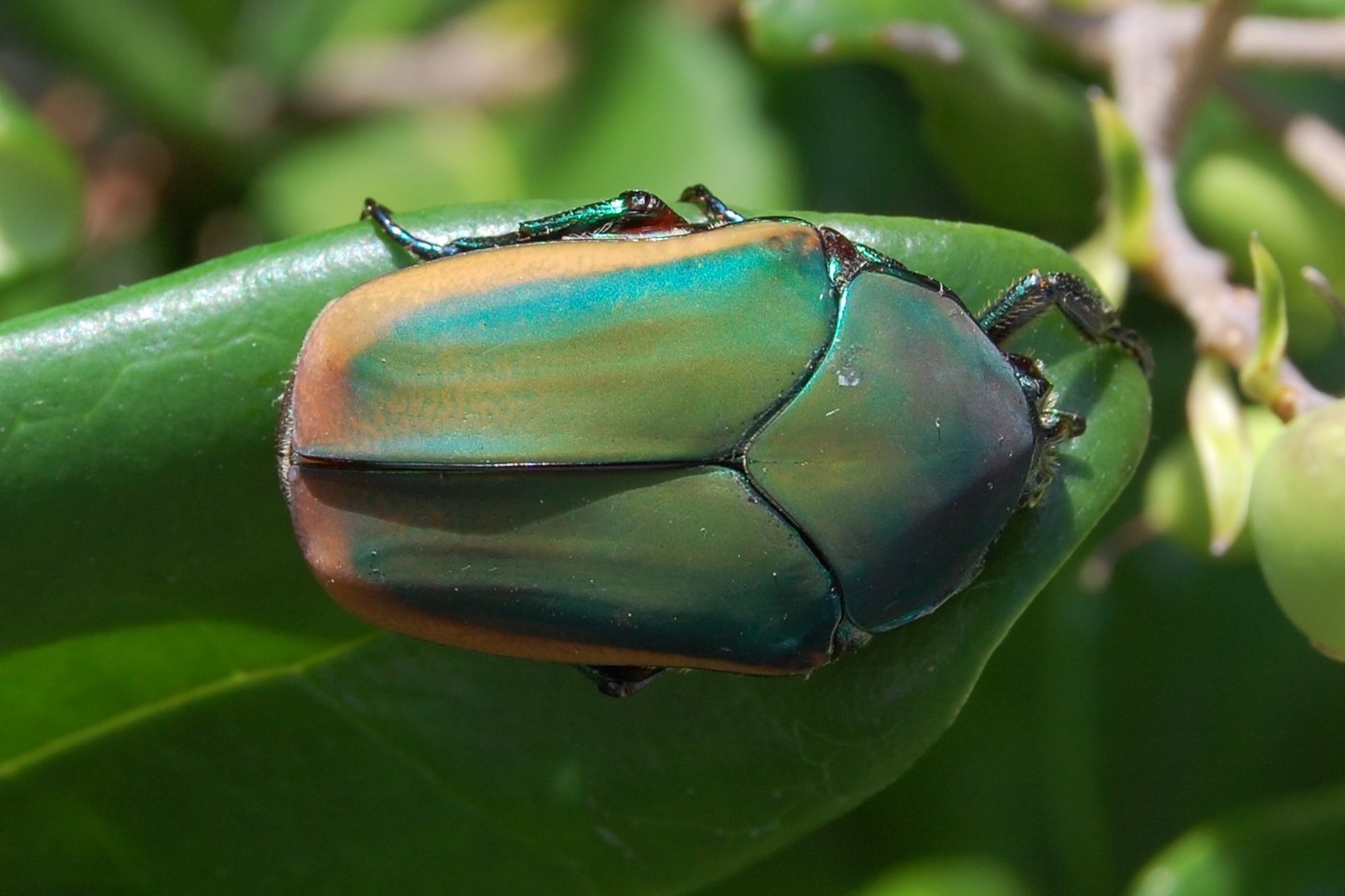
Key Visual Features
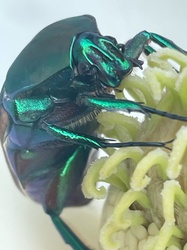
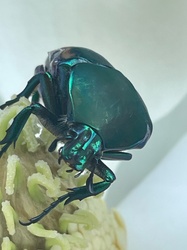
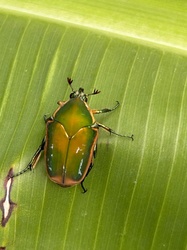
The fig beetle (Cotinis mutabilis) is a large, eye-catching scarab common in warmer parts of North America:
- Size: A hefty, rounded body measuring about 0.75-1.1 inches (19-27mm) long.
- Coloring: A matte to semi-glossy metallic green back with coppery or golden edges along the elytra; the underside is typically shinier and more vividly metallic green.
- Body shape: Broad, oval, and slightly domed, giving it a bulky appearance in flight.
- Legs: Sturdy, spiny legs suited for digging and gripping.
- Flight: A loud, heavy buzzing hum accompanies its flight, and it tends to fly with its hardened wing covers slightly raised.
Where and When You'll See One
Fig beetles are common in the western and southwestern United States, including California, Arizona, and neighboring regions. Adults are active during the day in the warmer months, especially mid to late summer, and are frequently seen around ripening or overripe fruit such as figs, as well as flying low and heavily over gardens, orchards, and compost areas.
Similar-Looking Bugs
- Green June beetle: A close eastern relative with a very similar velvety green appearance, but generally smaller and found in the eastern and central United States rather than the west.
- Japanese beetle: Smaller overall, with a shinier, more clearly two-toned metallic green thorax and coppery-brown wing covers, plus small tufts of white hair along the abdomen sides.
- Scarab beetles in general: Many share a broad, domed body shape, but the fig beetle's specific combination of matte green color, coppery edges, and heavy buzzing flight helps set it apart.
Behavior Notes
Fig beetles are strong, heavy fliers that tend to approach open fruit or garden beds directly and somewhat clumsily, often bumping into nearby objects along the way. They are most conspicuous on hot, still afternoons, when their loud buzzing flight and habit of clustering around the same food source make several individuals easy to spot at once.
Quick ID Checklist
- Large, broad, oval body about an inch long
- Matte metallic green back with coppery or golden edges
- Shinier metallic green underside
- Loud, heavy buzzing flight, often near ripening fruit
- Found in western and southwestern U.S. gardens and orchards in summer
Frequently asked questions
How is the fig beetle different from the green June beetle?
The fig beetle is generally larger and found in the western and southwestern United States, while the very similar-looking green June beetle is smaller and found mainly in the eastern and central states.
What time of year are fig beetles most commonly seen?
They are most active during the warmer months, especially mid to late summer, when adults are commonly seen around ripening fruit and garden areas.
Why do fig beetles sound so loud when flying?
Their heavy, bulky body combined with rapid wingbeats produces a loud, low buzzing hum that is often heard before the beetle is seen.
Where are fig beetles typically found?
They are common in the western and southwestern United States, particularly around gardens, orchards, and compost areas where fruit is ripening or decomposing.
Fig Beetle identified by the community
Recent Fig Beetle finds identified with Bug Identifier.