
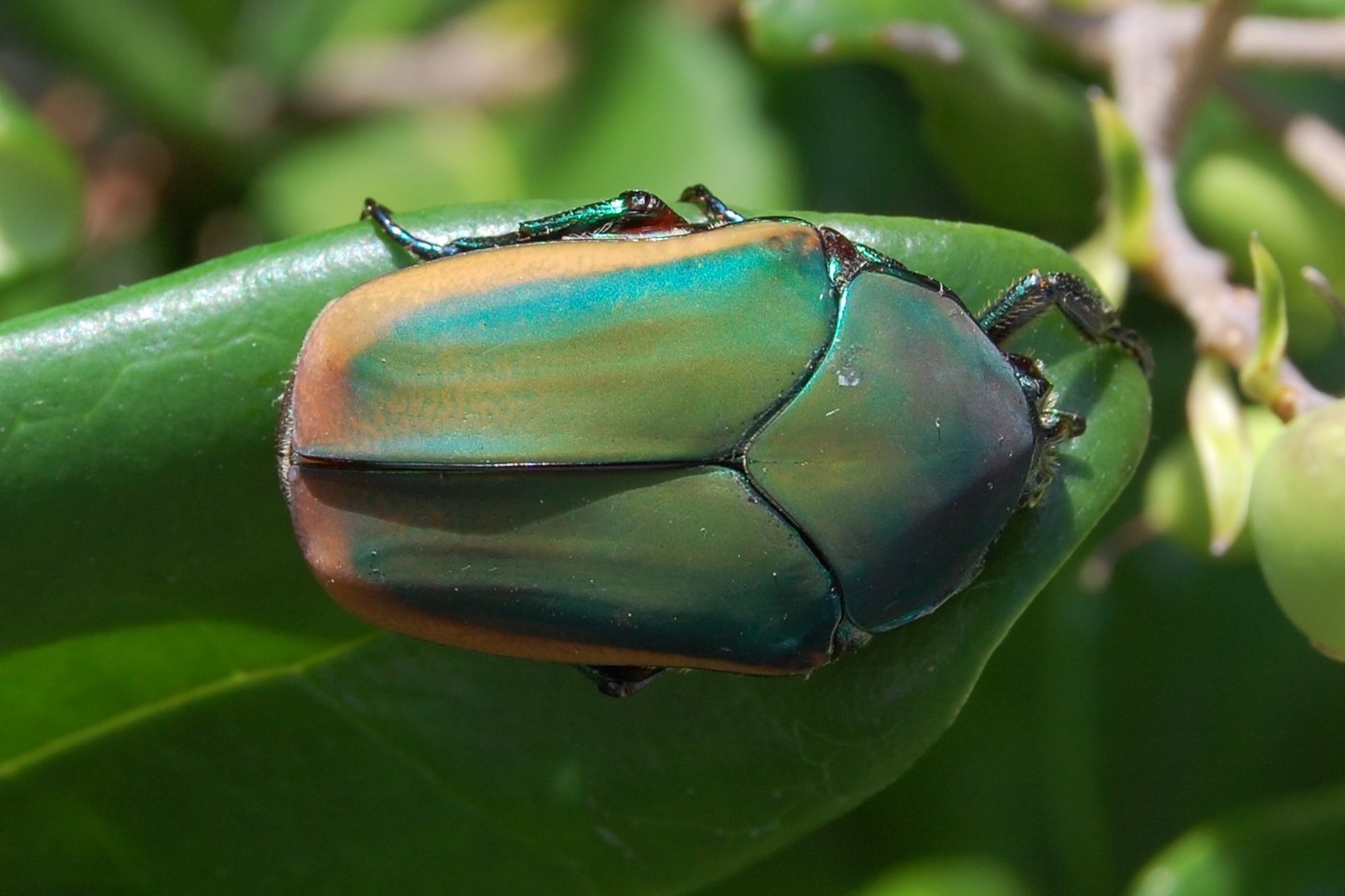
Fig Beetle
Cotinis mutabilis
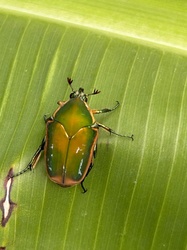
A large, dull metallic-green scarab beetle with a loud, buzzing flight, often seen crash-landing near ripe or overripe fruit and compost piles on warm summer days.
- Size
- 20–30 mm
- Habitat
- Gardens, orchards, and compost piles in warm, arid parts of the southwestern United States and Mexico
- Danger
- Nuisance pest
Spotted a bug like this?
Identify any bug or insect from a photo, free.
Overview
The fig beetle, also called the figeater beetle, is a large flower chafer in the scarab family (subfamily Cetoniinae). It is one of the biggest and most conspicuous beetles encountered in gardens across the arid Southwest, easily recognized by its heavy, droning flight.
Despite the name, fig beetles feed on a wide variety of ripe and overripe fruit, not figs exclusively, and are frequently seen visiting backyard fruit trees, grapevines, and compost bins where fermenting organic material attracts them.
Ecologically, the species is notable for its larvae, which develop in compost, mulch, and rich organic soil rather than living plant roots, making the fig beetle grub an important decomposer of organic matter distinct from many other root-feeding scarab grubs.
How to Identify
- Large, broad, oval body with a somewhat flattened top; dull matte green above and iridescent copper-orange to green beneath.
- Thick legs and a heavy, robust build typical of flower chafers.
- Flies with an audible, buzzing hum and often flies somewhat clumsily, bumping into obstacles.
- Lookalikes: distinguished from June beetles by its larger size, duller green (rather than brown) coloring, and iridescent underside.
Habitat & Range
Fig beetles are most common in the warm, arid regions of the southwestern United States and northern Mexico, thriving wherever compost, mulch, or organic-rich garden soil supports their larvae. Adults are active on warm days from late spring through summer, drawn to gardens, orchards, and compost piles, especially where ripe or fermenting fruit is present.
Behavior & Diet
Adult fig beetles feed on the juices of ripe, split, or overripe fruit such as figs, peaches, and grapes, often gathering in small groups on fallen or damaged fruit. Their flight is loud and heavy, and they are commonly seen bumbling through gardens on warm afternoons. The larvae, thick white grubs, live in compost piles and organic-rich soil, feeding on decaying plant matter; they are notable for crawling on their backs using ripples of their body rather than walking on their short legs.
Life Cycle
Fig beetles undergo complete metamorphosis with one generation per year in most areas. Eggs are laid in compost or rich organic soil, and the grubs feed on decaying organic matter through summer and fall, growing to a large size before overwintering as larvae. Pupation occurs in the soil in late spring, and adults emerge in early summer to feed and mate, completing the annual cycle.
Frequently asked questions
Do fig beetles only eat figs?
No, they feed on a variety of ripe and overripe fruit, including peaches, grapes, and other soft fruit, in addition to figs.
Why do fig beetle grubs crawl on their backs?
Their short legs are poorly suited to walking on flat surfaces, so the thick grubs move by undulating on their backs, especially when placed on open ground.
How can I tell it apart from a June beetle?
Fig beetles are larger and duller matte green with an iridescent copper-green underside, while June beetles are typically smaller and brown.
Where do fig beetle grubs live?
In compost piles, mulch, and organic-rich garden soil, where they feed on decaying plant matter.
Fig Beetle guides
In-depth guides for identifying, understanding, and living alongside Fig Beetle.
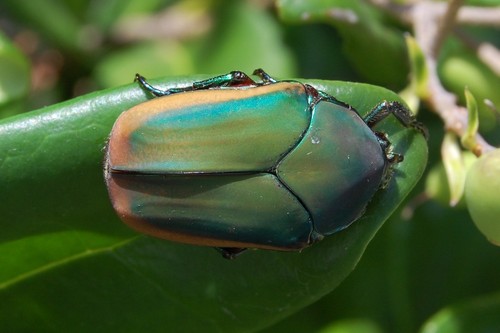
Fig Beetle identified by the community
Real finds identified with Bug Identifier.
Other bugs you may enjoy
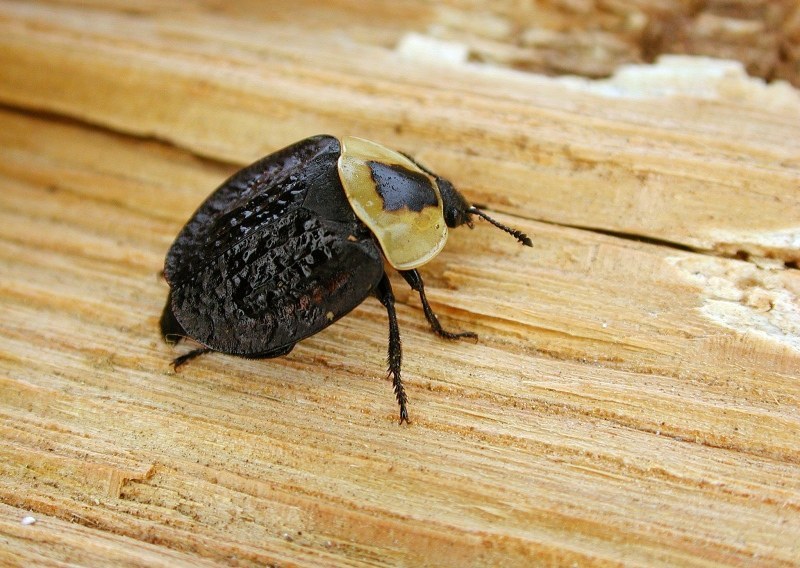
American Carrion Beetle
Forests, fields, and roadsides across North America, near decaying animal carcasses
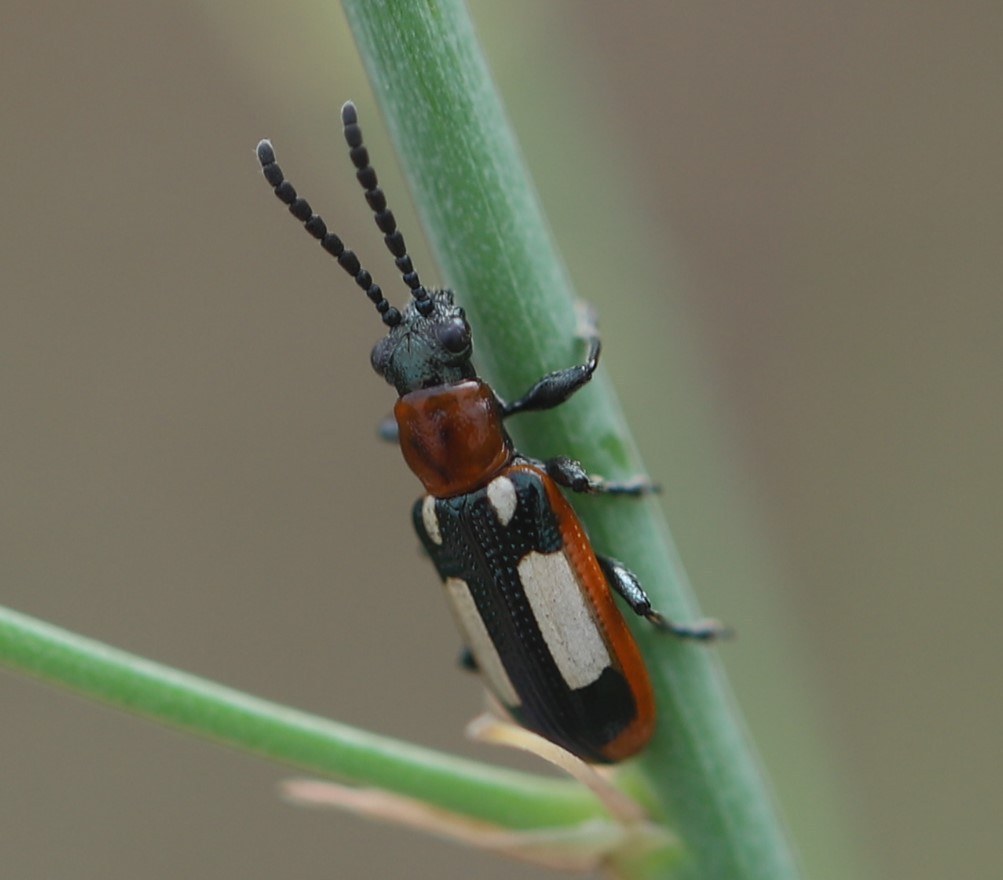
Asparagus Beetle
Asparagus patches, gardens, and farm fields
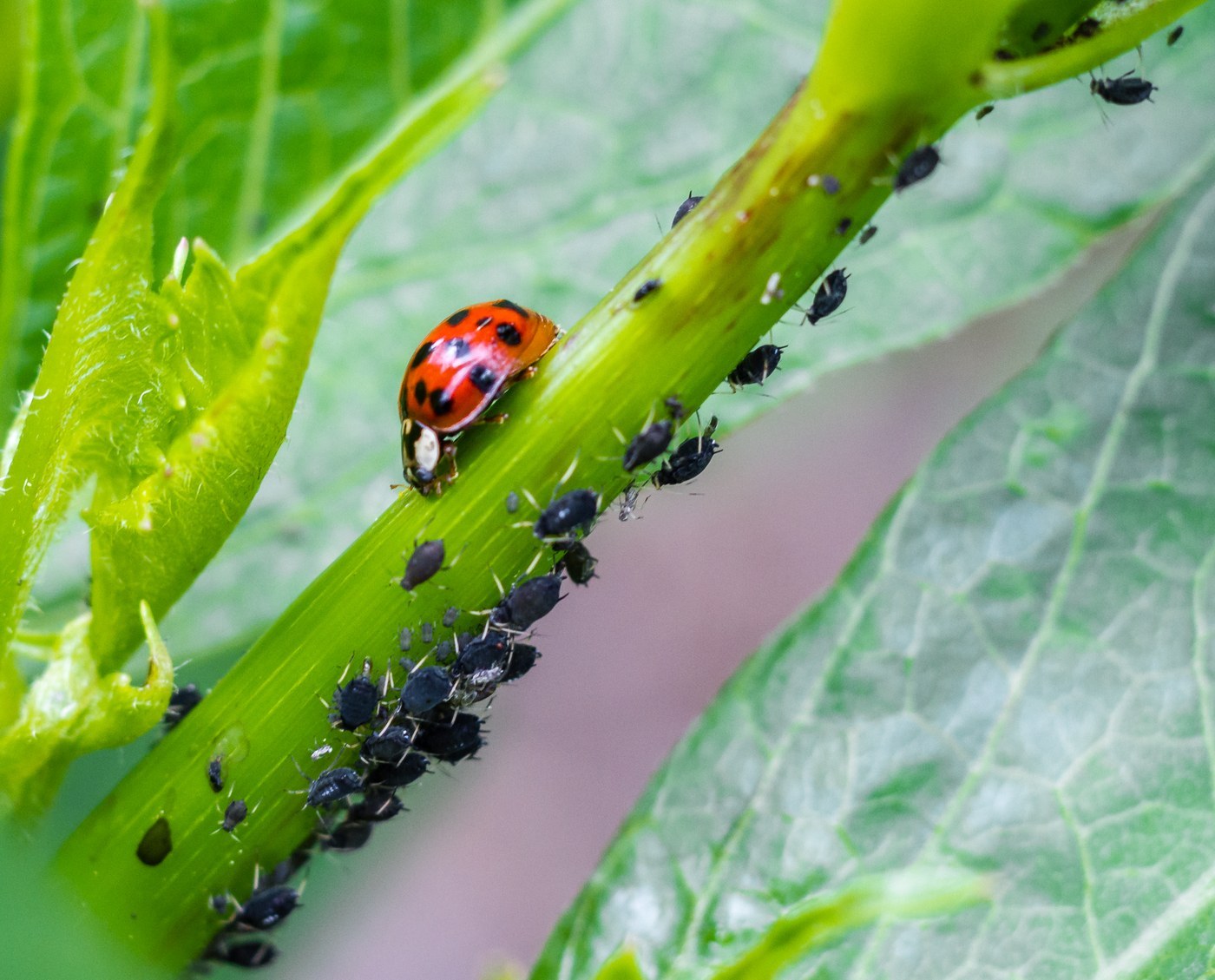
Asian Lady Beetle
Gardens, crop fields, woodlands, buildings
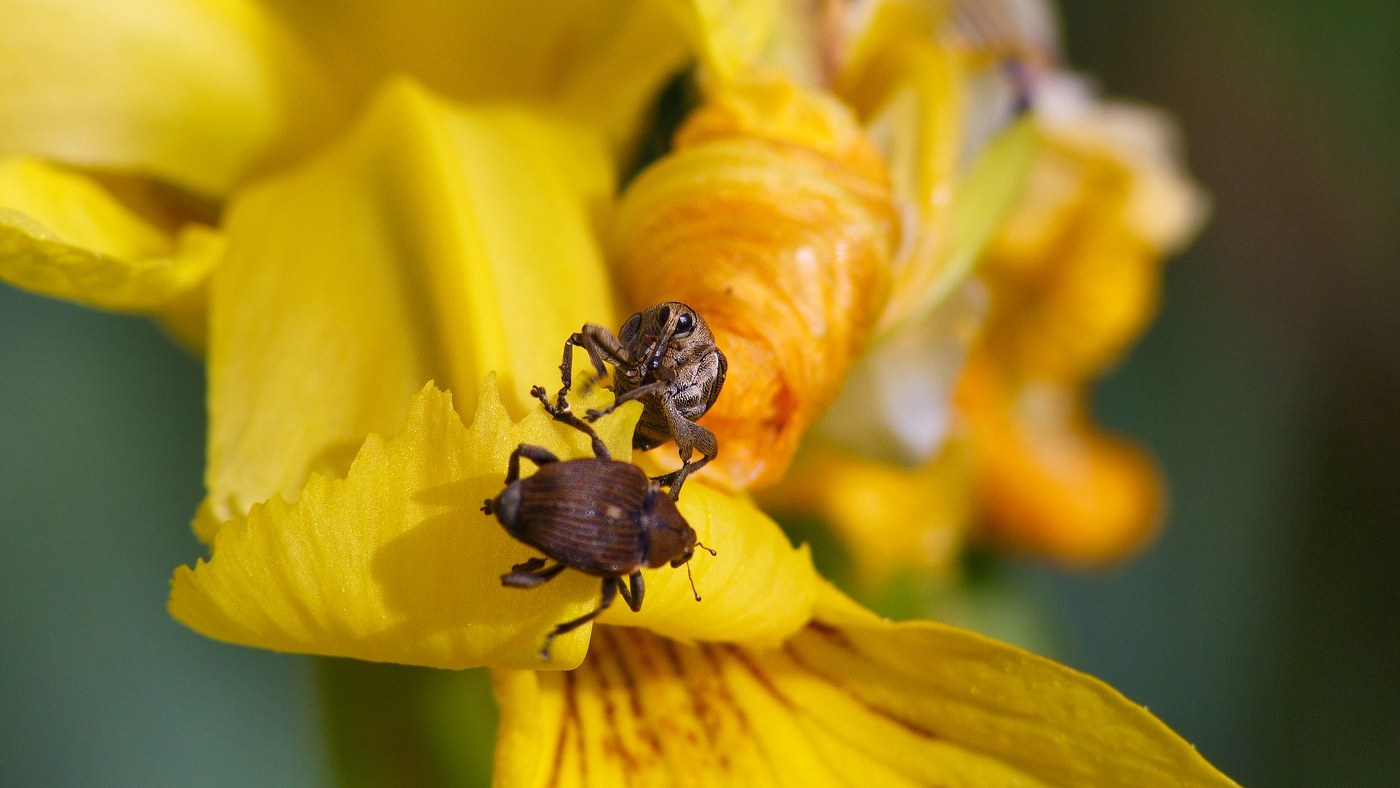
Acorn Weevil
Oak woodlands and forests, on and beneath oak trees
Wireworm
Soil of grasslands, gardens, and cultivated fields worldwide
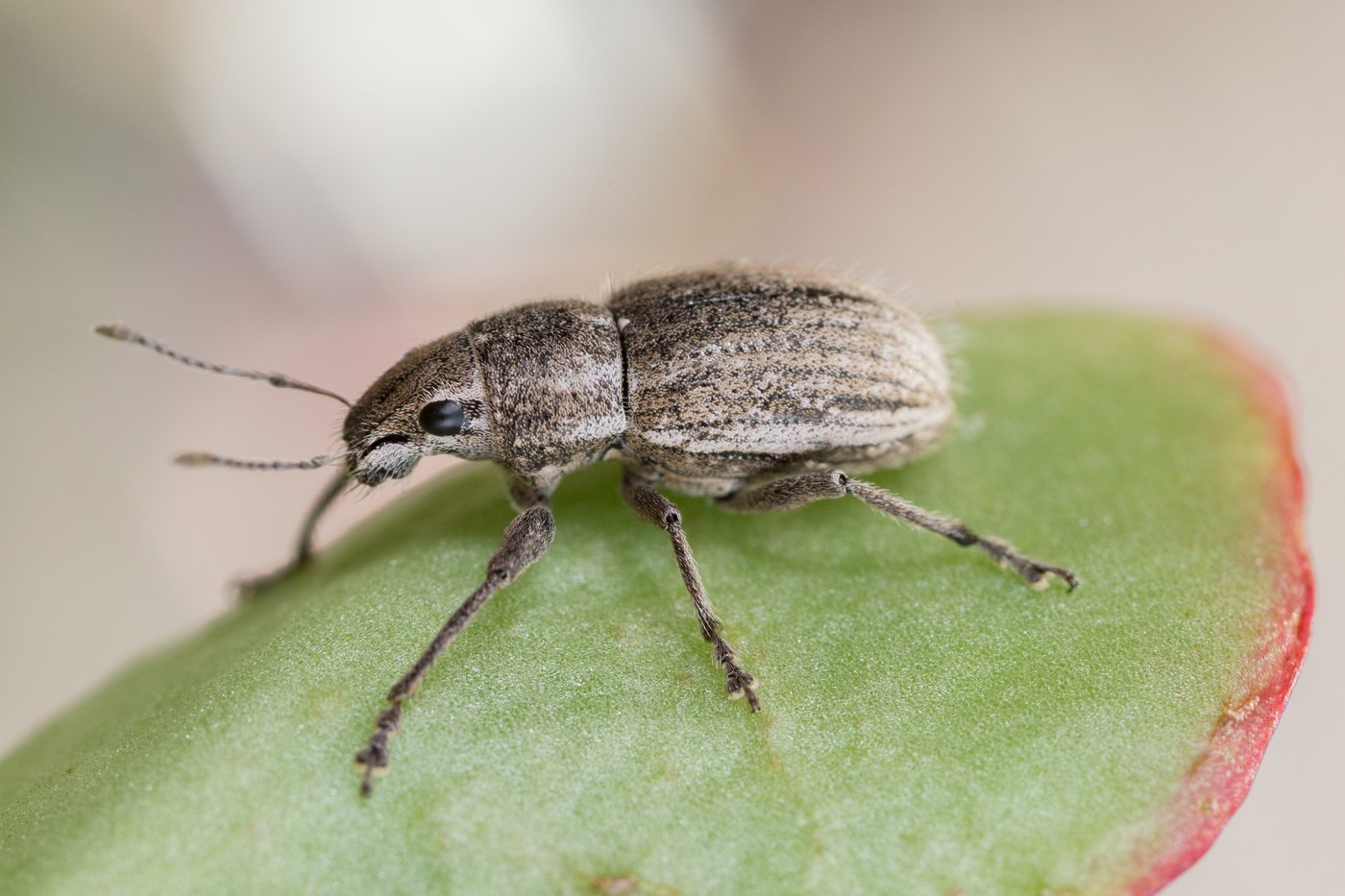
Whitefringed Beetle
Pastures, row crops, lawns, disturbed soils
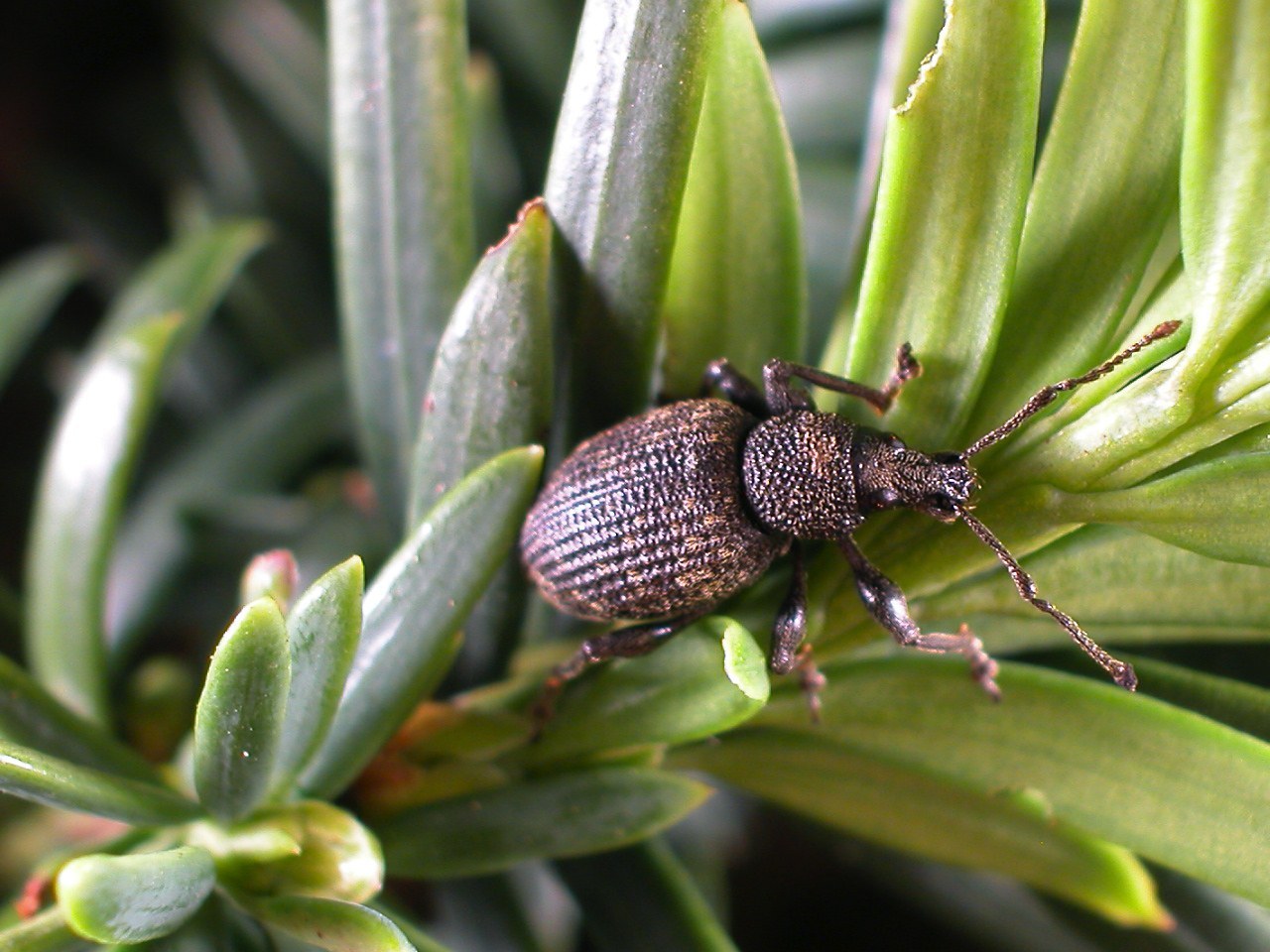
Vine Weevil
Gardens, nurseries, greenhouses, and container plantings
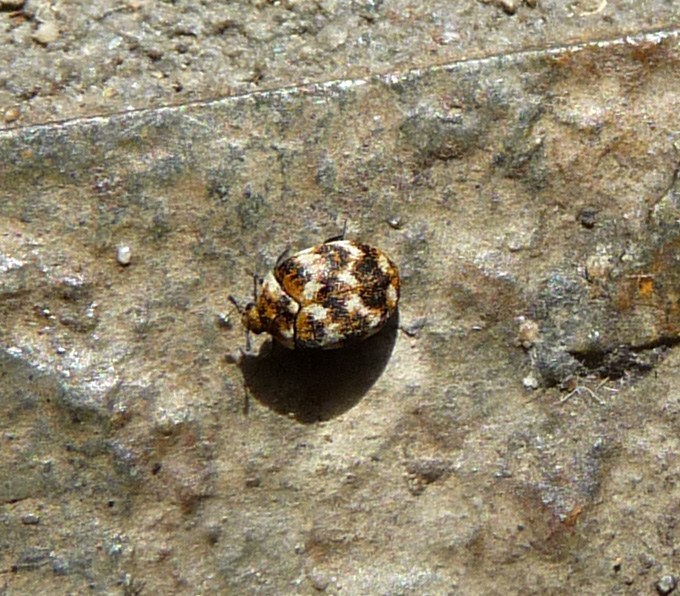
Varied Carpet Beetle
Homes, nests of birds and mammals, and flowers outdoors
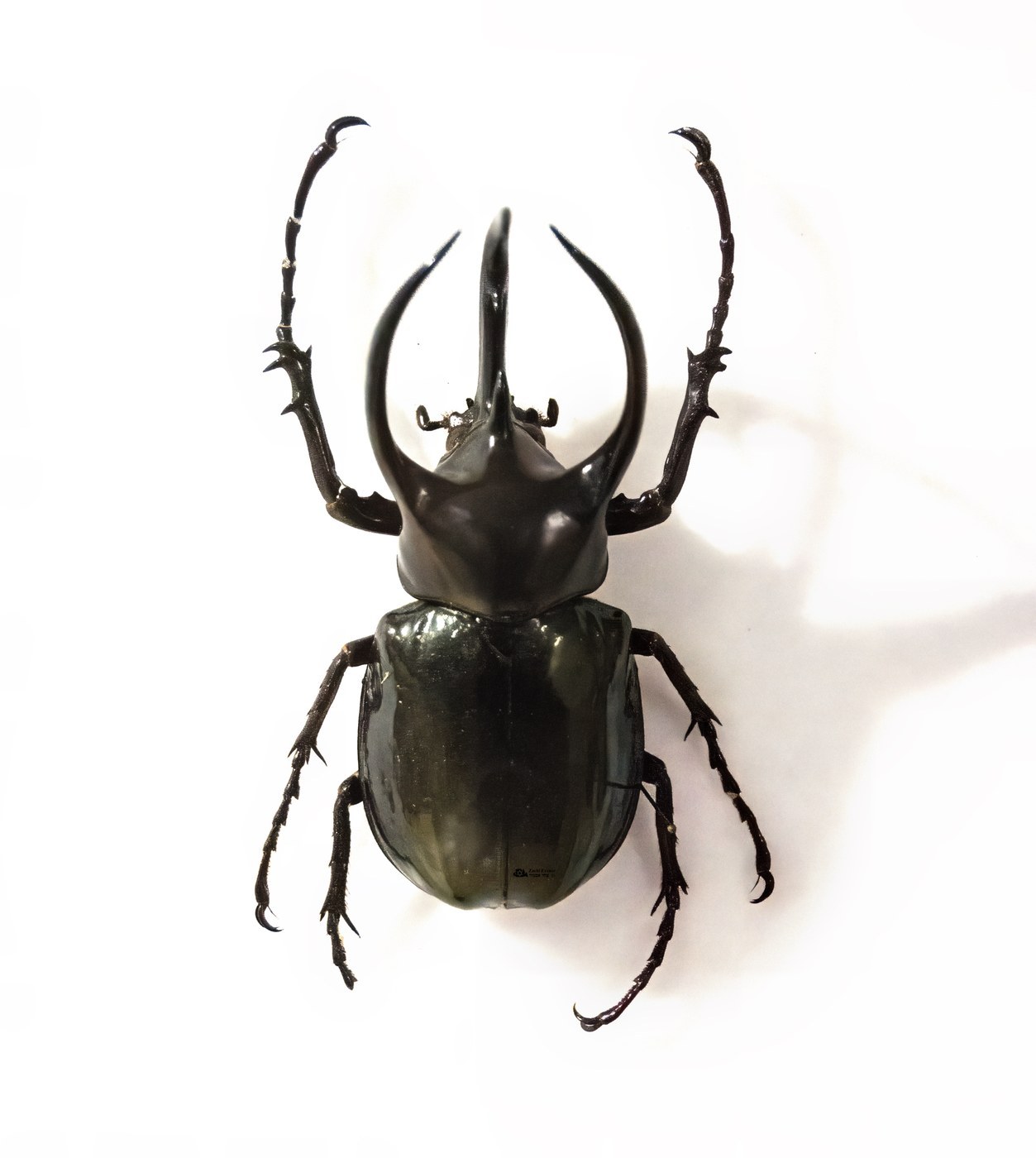
Atlas Beetle
Tropical forests of Southeast Asia
Titan Beetle
Amazon rainforest of South America
Ten-lined June Beetle
Sandy soils, pine forests, and orchards of western North America
Squash Beetle
Vegetable gardens and fields growing squash, pumpkin, and other cucurbits