Firebrat Identification Guide
Distinguish the firebrat from silverfish by its mottled gray-brown coloring and preference for warm spots near heat sources.
Read the full Firebrat encyclopedia entry →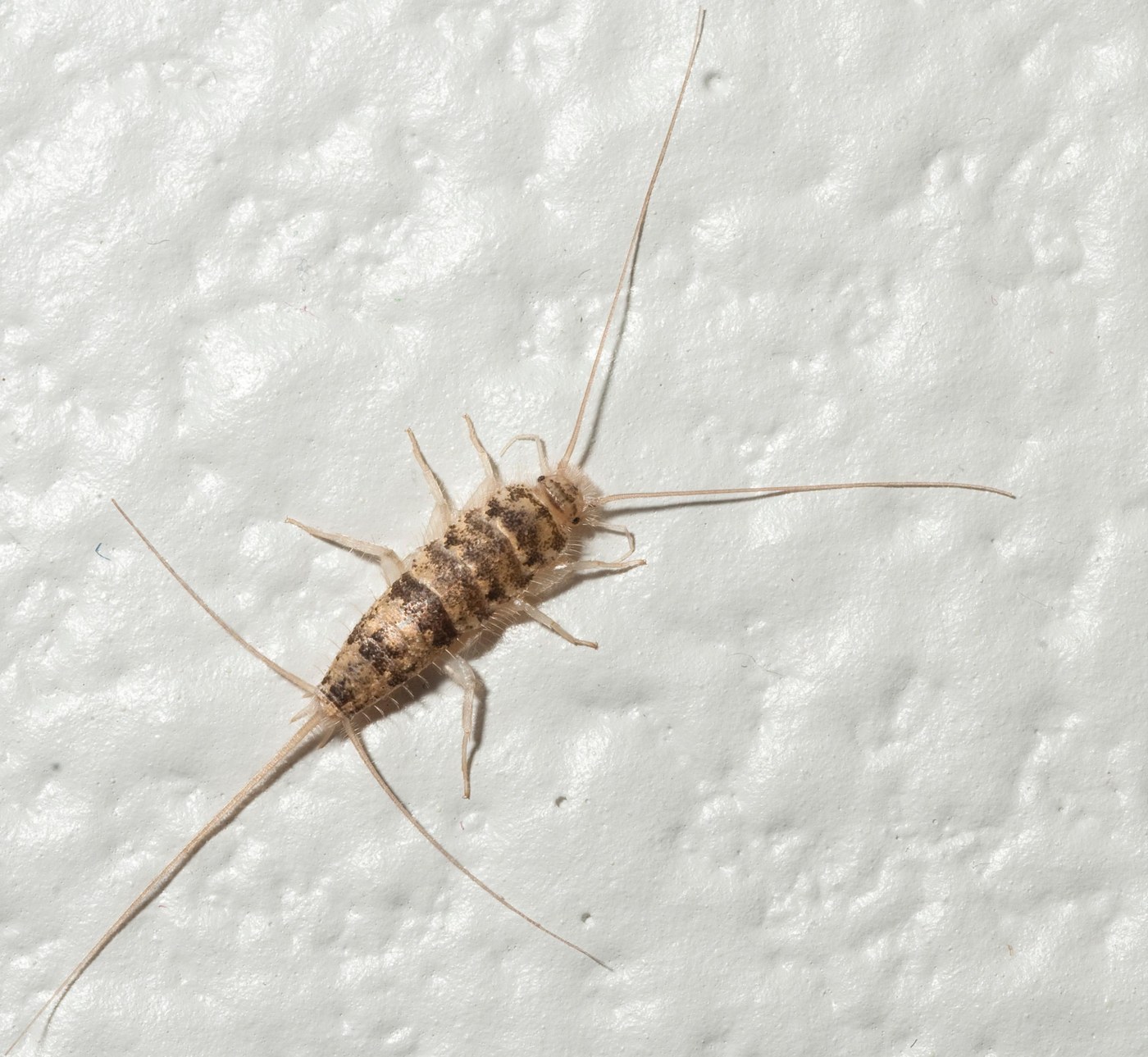
Key Visual Features
The firebrat (Thermobia domestica) is a small, wingless insect closely related to silverfish.
- Size: adults grow to about 1/2 to 3/4 inch long, not counting the tail bristles.
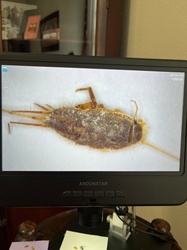
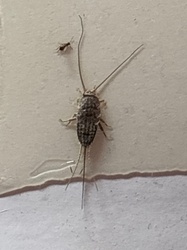
- Color: mottled gray and brown, with speckled patterning across the body, unlike the more uniform silvery sheen of true silverfish.
- Body shape: elongated, flattened, and tapering from a wider front to a narrow rear, giving a carrot-like or teardrop silhouette.
- Tail bristles: three long, thread-like appendages (two cerci and one central filament) extend from the rear of the abdomen.
- Antennae: long, thin, and flexible, extending forward from the head.
- Movement: extremely fast and agile, with a distinctive fish-like wriggling motion when running.
Where and When You'd See It
- Strongly associated with warm, dry locations, often near sources of heat such as furnaces, boilers, ovens, fireplaces, and attics.
- Active mainly at night, avoiding light and retreating quickly into cracks and crevices when exposed.
- Found indoors year-round wherever warm microclimates exist, with little seasonal pattern due to reliance on artificial heat.
- Often seen in kitchens, near water heaters, or in insulation close to heat pipes.
Similar-Looking Bugs
- Silverfish: very similar in shape but with a smoother, more uniformly silvery-gray body and a preference for cooler, more humid areas rather than heat sources.
- Earwigs: have pincer-like cerci rather than long thread-like tail bristles, and a more robust, less tapered body.
- Bristletails (outdoor species): similar general shape but typically found outdoors under bark or stones rather than inside heated buildings.
Where They Differ from Silverfish
The clearest field distinction is habitat preference: firebrats seek out warm, heated locations, while silverfish favor cooler, damp spots such as basements and bathrooms. Body mottling versus a uniform silvery sheen is the best visual cue when both are side by side.
Quick ID Checklist
- Mottled gray-brown, tapering body
- Three long tail bristles at the rear
- Long forward-facing antennae
- Fast, wriggling movement
- Found near warm heat sources like furnaces and ovens
Frequently asked questions
How is a firebrat different from a silverfish?
Firebrats have a mottled gray-brown body and favor warm areas near heat sources, while silverfish have a more uniform silvery sheen and prefer cooler, damp locations.
Does the firebrat have wings?
No, it is a wingless insect with a flattened, tapering body.
Where indoors is a firebrat most likely to be found?
Near warm locations such as furnaces, ovens, boilers, fireplaces, and heating pipes.
How many tail bristles does a firebrat have?
Three long thread-like bristles extend from the rear of its abdomen.
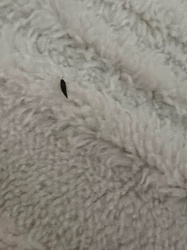
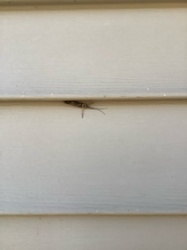
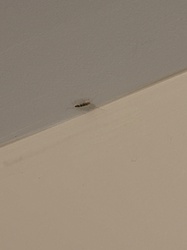
Firebrat identified by the community
Recent Firebrat finds identified with Bug Identifier.