Flea Beetle Identification Guide
Recognize this tiny, shiny beetle by its jumping escape behavior and the characteristic small round holes it leaves in leaves.
Read the full Flea Beetle encyclopedia entry →Key Visual Features
Flea beetles are named for their flea-like jumping ability, a behavior that is often the quickest way to confirm identification in the field.
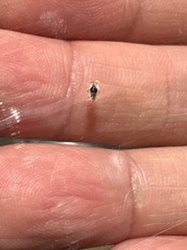
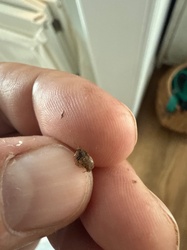
- Size: Very small, usually only 1.5 to 3 millimeters long.
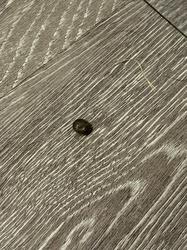
- Body shape: Oval and compact, with a smooth, hardened, convex shell (elytra) typical of beetles.
- Color: Commonly shiny black or dark bronze, though some species show metallic blue, green, or bronze sheens, and a few have pale yellow or white stripes running down the wing covers.
- Legs: The hind legs are noticeably enlarged and thickened compared to the front and middle legs, containing the muscle power that lets the beetle spring away suddenly when disturbed — much like a flea.
- Antennae: Thread-like, moderately long, extending forward from the head.
- Larvae: Small, slender, whitish-to-yellow grubs that live in the soil or within plant tissue, rarely seen above ground.
Where and When You'd See Them
Flea beetles are active from early spring through fall, with populations often peaking in spring on young, tender seedlings and again in late summer. They are found on the foliage of a wide range of garden plants, especially seedlings, and are most active on warm, sunny days. Because they are so quick to jump away, they are often first noticed by the tiny, numerous, round or irregular "shot hole" feeding marks left scattered across leaves rather than by seeing the beetle itself.
Similar-Looking Bugs
- Cucumber beetles: Larger and more elongated, with visible black stripes or spots on a yellow-green background, and they move more deliberately rather than jumping away instantly.
- Ground beetles: Considerably larger, with longer legs built for running rather than jumping, and typically found on the ground rather than on foliage.
- Weevils: Have a distinctive elongated snout projecting from the head, which flea beetles lack entirely.
- Aphids: Soft-bodied and pear-shaped rather than hard-shelled and oval, and do not jump when disturbed.
Quick ID Checklist
- Tiny, 1.5–3 mm, shiny black, bronze, or metallic oval beetle
- Enlarged hind legs built for jumping
- Jumps suddenly like a flea when disturbed
- Numerous small round "shot hole" marks scattered across leaves
- Most active on warm, sunny days from spring through fall
Frequently asked questions
What is the most reliable way to identify a flea beetle?
Its jumping behavior — when disturbed, a flea beetle springs away suddenly using its enlarged hind legs, much like a flea, which is a strong field clue alongside its tiny, shiny body.
How can I tell a flea beetle from a cucumber beetle?
Flea beetles are much smaller, usually solid dark or metallic, and jump instantly when disturbed, while cucumber beetles are larger, patterned with spots or stripes, and move more deliberately.
What kind of leaf damage suggests flea beetles rather than another insect?
Numerous small, round or irregular 'shot hole' marks scattered across leaves are a classic sign associated with flea beetle feeding.
Where do flea beetle larvae live?
In the soil or within plant tissue, where they are rarely seen, unlike the more visible jumping adults on foliage.
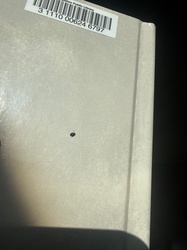
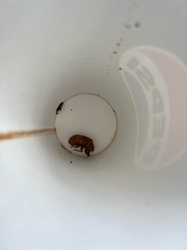
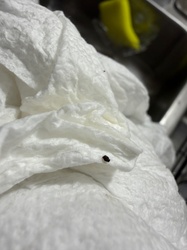
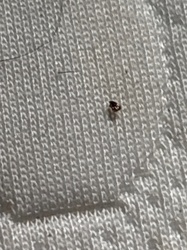
Flea Beetle identified by the community
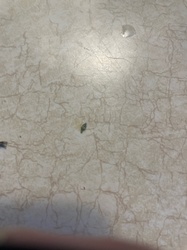
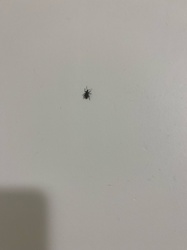
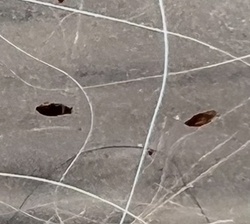
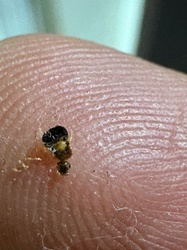
Recent Flea Beetle finds identified with Bug Identifier.