Flower Chafer Beetle Identification Guide
Learn to spot these day-flying beetles often found feeding openly on flower blossoms.
Read the full Flower Chafer Beetle encyclopedia entry →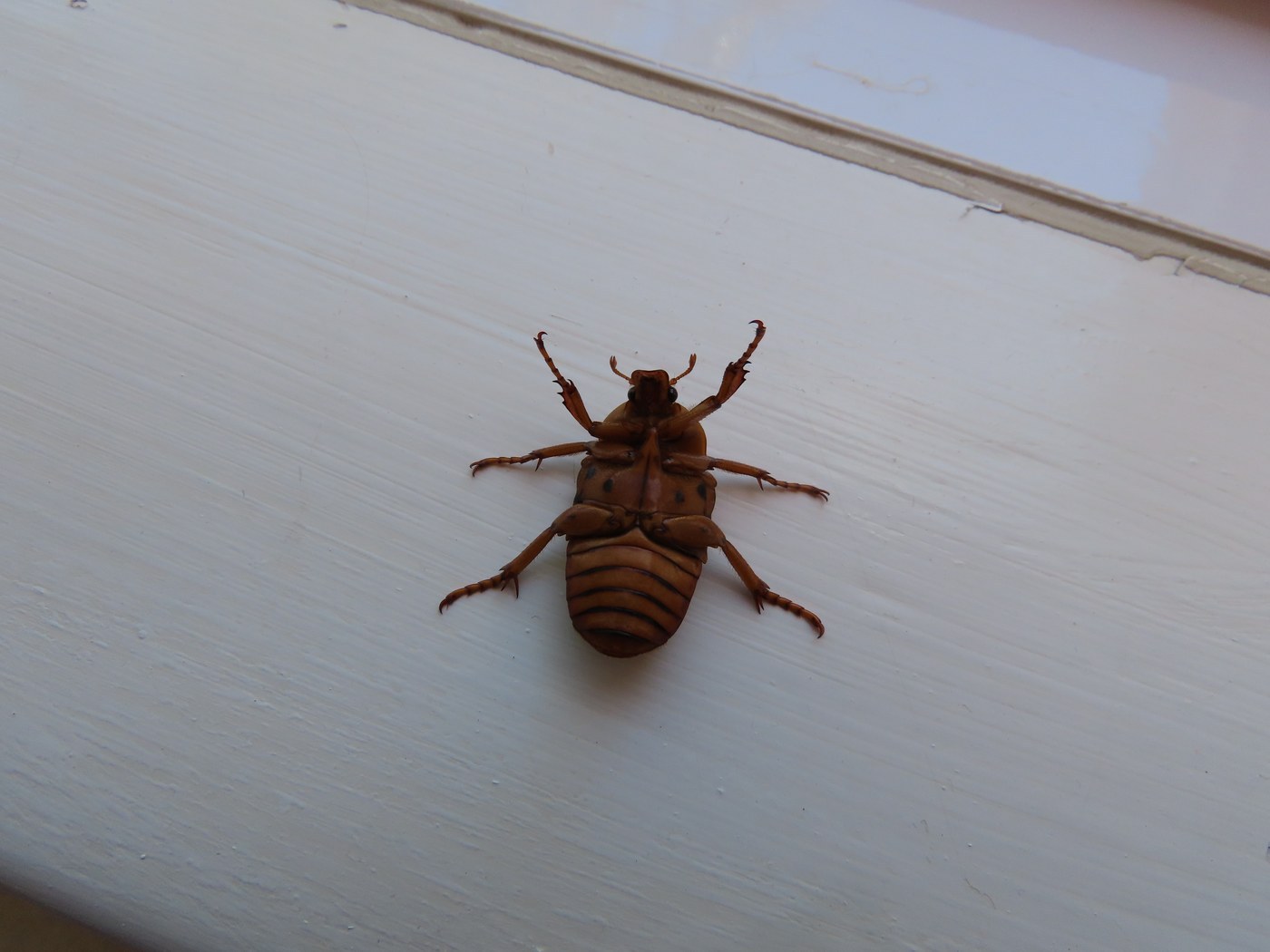
Key Visual Features
- Medium-sized beetle, generally 0.5-1.25 inches (1.2-3.2 cm) long, with a somewhat flattened, broad-oval body shape.
- Coloring varies widely by species, including metallic green, bronze, black with white or cream spots and streaks, or solid dull green and brown tones.
- Wing covers (elytra) are often marked with pale spots, streaks, or mottled patterns, particularly visible in the commonly seen spotted forms.
- The head and thorax are typically narrower than the broad abdomen, giving a slightly wedge-shaped outline from above.
- Legs are sturdy and equipped with small claws suited for gripping flower petals and stems.
- Unlike many beetles, flower chafers often fly with their wing covers only partly raised, giving a distinctive buzzing, direct flight.
Where and When You'd See It
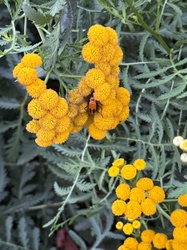
- Found visiting flowers in gardens, meadows, and woodland edges, especially blossoms with open, accessible pollen and nectar.
- Most active during the day, particularly in warm, sunny weather, often seen crawling over or resting on flower heads.
- Common from late spring through summer in temperate regions, with activity varying by species and climate.
- Adults are typically seen directly on or near flowers rather than hidden in soil or under bark, unlike many other beetle groups.
Similar-Looking Species
- Japanese beetles and other scarab relatives can share a similar general size and shape but usually lack the same pale spotted or streaked pattern on the wing covers seen in many flower chafers.
- June beetles are often larger, duller brown, and more nocturnal, rarely seen actively feeding on open flowers during the day.
- Some longhorn beetles visit flowers too, but they have noticeably longer antennae, often exceeding body length, compared to the shorter antennae typical of flower chafers.
Quick ID Checklist
- Broad-oval, somewhat flattened body, 0.5-1.25 inches long.
- Metallic green, bronze, or black-and-cream spotted coloring.
- Found actively feeding or resting directly on open flower blossoms.
- Direct, buzzing flight with wing covers only partly raised.
- Short antennae compared to longhorn beetle lookalikes.
Behavior Notes
- Adults are often bold and easy to approach, remaining on a flower even as it is closely observed, since they are focused on feeding.
- Multiple individuals, sometimes of different species, can be found sharing the same flower cluster without apparent conflict.
- Larvae of many species develop in decaying wood, compost, or leaf litter, quite different from the flower-visiting habits of the adults.
Frequently asked questions
How do I tell a flower chafer from a Japanese beetle?
Flower chafers often show distinct pale spots or streaks on the wing covers and are seen directly feeding on open flowers, while Japanese beetles tend to have a more uniform metallic green and copper coloring without the same spotted pattern.
Why are flower chafers seen flying differently from other beetles?
Many species fly with their hardened wing covers only partly lifted, using the hind wings from underneath, which produces a distinctive fast, direct, buzzing flight compared to beetles that fully raise their wing covers.
What time of year and day are they most visible?
They are most active during the day in warm weather, typically from late spring through summer, when flowers are blooming and beetles are feeding on pollen and nectar.
How can I distinguish a flower chafer from a longhorn beetle on the same flower?
Check antenna length: longhorn beetles have long antennae often exceeding their body length, while flower chafers have noticeably shorter, more compact antennae.
Flower Chafer Beetle identified by the community
Recent Flower Chafer Beetle finds identified with Bug Identifier.