Gall Wasp Identification Guide
A quick guide to recognizing the tiny wasps best known through the odd, ball-shaped galls they cause on oak leaves and stems.
Read the full Gall Wasp encyclopedia entry →Key Visual Features
Gall wasps are among the smallest and least conspicuous wasps, so identification usually relies as much on their handiwork as on the insect itself.
- Size: Very small, typically 1–8 mm long.
- Color: Usually dark brown or black, occasionally with reddish tones; coloring is muted and unremarkable compared to more colorful wasp families.
- Body shape: Compact and somewhat humpbacked, with a short abdomen that appears flattened from the side.
- Wings: Clear, membranous, with relatively simple venation; some species are wingless, especially certain generations that emerge from galls in fall or winter.
- Legs: Short and thin relative to the body.
- Antennae: Short to medium, thread-like, held forward.
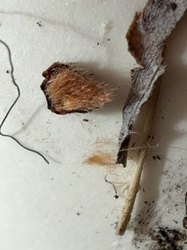
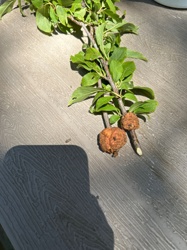
- Galls: The most recognizable feature by far — round, spiky, disc-shaped, or irregular woody growths on leaves, twigs, buds, flowers, or roots, ranging from pea-sized to golf-ball-sized structures.
Where and When You'll See One
Adult gall wasps are rarely spotted directly; galls are the primary field sign.
- Look on oak trees for the widest variety of galls: round "oak apples" on leaves, spiny or textured galls on twigs, and small button-like galls on the undersides of leaves.
- Roses also commonly host gall wasps, producing mossy or spiky red-tinted galls on stems.
- Galls appear seasonally, often forming in spring and summer and persisting, sometimes drying and hardening, into fall and winter.
- Adult wasps, when seen, are most likely spotted near host plants in spring as they emerge from overwintered galls or lay eggs to start new ones.
Similar-Looking Bugs
- Aphids and scale insects: Can also cause plant swellings, but their galls tend to look more like clustered bumps rather than the single, well-defined round or spiky galls of gall wasps.
- Gall midges (flies): Produce galls too, but midge galls are often smaller, softer, and less woody than typical gall wasp galls.
- Chalcid wasps: Similarly tiny and dark, but many chalcids are metallic and are more often associated with parasitizing other insects rather than forming their own plant galls.
- Sawfly larvae: Some sawflies also cause leaf rolling or blistering, but this differs from the discrete, rounded gall structures wasps produce.
Quick ID Checklist
- Adult is tiny, dark, and easy to overlook
- Identification usually relies on the presence of a round, spiky, or irregular gall on leaves, twigs, or buds
- Oak and rose plants are the most common and recognizable hosts
- Galls may be smooth, spiny, mossy-looking, or disc-shaped depending on species
- Wingless forms exist in some species and generations
Frequently asked questions
Why do I mostly see the gall and not the wasp?
Adult gall wasps are extremely small and short-lived, spending most of their life cycle developing inside the gall, so the visible plant growth is usually the clearest sign of their presence.
What plants are most likely to have gall wasp galls?
Oaks host the greatest variety of gall wasp species and gall shapes, while roses are another common and easily recognized host.
Are all plant galls caused by gall wasps?
No, other insects such as gall midges, aphids, and some mites can also cause galls, so gall shape, texture, and host plant help narrow down whether a wasp is responsible.
Does the gall stay on the plant year-round?
Many galls persist after the wasp inside has finished developing, drying out and remaining attached to the twig or leaf well into fall or winter even after the wasp has emerged.
Gall Wasp identified by the community
Recent Gall Wasp finds identified with Bug Identifier.