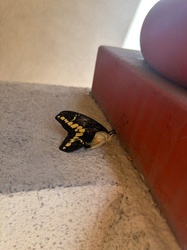
Giant Swallowtail Identification Guide
Spot North America's largest butterfly by its bold diagonal yellow band and spoon-tipped tails.
Read the full Giant Swallowtail encyclopedia entry →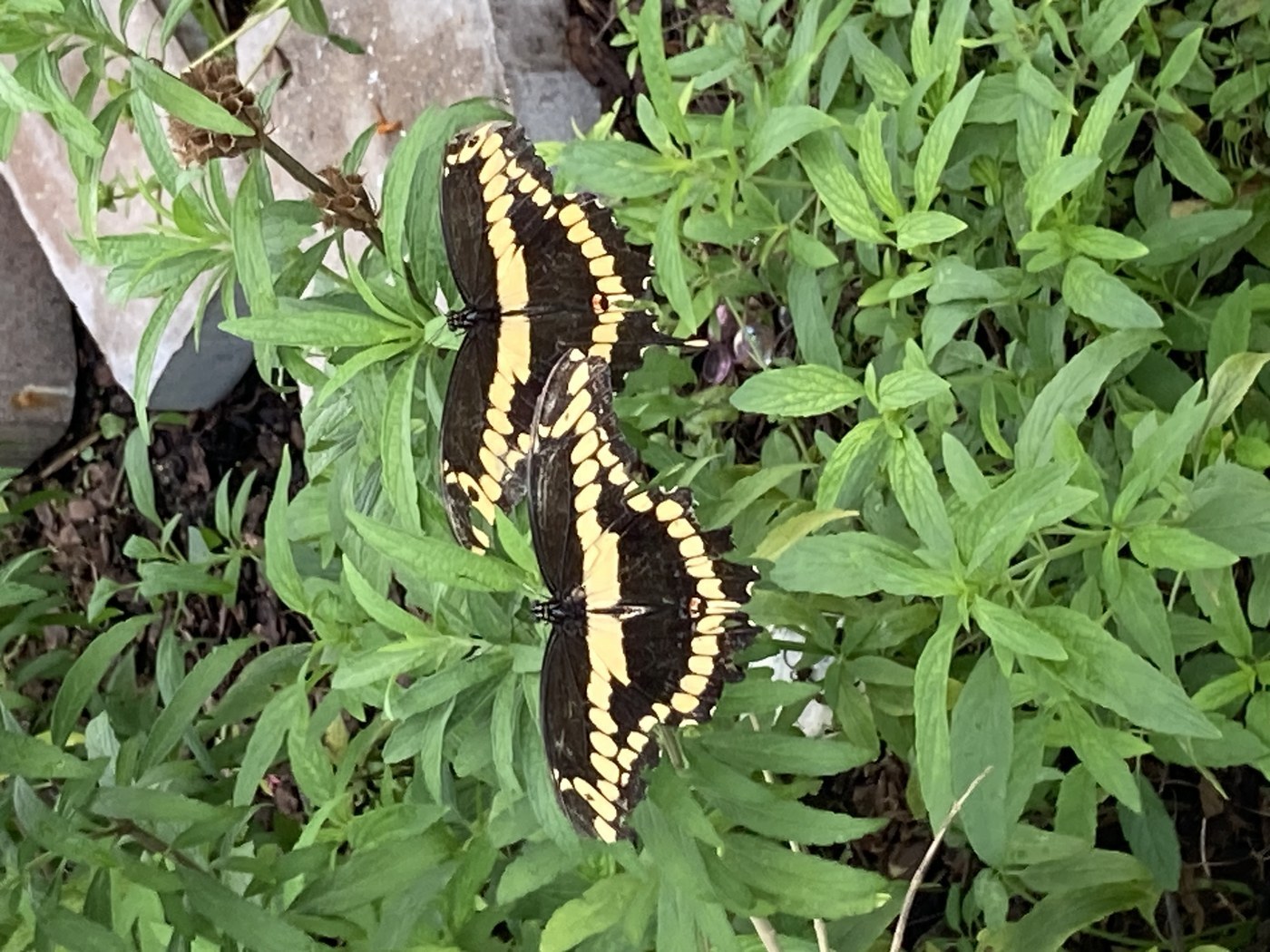
Key Visual Features
The Giant Swallowtail (Papilio cresphontes) is the largest butterfly in North America, with a wingspan that can reach 4 to 6 inches.
- Color: Dorsal wings are blackish-brown crossed by a broad diagonal band of yellow spots that forms an X-like or cross-like shape when the wings are spread.
- Underside: The ventral surface is mostly pale yellow with scattered blue and orange spots, quite different from the darker upper side.
- Body: Thick, dark body with yellow markings along the sides.
- Wings: Long, broad wings; the outer margin of each wing carries a row of small yellow spots.
- Tails: Each hindwing has a single tail with a distinctive yellow center, sometimes described as "spoon-shaped."
- Antennae and legs: Clubbed black antennae; legs are dark and slender.
Where and When You'll See It
Giant Swallowtails are found across the eastern and southern United States, into Mexico and Central America, favoring open woodlands, citrus groves, gardens, and roadside edges. They are strong, fast fliers that often stay in constant motion, rarely pausing for long even while nectaring. Adults can be seen from spring through fall, with several broods in warmer southern regions where they may be present nearly year-round.
Similar-Looking Species
- Eastern Tiger Swallowtail: Shows vertical black "tiger" stripes on a yellow background rather than a single diagonal yellow band, and lacks the yellow-centered tail.
- Two-tailed Swallowtail: Has two tails on each hindwing instead of one, and a paler yellow ground color with narrower black stripes.
- Thoas Swallowtail: Very similar overall pattern but found mainly farther south; wing shape and spot details differ subtly and range rarely overlaps significantly.
Quick ID Checklist
- Very large size, among the biggest butterflies you'll encounter
- Dark wings with a broad diagonal yellow band forming an X pattern
- Pale yellow underside with blue and orange spots
- Single tail per hindwing with a yellow center
- Fast, almost continuous flight, rarely resting long
Frequently asked questions
How do I know if a swallowtail is a Giant Swallowtail and not a Tiger Swallowtail?
Look at the pattern direction: Giant Swallowtails have a diagonal band of yellow spots crossing the wing, while Tiger Swallowtails have vertical black stripes running across a yellow wing.
Why does the Giant Swallowtail look so different from above and below?
The dorsal (upper) side is dark with a yellow band, while the ventral (underside) is mostly pale yellow with blue and orange spots, so the same individual can look strikingly different depending on wing position.
Where are Giant Swallowtails most commonly seen?
They favor open woodland edges, gardens, and citrus-growing regions, and are most frequently spotted in the southern and eastern United States.
Is the Giant Swallowtail really the largest butterfly in North America?
Yes, it typically holds the title for largest wingspan among North American butterfly species, often reaching up to 6 inches across.
Giant Swallowtail identified by the community
Recent Giant Swallowtail finds identified with Bug Identifier.