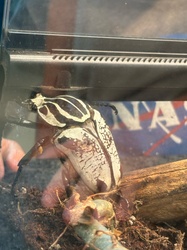
Goliath Beetle Identification Guide
Learn to recognize one of the world's heaviest insects by its bold black-and-white pattern, massive size, and head horns.
Read the full Goliath Beetle encyclopedia entry →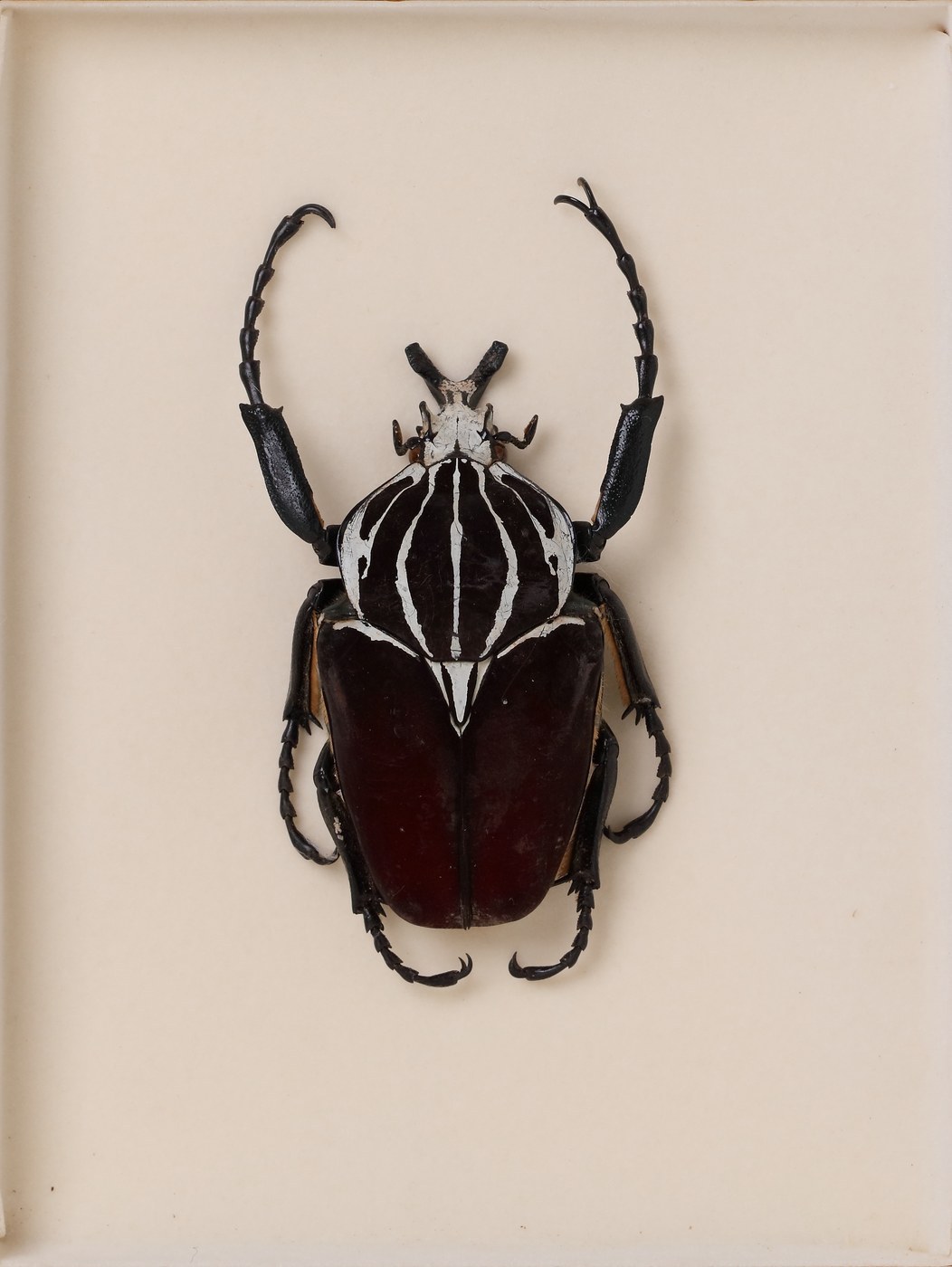
Key Visual Features
The Goliath beetle is one of the largest and heaviest insects on Earth, with adults measuring anywhere from 2.5 to 4.5 inches (60-110mm) long. Key features include:
- Size and bulk: An oversized, barrel-shaped body that is noticeably heavier and thicker than most other beetles.
- Coloring: A hard shell patterned in bold black and white (sometimes brown and tan) stripes or blotches across the pronotum (the shield behind the head), giving it a distinctive "racing stripe" look.
- Horns: Males carry a Y-shaped horn projecting from the head, used for wrestling rival males. Females lack a horn and instead have a wedge-shaped, shovel-like head used for digging.
- Legs: Thick, strong legs tipped with sturdy claws, built for gripping tree bark and branches.
- Wings: Hardened forewings (elytra) cover a large membranous hindwing; in flight the beetle produces a loud, low buzzing hum.
Where and When You'll See One
Goliath beetles are native to the tropical forests of equatorous Africa. Adults are diurnal (active during the day) and are most often spotted resting on tree trunks, feeding at oozing sap flows, or flying heavily between trees in the warmer, wetter months. They favor forest edges, clearings, and areas with fruiting or sap-producing trees.
Similar-Looking Bugs
- Atlas beetle and Hercules beetle: Both are large horned beetles, but they have curved rhinoceros-style horns rather than the Goliath's straight, forked "Y" horn, and neither shows the same bold black-and-white striped pattern.
- Other African scarabs: Smaller relatives may share a similar shape but lack the Goliath's exceptional size and patterned coloring.
Behavior Notes
Despite their bulk, Goliath beetles are capable, if somewhat clumsy, fliers, launching themselves from tree trunks with an audible buzz. Males are territorial around prime feeding spots such as sap flows, using their forked horn to lever rivals away rather than to cause serious injury. Because of their size and calm temperament when undisturbed, they are among the more approachable large beetles to observe closely in the field.
Quick ID Checklist
- Body length over 2.5 inches (very large for a beetle)
- Black-and-white or brown-and-tan striped/blotched pattern on the pronotum
- Males have a forked, Y-shaped head horn; females have a flat digging head
- Thick, heavily built legs with strong claws
- Loud, low buzzing sound in flight
Frequently asked questions
How can I tell a male from a female Goliath beetle?
Males have a distinct Y-shaped horn on the head used for wrestling, while females have a smooth, wedge-shaped head adapted for digging and lack a horn.
What size should I expect an adult Goliath beetle to be?
Adults typically range from about 2.5 to 4.5 inches (60-110mm) in length, making them among the bulkiest insects in the world.
Where is the best place to look for a Goliath beetle?
Look on tree trunks and at sap flows in tropical African forests during the day, since these beetles are active in daylight rather than at night.
Does the pattern on a Goliath beetle vary?
Yes, the black-and-white or brown-and-tan pattern on the pronotum and elytra can vary quite a bit between individuals, but the bold contrasting stripes remain a reliable clue.
Goliath Beetle identified by the community
Recent Goliath Beetle finds identified with Bug Identifier.