
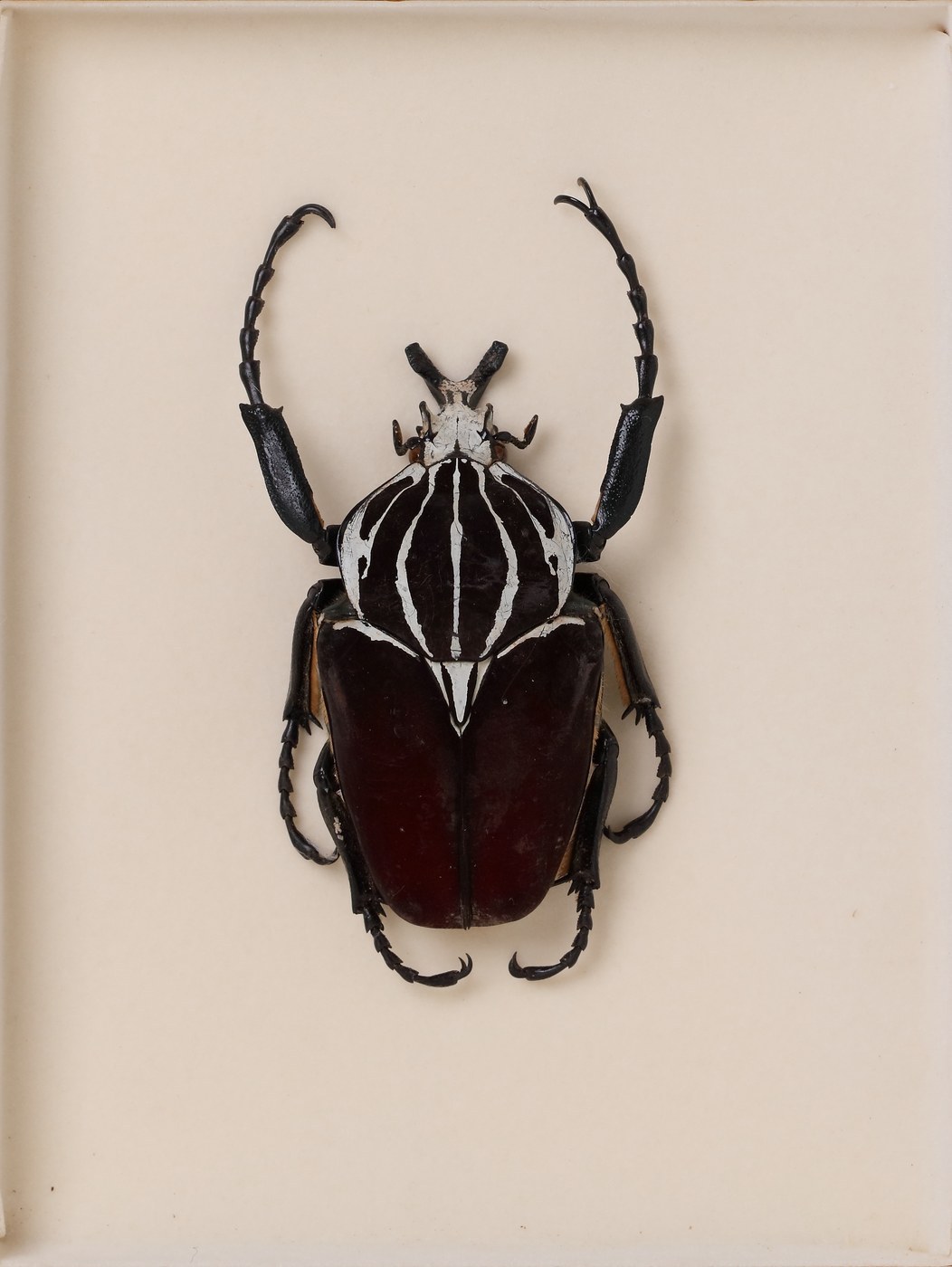
Goliath Beetle
Goliathus goliatus
One of the largest and heaviest beetles on Earth, a massive scarab with a bold pattern of black, white, and brown stripes across its shield-like body.
- Size
- 60–110 mm
- Habitat
- Tropical forests and savanna woodlands of equatorial Africa
- Danger
- Harmless
Spotted a bug like this?
Identify any bug or insect from a photo, free.
Overview
The Goliath beetle belongs to the scarab beetle family (Scarabaeidae), specifically the subfamily Cetoniinae, or flower chafers. It is among the largest insects in the world by mass, with some individuals ranking as the heaviest known beetles, rivaling even the largest longhorn and stag beetles in overall bulk.
Native to the tropical and equatorial regions of Africa, the genus Goliathus includes several closely related species that share the common name, each with somewhat different color patterns but a broadly similar massive, robust body plan. Its extraordinary size and striking markings have made it one of the most famous and sought-after beetles among collectors and in popular depictions of giant insects.
Ecologically, it fills a role typical of flower chafers, feeding on plant fluids and decaying organic matter as an adult, while its grubs are enormous detritivores that develop in rich organic soil or rotting wood, contributing to nutrient cycling in forest ecosystems.
How to Identify
- Massive, broad, shield-shaped body ranging from about 60 to 110 mm in length, among the heaviest of all beetles.
- Bold pattern of black and white (or brown and white) stripes across the pronotum and elytra, varying by species within the genus.
- Males typically bear a Y-shaped horn on the head used in competition, while females have a shovel-like head structure adapted for digging.
- Thick, sturdy legs equipped with strong claws for gripping bark and branches.
- Lookalikes include other large African scarabs, but the combination of extreme size, velvety texture, and bold black-and-white striping is distinctive to the genus.
Habitat & Range
Found in equatorial and tropical Africa, including rainforest and savanna woodland habitats across countries such as Cameroon, the Democratic Republic of Congo, and neighboring regions. Adults are most active during the warm, humid seasons, often seen feeding on tree sap, fruit, or flowers high in the forest canopy, while larvae develop below ground or within decomposing logs and leaf litter over an extended period.
Behavior & Diet
Adults feed on tree sap, rotting fruit, and nectar, using this energy for flight and reproduction, and males use their prominent head horns to wrestle rivals for access to females and feeding sites. Despite their bulk, they are capable fliers, producing a loud buzzing hum when taking off. The grubs, by contrast, are subterranean or wood-dwelling detritivores, consuming decaying organic matter and playing an important role in breaking down plant material within forest ecosystems. As one of the largest insects in their habitat, adult Goliath beetles have relatively few natural predators once fully grown, aside from large birds and mammals.
Life Cycle
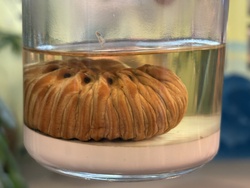
Development is complete metamorphosis: egg, larva, pupa, adult. Eggs are laid in rich organic soil or decaying wood; the enormous, C-shaped white grubs feed on decomposing plant matter for many months to over a year, growing to a remarkable size before constructing an underground pupal chamber. Adults emerge after pupation and live for a period of months, focused on feeding and reproduction. There is no true diapause, as the tropical climate allows year-round development, though larval growth is notably slow compared to most beetles.
Frequently asked questions
Is the Goliath beetle the heaviest beetle in the world?
It is widely regarded as one of the heaviest insects known, among the top contenders for the title alongside a few other giant scarabs.
Where does it live in the wild?
It is native to tropical and equatorial forest and savanna regions of Central and West Africa.
Why do males have a horn?
The Y-shaped horn on the male's head is used to wrestle rival males for access to feeding sites and mates.
What do the larvae eat?
The large grubs feed on decaying organic matter in soil or rotting wood, unlike the sap- and fruit-feeding adults.
Goliath Beetle guides
In-depth guides for identifying, understanding, and living alongside Goliath Beetle.
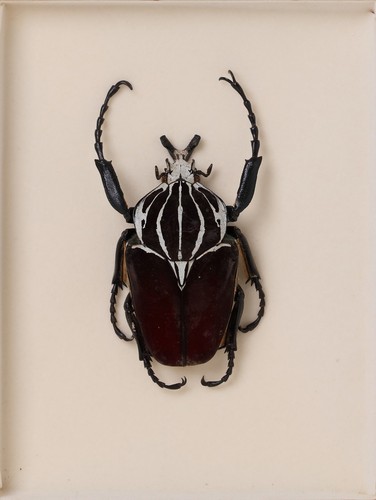
Goliath Beetle identified by the community
Real finds identified with Bug Identifier.
Other bugs you may enjoy
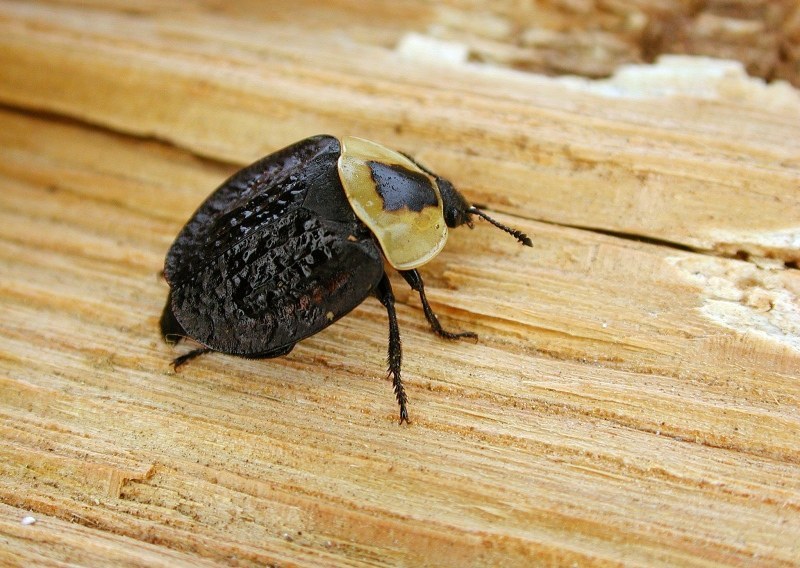
American Carrion Beetle
Forests, fields, and roadsides across North America, near decaying animal carcasses
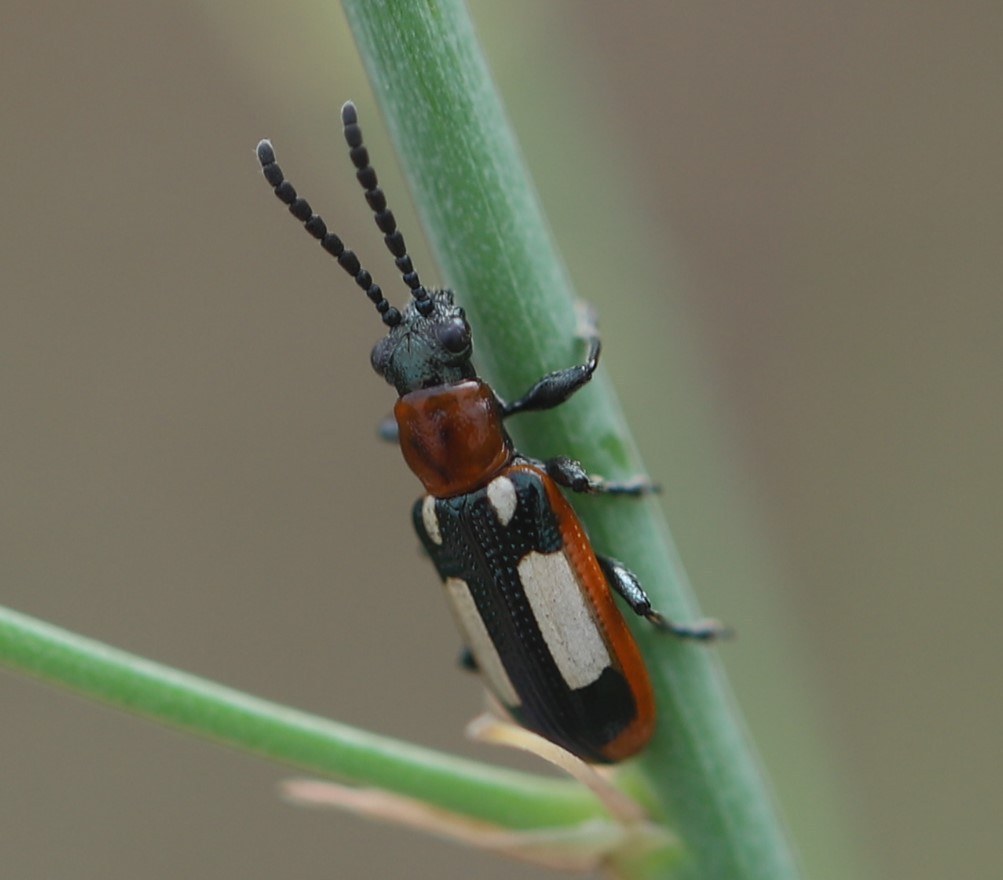
Asparagus Beetle
Asparagus patches, gardens, and farm fields
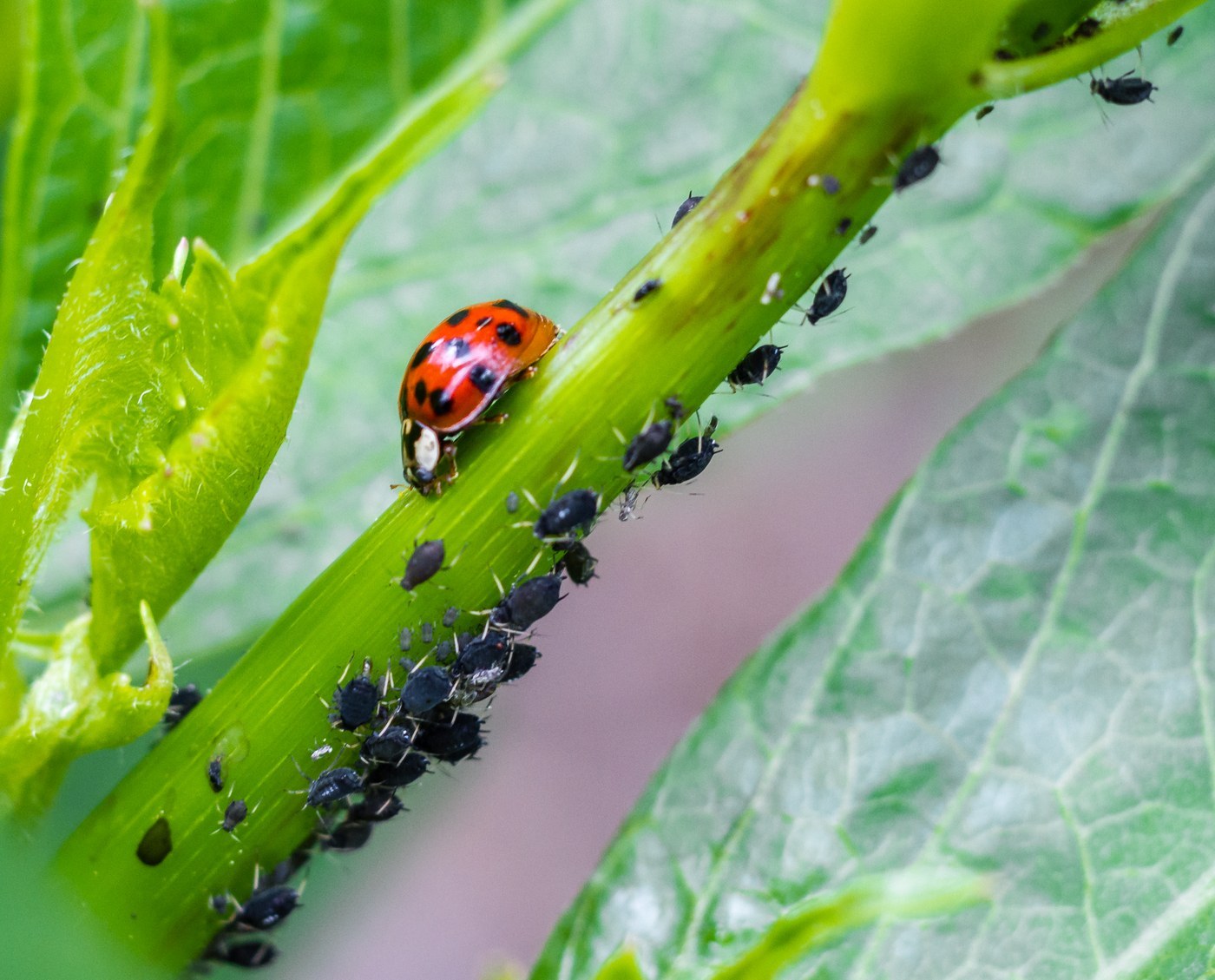
Asian Lady Beetle
Gardens, crop fields, woodlands, buildings
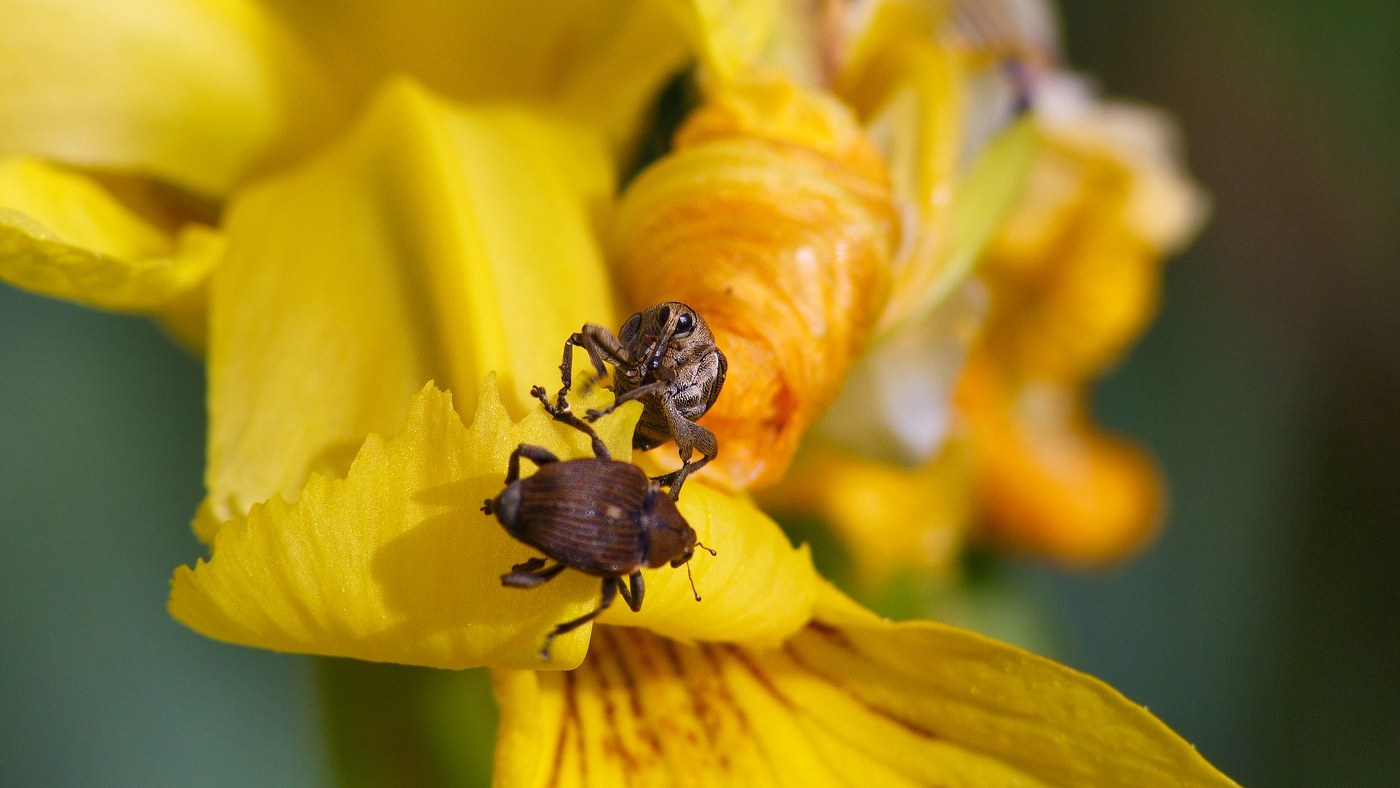
Acorn Weevil
Oak woodlands and forests, on and beneath oak trees
Wireworm
Soil of grasslands, gardens, and cultivated fields worldwide
Whitefringed Beetle
Pastures, row crops, lawns, disturbed soils
Vine Weevil
Gardens, nurseries, greenhouses, and container plantings
Varied Carpet Beetle
Homes, nests of birds and mammals, and flowers outdoors
Atlas Beetle
Tropical forests of Southeast Asia
Titan Beetle
Amazon rainforest of South America
Ten-lined June Beetle
Sandy soils, pine forests, and orchards of western North America
Squash Beetle
Vegetable gardens and fields growing squash, pumpkin, and other cucurbits