Goliath Birdeater Identification Guide
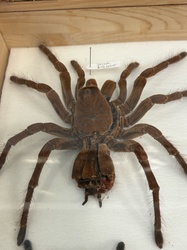
Identify the goliath birdeater by its massive size, dense brown hair, and thick, powerful legs unmatched by any other spider.
Read the full Goliath Birdeater encyclopedia entry →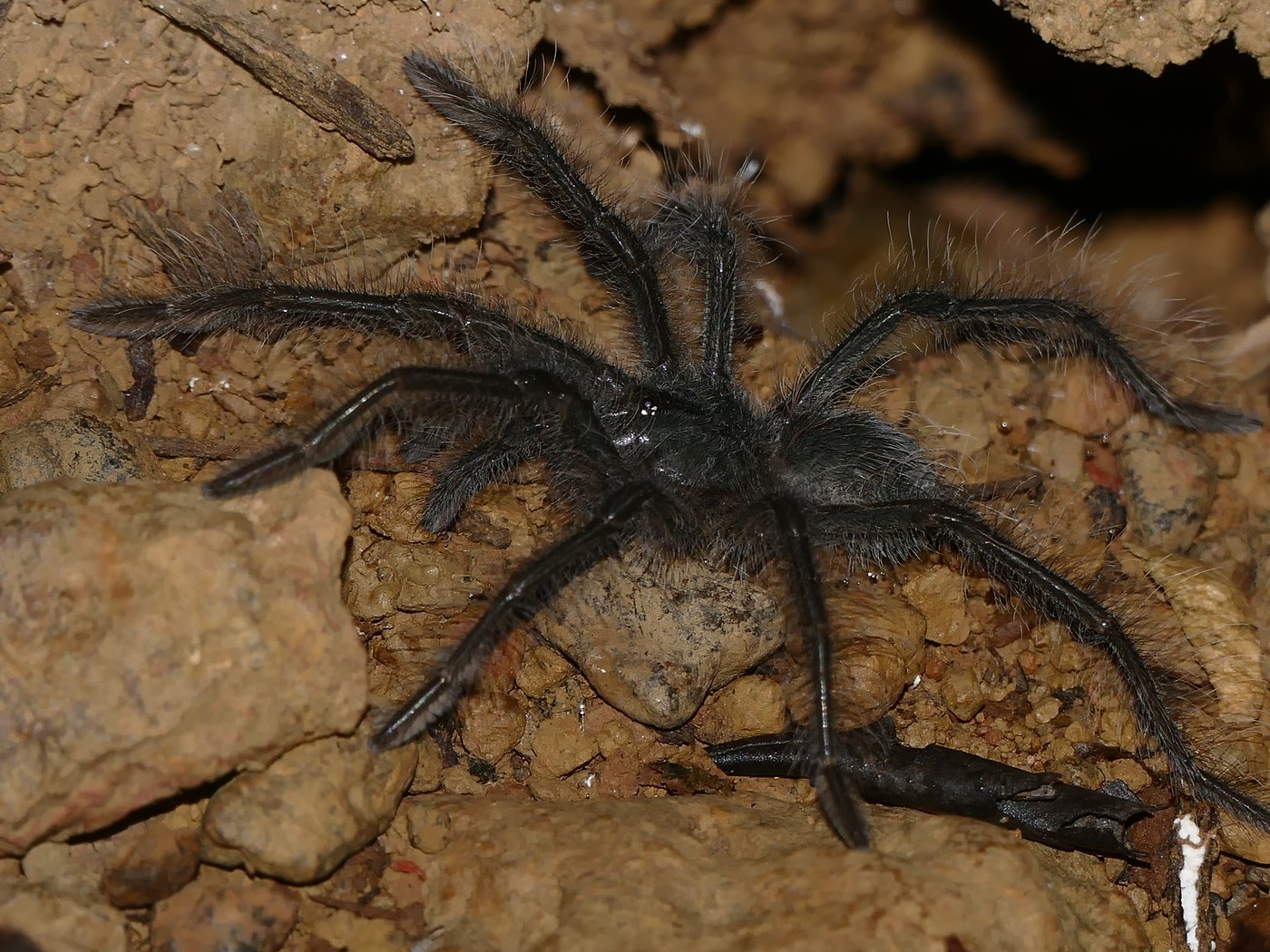
Key Visual Features
The goliath birdeater is famous for being one of the largest spiders in the world by mass and body size:
- Size: Leg span can reach up to 11-12 inches in large females, with a body length of roughly 4-5 inches, making it exceptionally large compared to nearly all other spiders.
- Color: Uniform brown to reddish-brown coloring across the body and legs, without bold contrasting bands or stripes.
- Body shape: An extremely bulky, heavily built abdomen and carapace, covered in dense, coarse hair that gives it a shaggy appearance.
- Legs: Thick, muscular legs proportionate to its large body, ending in strong claws suited for gripping soil and prey.
- Abdomen hairs: Covered in urticating hairs that can be flicked off defensively, contributing to its bristly, textured look.
Where and When You'll See One
This species is native to the rainforests of northern South America, including parts of the Amazon basin, where it lives in burrows dug into soft, moist soil beneath tree roots, fallen logs, or leaf litter. It is a nocturnal, ground-dwelling spider that spends daylight hours hidden in its burrow and emerges after dark to hunt near the entrance. Due to its size and impressive appearance, it is also a well-known species in the exotic pet trade, though wild sightings remain restricted to its native rainforest range.
Similar-Looking Spiders
- Other large Theraphosa species: Closely related giant tarantulas share a similar bulky brown build, differing mainly in subtle proportions and native range within South America.
- Mexican redknee tarantula: Much smaller overall and easily told apart by its bold black-and-orange leg banding, which the goliath birdeater lacks.
- Rose hair tarantula: Also lacks distinct banding but is considerably smaller and lighter in color, with a more pink-brown tone.
Quick ID Checklist
- Enormous size with a leg span that can approach a foot across
- Uniform brown to reddish-brown coloring without contrasting bands
- Dense, coarse, shaggy hair covering a bulky body
- Burrow dug into moist rainforest soil under roots or logs
- Nocturnal, emerging after dark to hunt near the burrow entrance
Frequently asked questions
What makes the goliath birdeater the largest spider by some measures?
Its combination of leg span, body mass, and overall bulk exceeds that of nearly every other spider species, giving it record-setting size among tarantulas.
Where in the wild would you find a goliath birdeater's burrow?
Look in moist rainforest soil in northern South America, typically beneath tree roots, fallen logs, or thick leaf litter in humid lowland forest.
How can you tell a goliath birdeater apart from other giant tarantulas?
Its exceptionally large size combined with a uniform brown coloring and lack of bold leg banding helps distinguish it from similarly bulky but smaller or differently marked species.
Is the goliath birdeater active during the day?
It is primarily nocturnal, remaining in its burrow through the day and becoming active near the entrance after dark.
Goliath Birdeater identified by the community
Recent Goliath Birdeater finds identified with Bug Identifier.