Grasshopper Identification Guide
Learn the field marks that separate a grasshopper's short antennae and big jumping legs from lookalikes.
Read the full Grasshopper encyclopedia entry →Key Visual Features
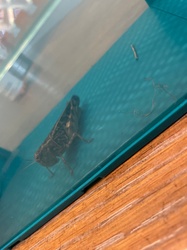
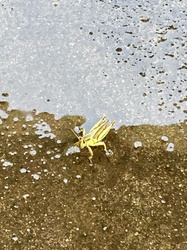
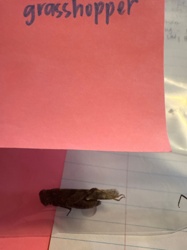
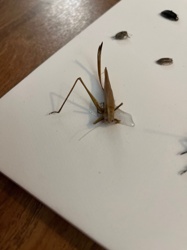
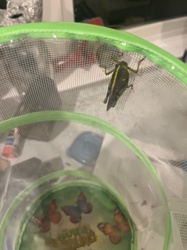
Grasshoppers (suborder Caelifera) are robust, medium-to-large insects, typically 1 to 3 inches long, best known for their enlarged, muscular hind legs adapted for powerful jumping. Their antennae are relatively short, usually no longer than the body (a key difference from crickets and katydids). The head is somewhat angular with large compound eyes and strong chewing mouthparts. Forewings are narrow and leathery, covering the more delicate, fan-like hindwings that are folded beneath at rest. Coloring is typically green, brown, gray, or yellow, often with mottled or striped patterns that provide camouflage against grass and soil; some species show brightly colored hindwings (red, yellow, or blue) that flash briefly in flight.
Where and When You'll See It
Grasshoppers favor open, sunny habitats: meadows, fields, roadsides, prairies, and gardens with tall grass or weedy growth. They are strictly day-active, basking and feeding in warm sunshine, and are most abundant and visible from mid-summer through early fall as populations build up. On cooler or overcast days they tend to stay low in vegetation and are harder to flush out, but a few steps through tall grass on a warm afternoon will usually send several leaping into view. Many species also produce a dry, buzzing or crackling sound in flight, produced by rubbing the hind legs against the wings or by snapping the wings themselves, which can help confirm an identification even before one is seen clearly.
Similar-Looking Bugs
- Crickets: Have antennae longer than the body and are active mainly at night, unlike the day-active, short-antennaed grasshopper.
- Katydids: Very long, thread-like antennae and leaf-shaped wings, usually green and found in shrubs or trees rather than open ground.
- Locusts: Technically certain grasshopper species that can form dense migratory swarms under specific conditions; visually similar to other grasshoppers but behaviorally distinct when swarming.
- Pygmy grasshoppers: Much smaller, with a pronotum that extends back over the abdomen like a saddle, unlike the typical grasshopper's shorter pronotum.
Quick ID Checklist
- Antennae shorter than or about equal to the body length
- Large, muscular hind legs for jumping
- Narrow, leathery forewings covering folded hindwings
- Green, brown, or mottled coloring for camouflage in grass
- Active by day in open, sunny fields and meadows, especially summer through fall
Frequently asked questions
What is the easiest way to tell a grasshopper from a cricket?
Check the antennae: grasshoppers have short antennae no longer than the body, while crickets have antennae much longer than their body length.
Why do some grasshoppers flash bright colors when they fly?
Certain species have brightly colored hindwings hidden beneath the plainer forewings, which become visible only during flight and can help with quick species recognition.
Are locusts a different insect from grasshoppers?
Locusts are actually specific grasshopper species that have the ability to shift into a swarming phase under crowded conditions; outside of swarming they look much like other grasshoppers.
When are grasshoppers most active?
They are active during the day, especially in warm, sunny weather, with populations typically peaking from mid-summer into early fall.
Grasshopper identified by the community
Recent Grasshopper finds identified with Bug Identifier.