Great Diving Beetle Identification Guide
A large, streamlined pond beetle built for powerful underwater swimming, with oar-like hind legs and a glossy dark shell.
Read the full Great Diving Beetle encyclopedia entry →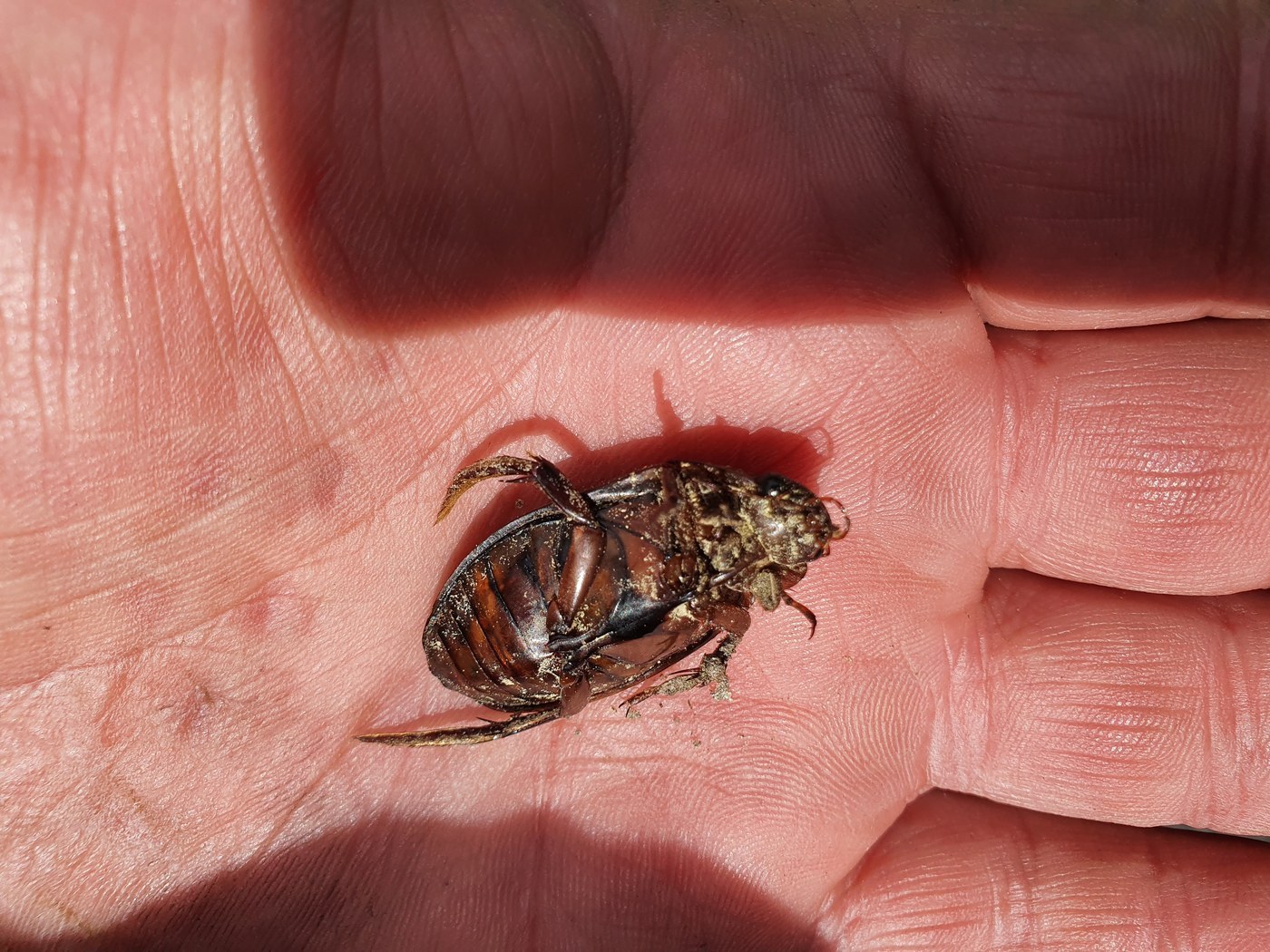
Key Visual Features
- Large, oval, streamlined body reaching roughly 1.2-1.4 inches (28-35 mm) in length
- Dark olive-brown to blackish elytra (wing covers), often with a narrow yellowish-green margin around the edge of the body
- Smooth, glossy shell in males; females of many species have ridged or grooved elytra along the front portion
- Broad, flattened hind legs fringed with long swimming hairs, held out like oars
- Short, thread-like antennae and strong biting mouthparts
- Domed, convex back that tapers to a point at the rear
- Air bubble sometimes visible tucked under the wing covers when the beetle surfaces to breathe
Where and When You'll See It
Great diving beetles inhabit ponds, lakes, ditches, and slow-moving water with plenty of submerged vegetation, where they hunt other invertebrates and small aquatic animals. They are strong swimmers and fliers, active mainly from spring through fall, and are most often seen surfacing briefly tail-first to trap an air bubble under their wing covers before diving back down. On warm nights, adults sometimes fly between water bodies and can be attracted to lights.
Similar-Looking Bugs
- Water scavenger beetle: similarly large and dark, but has a more domed, keeled underside and shorter, clubbed antennae instead of thread-like ones; it also swims with alternating leg strokes rather than the diving beetle's coordinated oar stroke.
- Predaceous diving beetle (smaller species): similar shape but noticeably smaller, often under an inch long.
- Giant water bug (toe-biter): broader and flatter overall, with prominent raptorial front legs, unlike the diving beetle's uniform oar-like hind legs.
- Whirligig beetle: much smaller, shinier, and swims in circles on the surface rather than diving and swimming underwater.
Quick ID Checklist
- Large, smooth, oval body around 1.2-1.4 inches long
- Dark olive-brown to black with a thin yellowish body margin
- Broad, hair-fringed hind legs held like oars
- Surfaces tail-first to collect an air bubble under the wing covers
- Found swimming actively in vegetated ponds and slow water
Frequently asked questions
How can I tell a great diving beetle from a water scavenger beetle?
Check the antennae and swimming style: diving beetles have long thread-like antennae and swim by kicking both hind legs together, while water scavenger beetles have short clubbed antennae and swim with an alternating leg stroke.
Why does the beetle surface tail-first?
It positions the tip of its abdomen at the water surface to trap a fresh air bubble under its wing covers, which it uses as an air supply while swimming and hunting underwater.
Are male and female great diving beetles different in appearance?
Yes, in many species males have smooth, glossy wing covers while females have grooved or ridged wing covers along the front portion of the body.
Can great diving beetles fly?
Yes, they are capable fliers and often travel between ponds at night, occasionally being drawn to artificial lighting.
Great Diving Beetle identified by the community
Recent Great Diving Beetle finds identified with Bug Identifier.