Green Darner Dragonfly Identification Guide
Identify the Green Darner Dragonfly by its bright green thorax, blue abdomen (in males), and large size among common dragonflies.
Read the full Green Darner Dragonfly encyclopedia entry →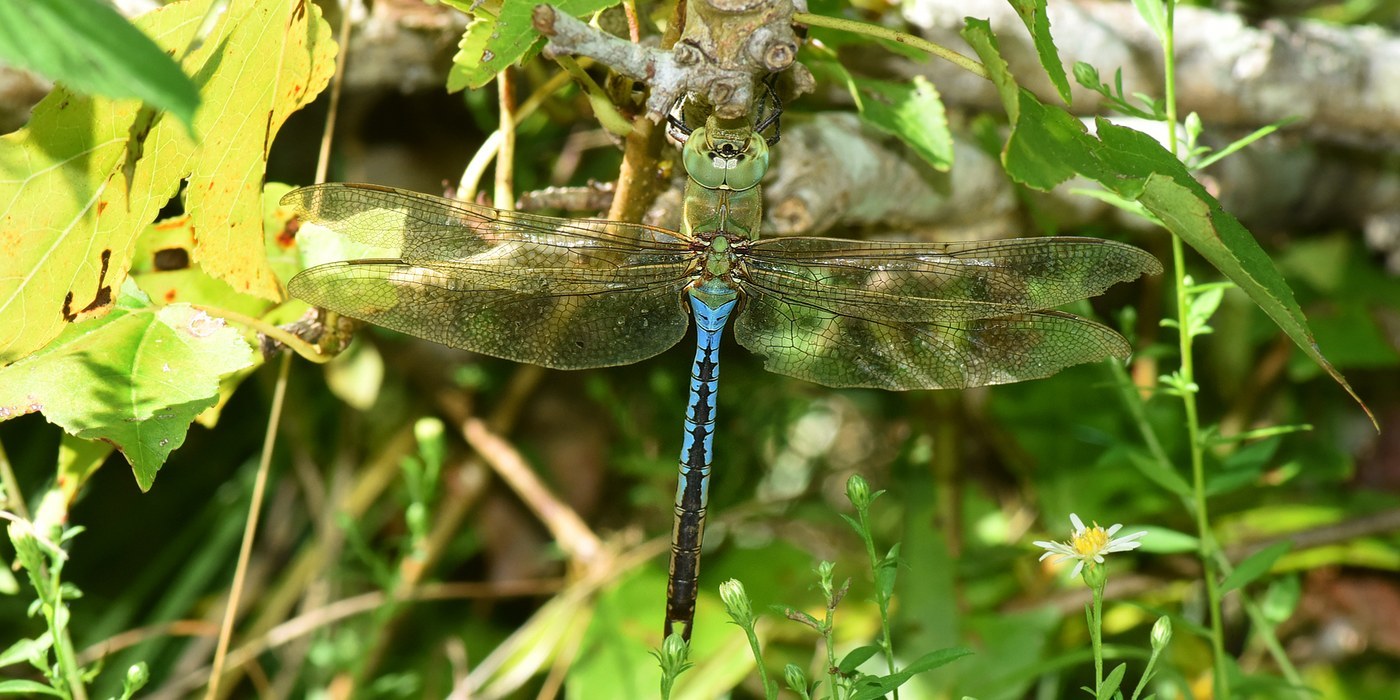
Key Visual Features
The Green Darner Dragonfly is one of the largest and most recognizable dragonflies, with a body length typically around 3 inches and a wingspan that can reach nearly 4.5 inches.
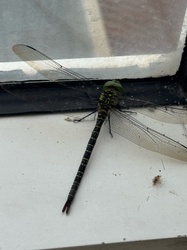
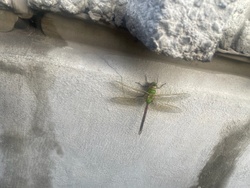
- Thorax: Bright, solid green, unmarked and distinct from the coloring of the abdomen, giving the front portion of the body a vivid green appearance.
- Abdomen: In males, typically a bright blue with a darker dorsal stripe running its length; in females and some color variants, the abdomen may appear more brownish or dull violet instead of blue.
- Head: Large and rounded, dominated by very large compound eyes that meet at the top of the head, along with a small dark "bullseye" or target-shaped marking on the face.
- Wings: Two pairs of long, clear, heavily veined wings held out flat and perpendicular to the body at rest, typical of dragonflies rather than folded like damselflies.
- Legs: Long and spined, used for catching prey in flight and for perching.
Where and When You'd See It
Green Darners are found near ponds, lakes, marshes, and slow-moving streams, often patrolling open water and adjacent fields in fast, strong, sustained flight. They are active during the day, especially in warm, sunny conditions, and are present from spring through fall in much of their range, with some populations known for long-distance migratory movements in large loose swarms during spring and fall. They are often seen flying continuously over water rather than perching for long periods, though they will rest on vegetation near the shoreline.
Similar-Looking Bugs
Green Darner Dragonflies can be confused with:
- Other darner species – Many darners share the large size and fast flight, but differ in the exact thorax and abdomen color pattern; the solid green thorax combined with a blue abdomen is distinctive to this species in males.
- Damselflies – Damselflies are more slender, fold their wings together over the body at rest, and have eyes clearly separated on the sides of the head, unlike the large, touching eyes of the darner.
- Skimmer dragonflies – Skimmers tend to be shorter-bodied with broader wing markings and typically perch more frequently rather than flying continuously.
- Other blue-abdomen dragonflies – Some species show blue coloring but lack the combination of a solid bright green thorax paired with a dark dorsal abdominal stripe.
Quick ID Checklist
- Bright green thorax contrasting with a blue (male) or brownish (female) abdomen
- Large eyes meeting at the top of the head with a bullseye facial mark
- Large size, roughly 3 inches long with a wide wingspan
- Wings held flat and outstretched at rest, not folded
- Found flying continuously over ponds, lakes, and marshes rather than perching often
Frequently asked questions
How can I tell a male from a female Green Darner?
Males typically show a bright blue abdomen with a dark stripe, while females and some color variants have a more brownish or dull violet abdomen, though both sexes share the same solid green thorax.
What is the small mark on the Green Darner's face?
It has a distinctive dark, bullseye- or target-shaped marking on the front of the face, which is a helpful feature for confirming identification.
How is a Green Darner different from a damselfly?
Dragonflies like the Green Darner hold their wings flat and outstretched at rest and have eyes that touch at the top of the head, while damselflies fold their wings together and have eyes set apart on the sides of the head.
Where and when are Green Darners most commonly seen?
They are seen near ponds, lakes, and marshes from spring through fall, often flying continuously over open water, with some populations also observed migrating in loose swarms during spring and fall.
Green Darner Dragonfly identified by the community
Recent Green Darner Dragonfly finds identified with Bug Identifier.