Green Lynx Spider Identification Guide
A bright green, spiny-legged spider often found perched motionless on flowers and shrubs waiting to ambush prey.
Read the full Green Lynx Spider encyclopedia entry →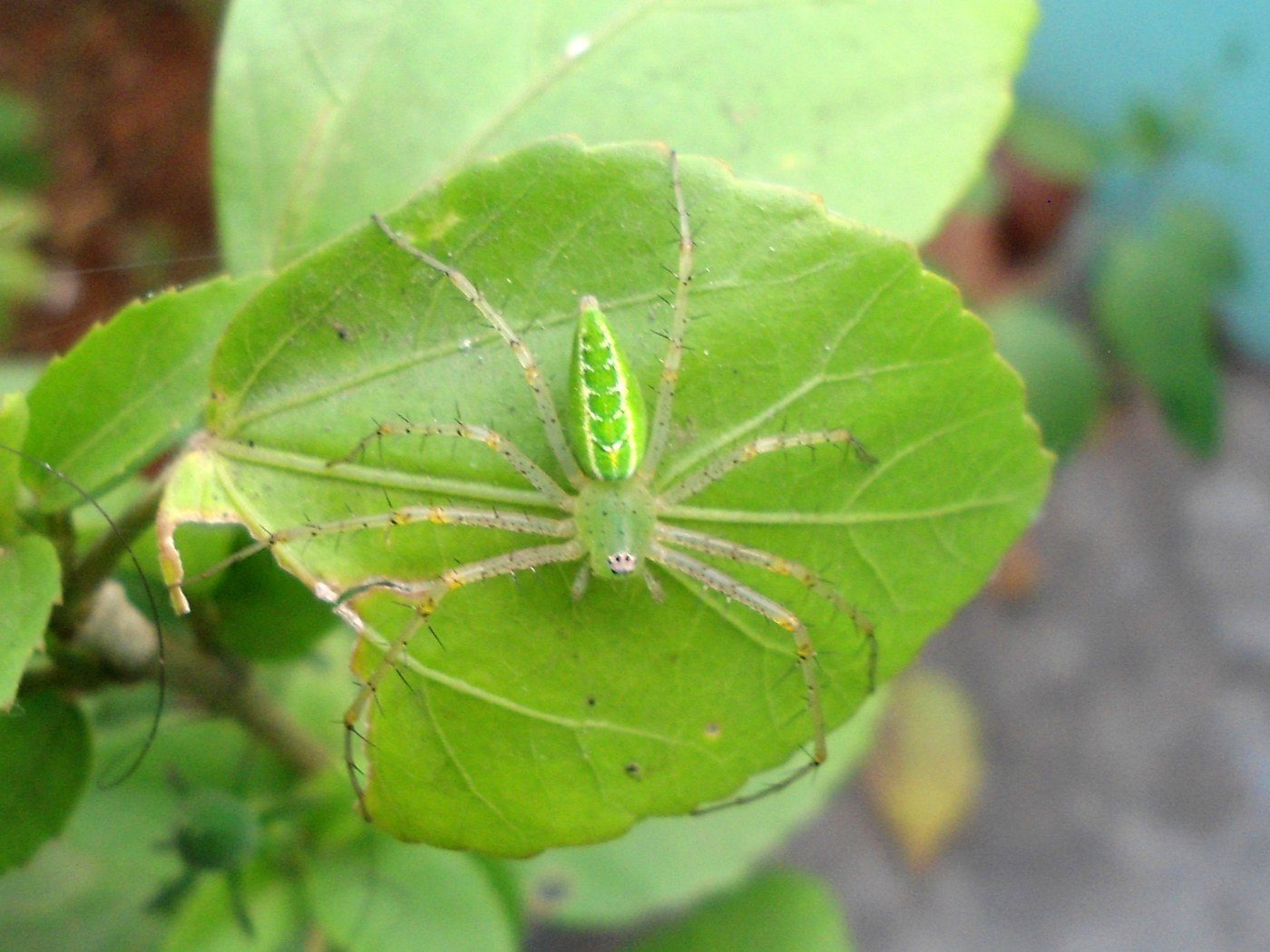
Key Visual Features
The green lynx spider (Peucetia viridans) is a striking, vividly colored spider commonly seen on garden and meadow vegetation.
- Size: Body length of about 0.5–0.9 inches (12–22 mm), with females larger than males.
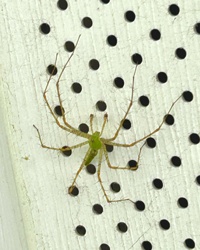
- Color: Bright translucent green body, sometimes with reddish or brownish speckling, and pale markings on the abdomen. Coloring provides camouflage among leaves and stems.
- Body shape: Elongated, somewhat angular abdomen tapering toward the rear, with a distinctly spiny appearance.
- Legs: Long, slender, and covered with prominent black spines — a hallmark feature that separates lynx spiders from most other spider families.
- Eyes: Eight eyes arranged in a hexagonal pattern on the front of the head, providing wide-angle vision for spotting prey.
- Posture: Often seen sitting motionless on top of flowers or leaf tips with legs spread wide, ready to ambush passing insects.
Where and When You'd See It
Green lynx spiders are common throughout the southern and southwestern United States, as well as Mexico and parts of Central America, inhabiting open fields, gardens, shrubs, and agricultural areas with abundant flowering plants. They do not build webs to catch prey; instead they actively hunt or ambush from a stationary position on foliage. They are most visible from late spring through fall, particularly on sunny days when flowering plants attract insect prey.
Similar-Looking Species
- Green crab spiders: Also green and found on flowers, but have a flatter, wider body and hold their front legs out sideways like a crab rather than having spiny legs.
- Orchard orb weaver: Some individuals show green coloring but have a rounder abdomen and build circular webs, unlike the web-free hunting lynx spider.
- Other lynx spider species: Similar spiny-legged body plan; distinguished mainly by subtle color and marking differences and geographic range.
- Green huntsman spiders: Similar coloring but a flatter body and legs held more to the sides, lacking the pronounced spines of the lynx spider.
Quick ID Checklist
- Bright green body with reddish or brown speckling
- Long, slender legs covered in noticeable black spines
- Angular, tapered abdomen
- Perched motionless on flowers or leaf tips rather than in a web
- Found in open, sunny gardens and fields with flowering plants
Frequently asked questions
What is the most distinctive feature of a green lynx spider?
The combination of bright green coloring and long legs covered in prominent black spines is the clearest identifying feature, setting it apart from other green garden spiders.
Does the green lynx spider spin a web to catch food?
No, it is an active ambush hunter that waits on flowers or foliage and pounces on passing insects rather than trapping them in a web.
How is it different from a green crab spider?
Green lynx spiders have spiny legs and a more angular, tapered abdomen, while crab spiders have a flatter, wider body and hold their front legs out to the sides like a crab.
Where in the garden would I most likely spot one?
Look on top of flowers, seed heads, and leafy shrub tips, especially in sunny, open areas where they wait motionless for prey.
Green Lynx Spider identified by the community
Recent Green Lynx Spider finds identified with Bug Identifier.