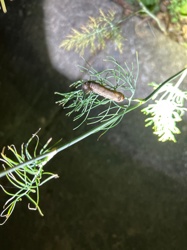
Gypsy Cutworm Moth Identification Guide
Identify this understated brown noctuid moth by its mottled forewing pattern and stout, robust build.
Read the full Gypsy Cutworm Moth encyclopedia entry →Key Visual Features
The Gypsy Cutworm Moth (Peridroma saucia, also known as the Pearly Underwing or Variegated Cutworm Moth) is a medium-sized noctuid moth with a wingspan of about 1.4 to 1.9 inches (3.5 to 4.8 cm). Look for:
- Forewings in variable shades of grayish-brown to reddish-brown, marked with a complex pattern of darker mottling, wavy cross-lines, and pale patches
- A pale, somewhat diamond- or kidney-shaped marking (the "orbicular" and "reniform" spots typical of many noctuid moths) near the center of each forewing, often outlined faintly in a lighter tone
- Hindwings that are noticeably paler, often pearly white to light gray with a faint darker border, giving rise to the alternate common name "Pearly Underwing"
- A stout, robust, moderately furry gray-brown body typical of cutworm moths
- Thread-like antennae, slightly thicker in males
- A generally mottled, bark-like camouflage pattern that helps it blend into tree trunks, fences, and leaf litter
At rest, the wings are held tent-like or flat over the body, concealing the paler hindwings and showing mainly the mottled brown forewing pattern.
Where and When You'll See It
This species has a very wide distribution, found across North America, Europe, and other temperate regions worldwide, often in open fields, gardens, meadows, and disturbed or agricultural land. It is a strong migrant in some regions, allowing it to appear well outside its usual breeding range. Adults are nocturnal and are commonly attracted to outdoor lights and light traps. They can be found from spring through autumn in temperate climates, with multiple generations possible depending on local conditions, and populations sometimes surge dramatically in certain years.
Similar-Looking Moths
- Other cutworm and dart moths (subfamily Noctuinae): Many species share a similar mottled brown forewing pattern with pale orbicular and reniform spots, making the pearly white hindwing the most useful distinguishing feature for this particular species.
- Armyworm moths: Similar general size and coloring, but typically show a more uniform tan-brown forewing with a small, distinct white dot rather than the more complex mottling of the Gypsy Cutworm Moth.
- Other Peridroma or closely related noctuids: Best separated by close comparison of the exact forewing mottling pattern and the paleness of the hindwing.
Quick ID Checklist
- Medium moth, wingspan roughly 1.4–1.9 inches
- Mottled gray-brown to reddish-brown forewings with pale central spots
- Pearly white to pale gray hindwings, a key distinguishing feature
- Stout, moderately furry body
- Common at lights in open fields and gardens from spring through autumn
Frequently asked questions
Why is this species also called the Pearly Underwing?
Its hindwings are noticeably paler than the mottled brown forewings, often pearly white to light gray, which gives rise to this alternate common name.
How can I tell this moth apart from other similar brown noctuid moths?
The pale, pearly hindwing color is one of the most useful clues, since many similarly mottled brown noctuid moths have darker or more uniformly colored hindwings.
Where is the Gypsy Cutworm Moth typically found?
It has a very wide global distribution and is commonly seen in open fields, gardens, and disturbed land across North America, Europe, and other temperate regions.
What time of year and day is this moth most active?
It is nocturnal and most active from spring through autumn in temperate climates, and it is frequently attracted to outdoor lights and light traps after dark.
Gypsy Cutworm Moth identified by the community
Recent Gypsy Cutworm Moth finds identified with Bug Identifier.