Gypsy Moth (Spongy Moth) Identification Guide
Tell apart the small flying males and larger flightless females of this widespread moth, plus their spongy egg masses.
Read the full Gypsy Moth (Spongy Moth) encyclopedia entry →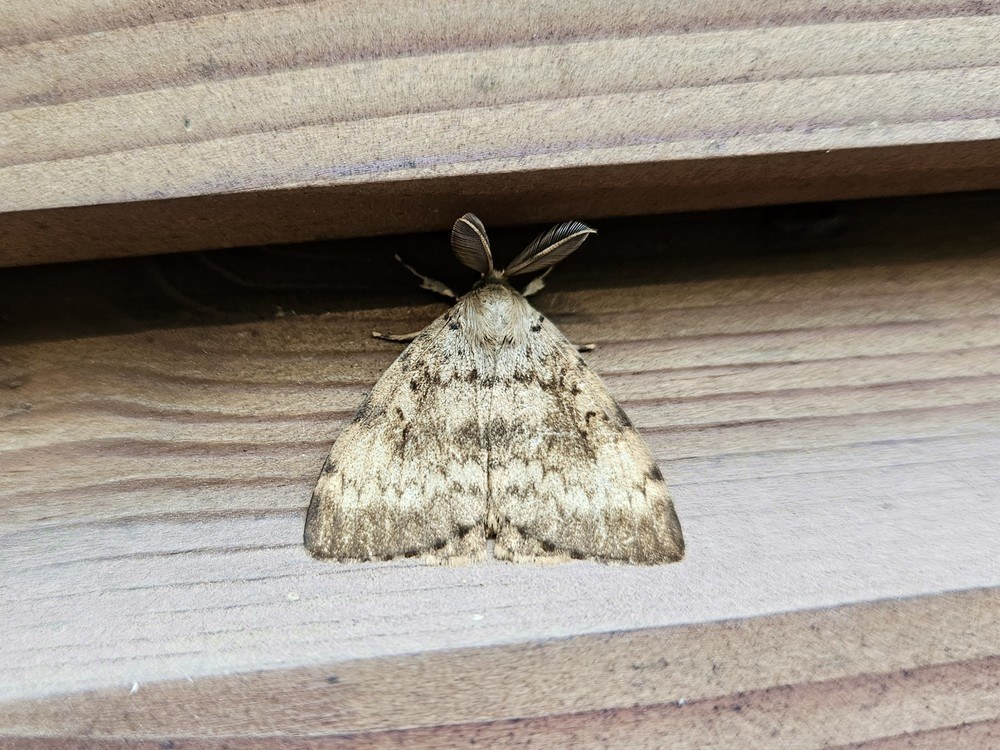
Key Features
- Strong sexual dimorphism between males and females, to the point that they are easy to mistake for two different species
- Males are smaller, with a wingspan around 3.7–4.5 cm (1.5–1.8 inches), mottled brown wings with darker wavy bands, and feathery antennae; they fly readily and are often seen darting through wooded areas during the day searching for mates
- Females are notably larger, wingspan up to 5–6.5 cm (2–2.5 inches), with off-white to cream-colored wings marked by faint dark brown zigzag lines; females are heavy-bodied and generally do not fly, instead remaining near their pupal case after emerging
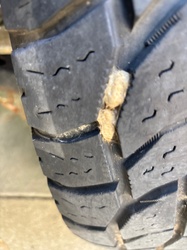
- The common name "spongy moth" (increasingly used in North America) refers to the buff or tan, sponge-textured egg masses females lay on tree bark, outdoor furniture, vehicles, and other surfaces
- Adults have reduced mouthparts and do not feed, living only for a short period focused on mating and egg-laying
Where & When to Spot One
- Found across Europe, Asia, and North America (introduced), in deciduous and mixed forests, woodland edges, and urban shade trees
- Adults emerge in mid-to-late summer, with flight/activity typically from July into August depending on region and elevation
- Males fly during the day searching for stationary, pheromone-releasing females, often seen clinging to tree trunks or fluttering erratically at head height
- Egg masses, laid in summer, remain visible on bark, rocks, and structures through fall and winter, hatching into small caterpillars the following spring
Similar Species
- Male Gypsy Moths can resemble other brown, mottled-winged moths, but the combination of feathery antennae, active daytime flight, and searching behavior around tree trunks is characteristic
- Female Gypsy Moths, being pale, heavy, and largely flightless, are distinctive when seen clinging to bark next to a sponge-textured egg mass
- Other tussock and lappet moths can show similar dimorphism, but the specific buff-colored, felt-like egg mass is a strong identifying clue unique to this species
- Nun moths, a related species in parts of Europe and Asia, look somewhat similar but have a more zigzagged black-and-white wing pattern in both sexes
Quick ID Checklist
- Males: small, mottled brown, feathery antennae, active flyers
- Females: larger, pale cream-white with faint zigzag lines, mostly flightless
- Buff/tan sponge-textured egg masses on bark or structures
- Adults seen mid-to-late summer on tree trunks
- Found in deciduous/mixed forests and urban shade trees
Frequently asked questions
Why do male and female Gypsy Moths look so different?
They show strong sexual dimorphism — males are small, mottled brown, and fly to find mates, while females are larger, pale, and generally stay put near where they emerged.
What do the egg masses look like?
Buff or tan patches with a spongy, felt-like texture, laid on tree bark or other outdoor surfaces in summer.
When can I see adult Gypsy Moths?
Mostly during mid-to-late summer, when males actively fly by day searching for females.
Why is it also called the "spongy moth"?
The name refers to the distinctive sponge-textured egg masses the females lay, a naming shift used increasingly in North America.
Gypsy Moth (Spongy Moth) identified by the community
Recent Gypsy Moth (Spongy Moth) finds identified with Bug Identifier.