Hercules Beetle Identification Guide
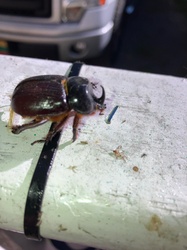
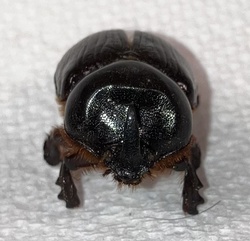
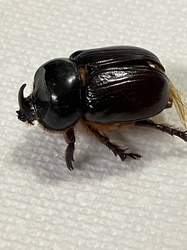
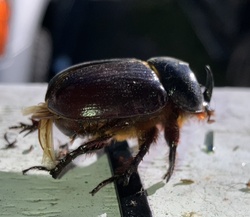
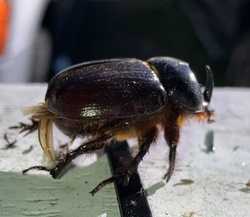
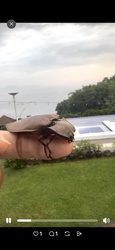
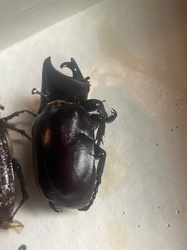
Identify the Hercules beetle by its massive size and the long, forward-curving horns on males.
Read the full Hercules Beetle encyclopedia entry →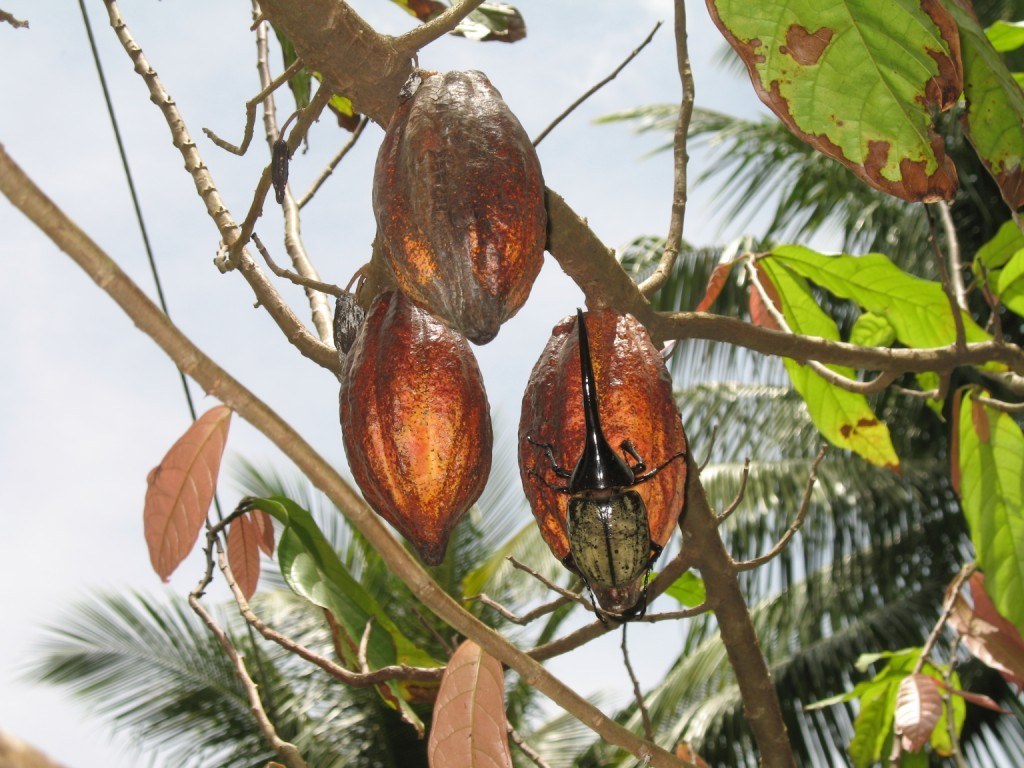
Key Visual Features
- Size: One of the largest beetles, with males reaching up to 6-7 inches long including their horns, while females are noticeably smaller and hornless.
- Horns: Males display two dramatic horns—a long upper horn curving down from the thorax and a shorter lower horn projecting from the head—used to grip and wrestle rivals.
- Body color: Often olive-green, gray, or tan wing covers (elytra) speckled with black spots, though color can shift with humidity, appearing darker when moist and lighter when dry; the underside and legs are typically black or dark brown.
- Body shape: Broad, heavily armored, and robust, with a glossy or slightly matte sheen on the elytra.
- Legs: Six thick, spiny legs built for gripping bark and branches.
- Antennae: Short, clubbed antennae typical of scarab beetles, tucked near the head.
Where and When You'd See One
Hercules beetles are found in tropical and subtropical forested regions, favoring humid rainforest environments. Adults are most active at night, when they fly to feed on rotting fruit, sap, or forest vegetation, and rest during the day in leaf litter, tree hollows, or under bark. Larvae develop in decaying wood and rich, damp soil, often taking a year or more to mature.
Similar-Looking Creatures
- Rhinoceros beetles: Also large scarabs with horns, but usually smaller overall and typically feature a single prominent horn rather than the Hercules beetle's paired pincer-like horns.
- Elephant beetles: Similarly massive and horned, but generally darker, more uniformly colored, and covered in fine hair-like bristles rather than the mottled elytra of the Hercules beetle.
- Stag beetles: Have enlarged, antler-like mandibles at the front of the head rather than horns projecting from the thorax and head.
- Other scarab beetles: Smaller in size and lacking the elongated, opposing horn structure seen in male Hercules beetles.
Quick ID Checklist
- Very large body, up to 6-7 inches in males including horns.
- Paired horns in males: a long curved upper horn and shorter lower horn that meet like pincers.
- Olive-green to gray elytra with black speckling, color-shifting with humidity.
- Females are hornless and generally smaller.
- Found in humid tropical forests, most active at night.
Frequently asked questions
How can I tell a male Hercules beetle from a female?
Males have two long, prominent horns that curve toward each other like pincers, while females lack horns entirely and have a smoother, more rounded head and thorax.
Why does the Hercules beetle's color seem to change?
The elytra of the Hercules beetle can shift in appearance based on humidity, often looking darker olive or black in moist conditions and lighter tan or gray when the air is dry.
What distinguishes a Hercules beetle from a rhinoceros beetle?
Hercules beetles are typically larger and feature two opposing horns that form a pincer-like structure, whereas many rhinoceros beetles have just one large curved horn projecting from the head or thorax.
When and where are Hercules beetles most likely to be active?
They are nocturnal and most active at night in humid tropical and subtropical forests, where they can be found on tree trunks, fallen fruit, or sap flows after dark.
Hercules Beetle identified by the community
Recent Hercules Beetle finds identified with Bug Identifier.