House Cricket Identification Guide
Identify house crickets by their light tan color, banded head markings, and tendency to seek out warm, sheltered spaces.
Read the full House Cricket encyclopedia entry →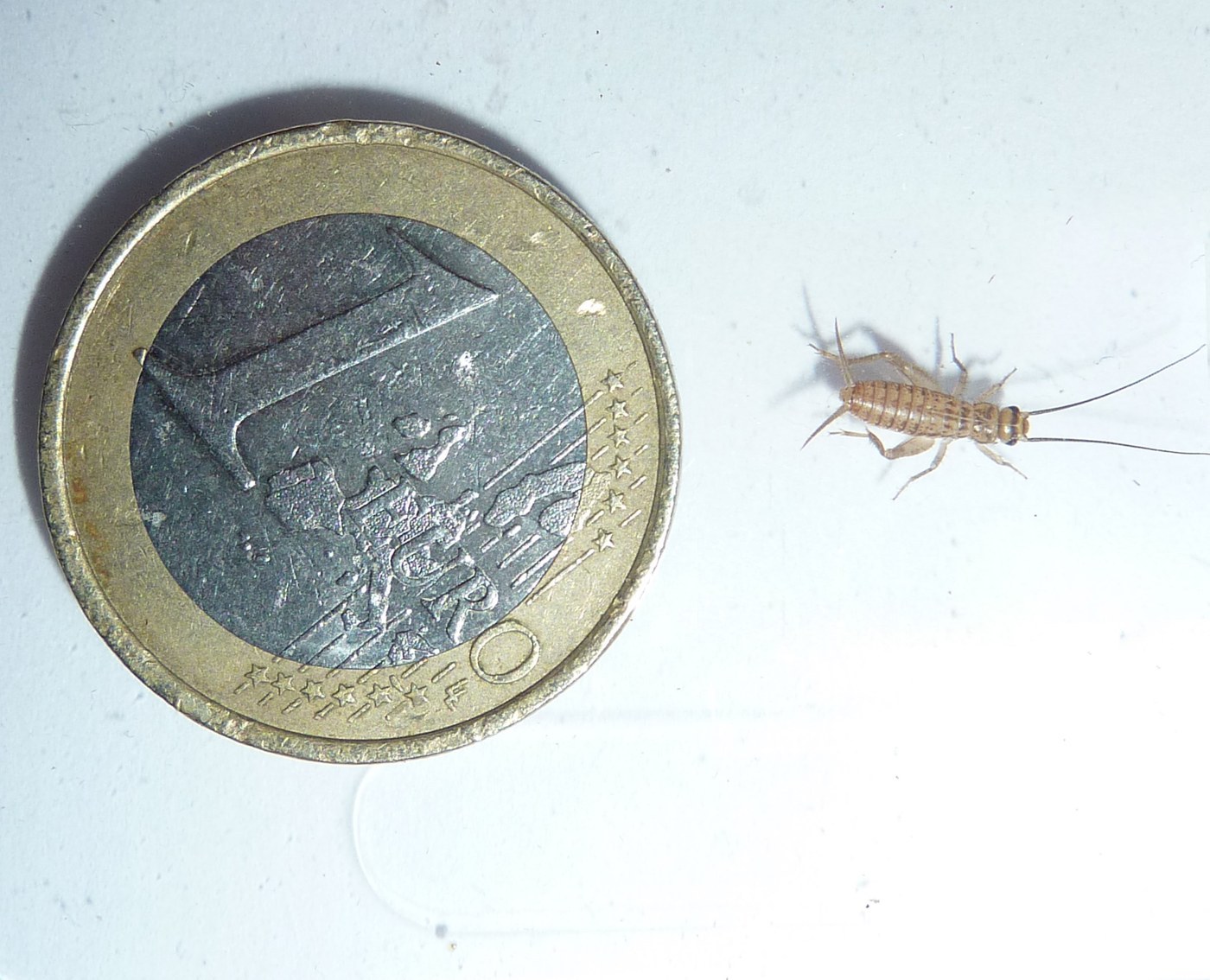
Key Visual Features
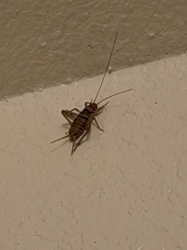
House crickets are medium-sized crickets recognized by their lighter coloring compared to their darker field cricket relatives.
- Body: Slender to moderately robust, typically 0.6 to 0.9 inches long.
- Color: Light tan, straw-colored, or yellowish-brown overall, which helps distinguish them at a glance from the darker field cricket.
- Head markings: Shows three or four dark, curved bands across the top of the head, a distinctive feature useful for identification.
- Antennae: Long and thread-like, extending well past the body length.
- Legs and wings: Strong jumping hind legs and wings folded flat over the back; males produce a chirping call by rubbing specialized structures on the forewings together, and females have a long, slender ovipositor.
Where and When You'd See Them
House crickets are found in a wide range of habitats, from grassy areas and garbage dumps to warm, sheltered spots, and are especially known for moving indoors or into sheltered structures during cooler months, seeking out warmth. Outdoors, they are active from late spring through fall, most noticeable at night when males call from hidden spots such as under debris, in cracks, or among vegetation. Their tolerance for warm, dry conditions means they are often found in areas with artificial heat sources during colder seasons.
Similar-Looking Bugs
- Field crickets: Uniformly dark brown to black, lacking the banded head pattern and light tan coloring of house crickets.
- Camel crickets: Wingless with a strongly humped back and no calling song; house crickets have visible wings and a flatter profile.
- Mole crickets: Have broad, shovel-like front legs for burrowing, unlike the standard jumping legs of house crickets.
- Katydids: Larger, with long leaf-shaped wings and typically green coloring, quite different from the compact tan house cricket.
Quick ID Checklist
- Light tan to straw-colored body, roughly three-quarters of an inch long
- Three or four dark curved bands across the top of the head
- Long, thread-like antennae
- Strong jumping hind legs and flat-folded wings
- Often found seeking warm, sheltered spots, especially as temperatures drop
Frequently asked questions
What color is a house cricket compared to a field cricket?
House crickets are light tan or straw-colored, while field crickets are much darker, typically brown to shiny black.
What markings help identify a house cricket's head?
Look for three or four dark, curved bands running across the top of the head, a pattern distinctive to this species.
Why are house crickets often found indoors or in sheltered spots?
They tend to seek out warm, sheltered environments, especially as outdoor temperatures cool, which is why they are commonly associated with structures offering artificial warmth.
How do house crickets differ from camel crickets?
House crickets have visible wings, a flatter back, and produce an audible chirping call, while camel crickets are wingless, humpbacked, and silent.
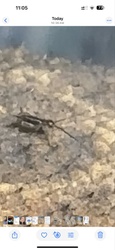
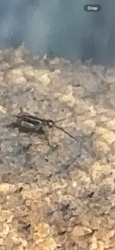
House Cricket identified by the community
Recent House Cricket finds identified with Bug Identifier.