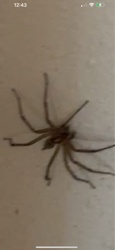
House Spider Identification Guide
Learn to identify a common house spider by its rounded abdomen, mottled brown coloring, and irregular tangle-style web.
Read the full House Spider encyclopedia entry →Key Visual Features
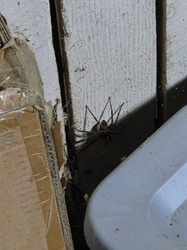
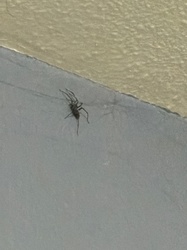
The term "house spider" most often refers to the common house spider, a small-to-medium arachnid frequently found indoors.
- Size: Body length of about 1/4 to 3/8 inch (5–10 mm) for females, with males somewhat smaller and slimmer.
- Color: Dirty yellowish-brown to gray-brown, often with darker chevron or mottled patterns on the abdomen.
- Body shape: Rounded, bulbous abdomen much larger than the smaller, more compact cephalothorax (head-and-body segment).
- Legs: Eight long, slender legs, typically banded with alternating light and dark segments.
- Eyes: Eight small eyes arranged in two rows across the front of the cephalothorax, though hard to see without magnification.
- Markings: Abdomen often shows faint dark zigzag or arrow-like patterning, especially visible on females.
Where and When You'll See Them
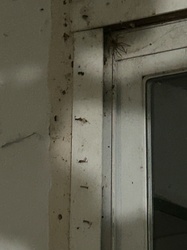
House spiders build irregular, tangled "cobwebs" in corners of rooms, basements, garages, window frames, and other undisturbed indoor or sheltered outdoor spaces. They favor dim, quiet areas near ceilings, wall junctions, and clutter. These spiders can be found indoors year-round since indoor temperatures stay stable, though sightings often increase in fall as populations grow and spiders become more mobile.
Similar-Looking Spiders
- Cellar spiders (daddy longlegs spiders): Have much longer, thinner legs and a smaller, more elongated abdomen, and tend to hang upside down in loose webs.
- Wolf spiders: Larger, hairier, with a flatter body and no web — they hunt actively on the ground rather than sitting in a tangled web.
- Jumping spiders: Compact, short-legged, and often boldly patterned with large front eyes, moving in quick hops rather than building webs.
- Widow spiders: Have a smoother, glossier black or dark abdomen, often with a distinct hourglass-shaped marking underneath, unlike the mottled brown of a house spider.
Quick ID Checklist
- Rounded, bulbous brown-to-gray abdomen with mottled patterning
- Banded legs, long and slender
- Builds messy, irregular "cobweb" style webs in corners
- Found in quiet indoor spaces: basements, garages, window corners
- Sits inverted near the center of its web waiting for prey
Frequently asked questions
How do I tell a house spider from a cellar spider?
House spiders have a rounder, more compact body with banded legs, while cellar spiders have extremely long, thin legs and a smaller, more elongated abdomen, and often hang upside down in their webs.
What kind of web does a house spider build?
House spiders spin irregular, tangled webs, sometimes called cobwebs, usually tucked into corners, ceiling junctions, or cluttered areas rather than the neat spiral webs of orb-weavers.
Are all brown spiders indoors house spiders?
Not necessarily. Several spider species share a brown, mottled look, so checking the web style, body shape, and leg banding together gives a more reliable identification than color alone.
Why do I see more house spiders in fall?
Populations that have grown over the warmer months become more visible in autumn as spiders move around more, which is a normal seasonal pattern rather than a sign of anything unusual.
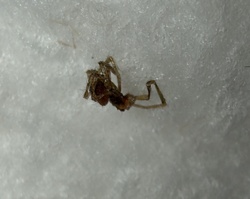
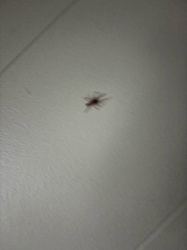
House Spider identified by the community
Recent House Spider finds identified with Bug Identifier.