Julia Butterfly Identification Guide
Distinguish this vivid orange, long-winged butterfly from similar species by its clean color and fast flight.
Read the full Julia Butterfly encyclopedia entry →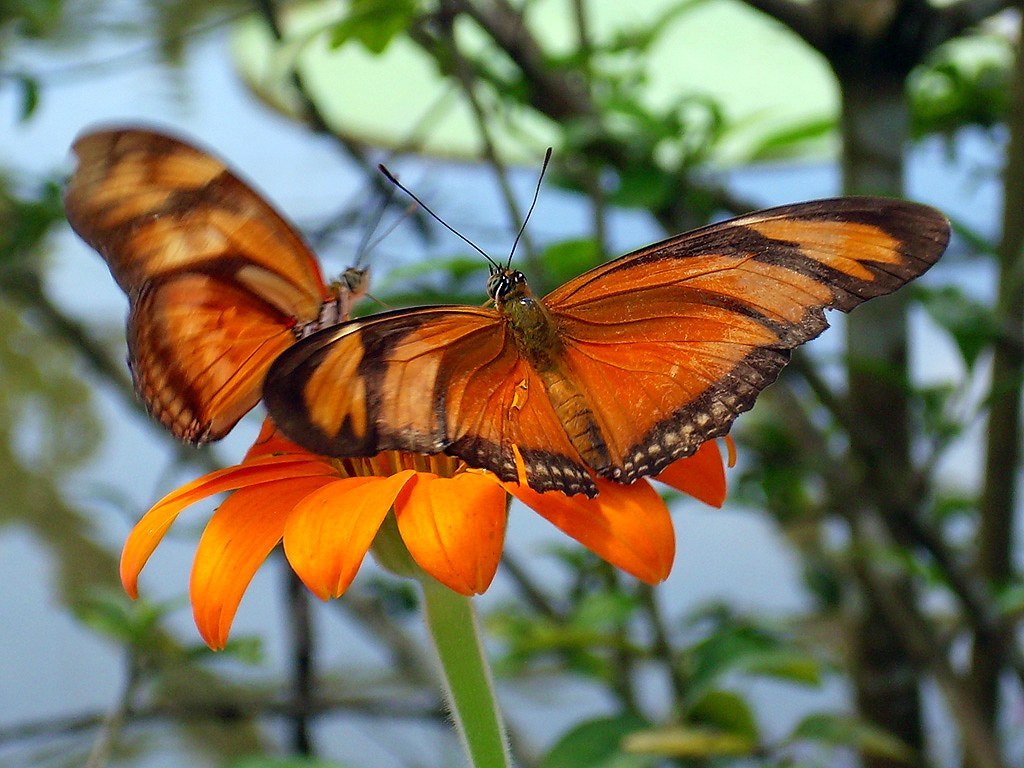
Key Visual Features
The Julia Butterfly (Dryas iulia) is known for its long, narrow wings and vivid orange coloring.
- Color: Males are bright, vivid orange, while females are typically a duller orange-brown.
- Pattern: Thin black lines trace along the wing veins and margins, but the wings are otherwise largely unmarked, lacking large spots or eyespots.
- Wing shape: Elongated, narrow forewings and hindwings give the butterfly a streamlined look.
- Body: Slender orange-brown body with fine dark markings.
- Size: Wingspan of roughly 3 to 3.5 inches.
- Underside: The ventral wing surface is a paler orange-tan, generally plainer than the upper side.
Where and When You'll See It
Julia Butterflies are found in tropical hammocks, gardens, and open sunny areas, primarily in Florida, southern Texas, and other warm regions, with occasional strays farther north during summer months. They favor habitats where passionflower vines grow, since these serve as the larval host plant. Adults are active during the day and are known for fast, direct flight in sunny, open spaces, frequently visiting flowers for nectar.
Similar-Looking Species
- Gulf Fritillary: Has bold black spots on the dorsal wings and striking silver-spangled spots on the ventral surface, distinguishing it from the mostly unmarked Julia.
- Monarch: Larger, with a network of black veins across the wings, white-spotted black borders, and a more deliberate gliding flight, quite different from Julia's plain orange color and rapid flight.
- Viceroy: Shows a horizontal black line crossing the hindwing veins, a feature absent in the Julia Butterfly.
- Zebra Longwing: Similar elongated wing shape but boldly striped black and yellow rather than solid orange.
Quick ID Checklist
- Long, narrow wings in vivid orange (male) or duller orange-brown (female)
- Thin black veining with few or no large spots
- Fast, direct flight in sunny open habitat
- Found near passionflower vines in warm southern regions
Frequently asked questions
How can I tell a Julia Butterfly from a Gulf Fritillary?
The Julia is mostly plain orange with thin black veining and few spots, while the Gulf Fritillary has bold black spots on top and distinctive silver-spangled markings underneath.
Do male and female Julia Butterflies look different?
Yes, males are typically a brighter, more vivid orange, while females tend to appear duller and more orange-brown.
Where are Julia Butterflies most often seen?
They are most common in Florida, southern Texas, and other warm regions with passionflower vines, occasionally straying farther north in summer.
What kind of flight pattern does the Julia Butterfly have?
It tends to fly fast and directly through sunny, open areas, unlike the more leisurely gliding flight of butterflies like the Monarch.
Julia Butterfly identified by the community
Recent Julia Butterfly finds identified with Bug Identifier.