Leafcutter Bee Identification Guide
Identify a leafcutter bee by its stocky build, belly-brush of pollen hairs, and the neat semicircular notches it leaves in leaves.
Read the full Leafcutter Bee encyclopedia entry →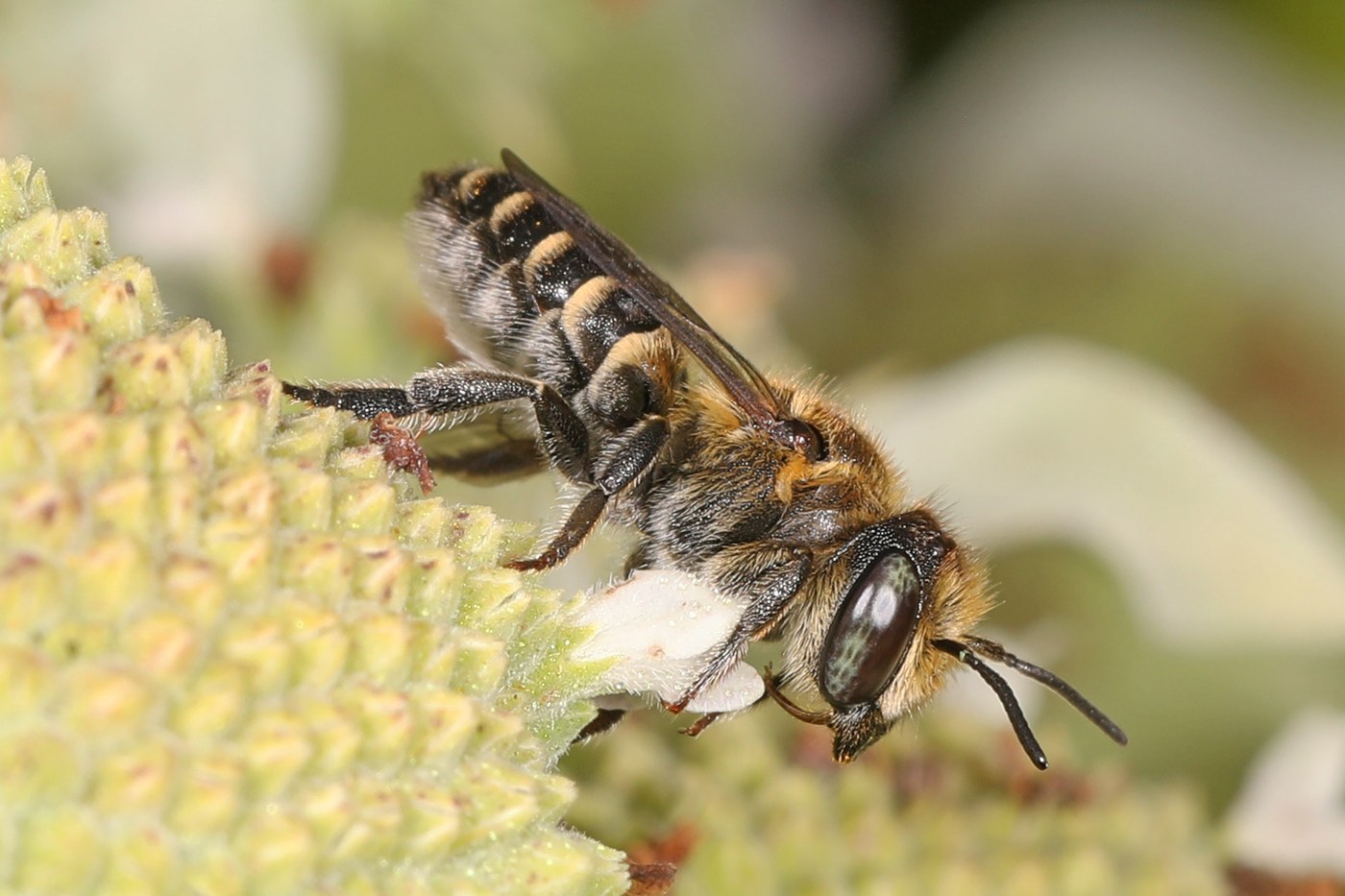
Key Visual Features
Leafcutter bees are solitary bees recognized as much by the evidence they leave behind as by their appearance.
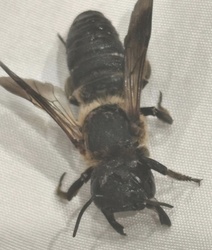
- Size: Medium, around 0.4-0.6 inch (10-15 mm), with a broad, stocky body.
- Body shape: Thick-set body with a large head and strong jaws (mandibles) used for cutting leaf material.
- Coloring: Usually dark brown to black, sometimes with pale banding across the abdomen; not metallic like mason bees.
- Wings: Clear to smoky-tinted, folded flat over the back at rest.
- Legs and antennae: Females have a dense brush of hairs on the underside of the abdomen for carrying pollen; antennae are short and elbowed.
Where and When You'll See It
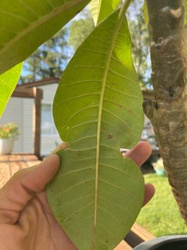
Leafcutter bees are active from late spring through summer in gardens, meadows, and woodland edges wherever soft-leaved plants like roses, redbud, or lilac grow nearby. Females use existing cavities — hollow stems, old beetle tunnels, or bee hotel tubes — rather than excavating their own, and they line and seal each brood cell with circular or oval pieces cut cleanly from leaves. The telltale sign of this bee's presence is not the insect itself but the leaves it leaves behind: neat, smooth-edged semicircular notches cut from the margins of leaves, quite different from the ragged damage caused by chewing caterpillars. Adults are usually seen flying rapidly between flowers or carrying a rolled leaf fragment back to a nest cavity.
Similar-Looking Bugs
- Mason bee: Similar size and belly-pollen habit, but mason bees seal their nest cells with mud rather than leaf pieces and often show a metallic sheen.
- Honey bee: Slimmer body, golden-brown striping, carries pollen in leg baskets rather than on the belly.
- Bumble bee: Much fuzzier overall and noticeably larger, without the flat, cut-leaf pollen brush.
Quick ID Checklist
- Stocky, dark bee with a pollen brush on the underside of the abdomen
- No metallic sheen (distinguishes it from mason bees)
- Seen carrying a curled leaf fragment in flight
- Nearby leaves show smooth, semicircular notches cut from the edges
- Nests in existing cavities, sealed with layered leaf pieces
Frequently asked questions
How can I identify a leafcutter bee without seeing it up close?
Look for the evidence: smooth, semicircular notches neatly cut from leaf edges are a strong sign leafcutter bees are active in the area.
How is a leafcutter bee different from a mason bee?
Leafcutter bees seal their nest cells with cut leaf pieces and lack a metallic sheen, while mason bees use mud plugs and often have a shiny blue-green body.
Does cutting leaves harm the plant?
The notches are cosmetic and limited to small leaf-edge pieces used for nest building, not chewed feeding damage across the whole leaf.
Where do leafcutter bees carry their pollen?
Females carry pollen in a dense brush of hairs on the underside of the abdomen rather than in leg pollen baskets like honey bees.
Leafcutter Bee identified by the community
Recent Leafcutter Bee finds identified with Bug Identifier.