Lime Hawk-Moth Identification Guide
Identify this variable pink-green sphinx moth by its scalloped wing edges and angular resting posture.
Read the full Lime Hawk-Moth encyclopedia entry →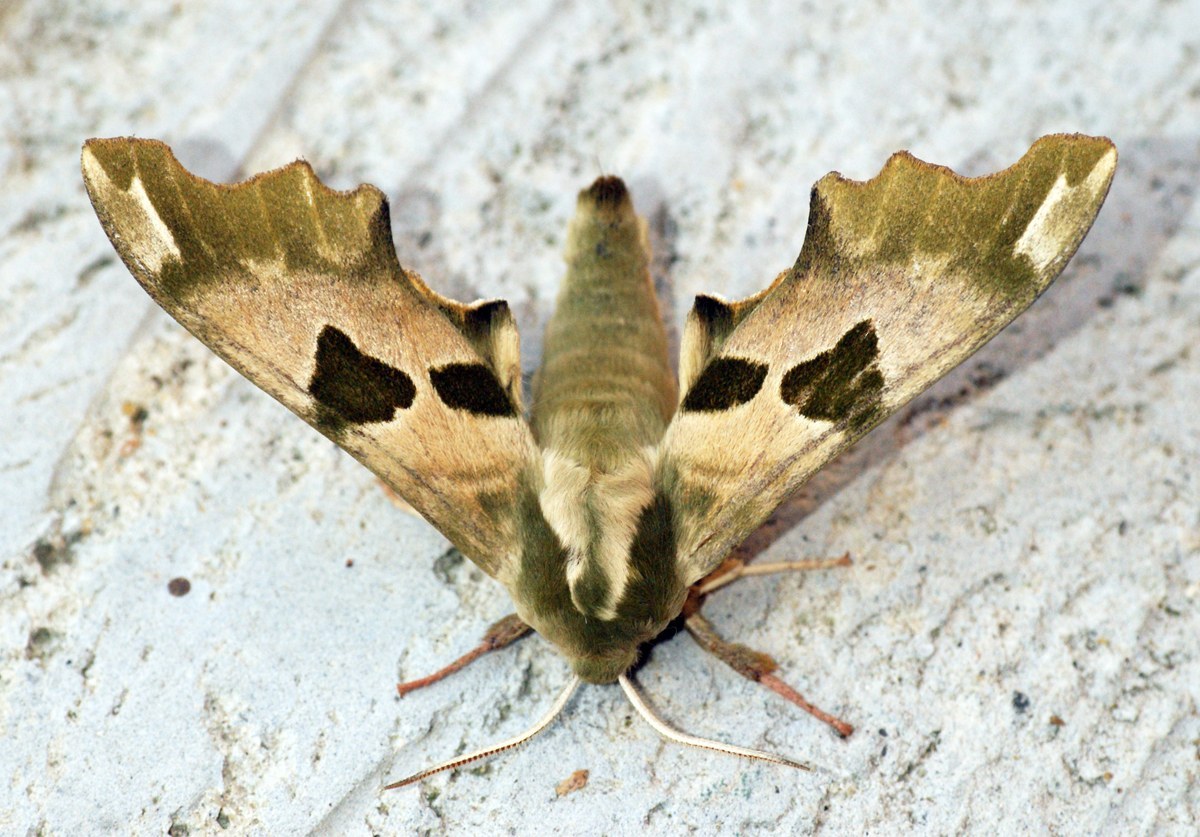
Key Visual Features
The Lime Hawk-Moth (Mimas tiliae) is a medium to large European hawk-moth with a wingspan of about 2.4 to 3.1 inches (6 to 8 cm). Its appearance is notably variable, but common features include:
- Forewings in shades ranging from olive-green to pinkish-brown or rusty tan, often marked with one or two darker green or brown irregular patches or bands
- Distinctly scalloped or notched (wavy) outer wing margins, giving the wings a jagged rather than smooth edge
- A stocky, tapering body with color that generally matches the forewings
- Hindwings that are typically a duller brownish or dusky rose shade, mostly concealed at rest
- Short, thickened antennae typical of hawk-moths
- A resting posture with wings held in a sharp, angular, tent-like shape rather than flat, and the moth often perches with wings swept forward, giving an alert, "peaked-roof" silhouette
Where and When You'll See It
Lime Hawk-Moths are widespread across Europe and into parts of temperate Asia, inhabiting parks, gardens, hedgerows, woodland edges, and urban streets — anywhere lime (linden), elm, or birch trees grow, since these serve as caterpillar host plants. Adults fly at night during a single generation in late spring to early summer, typically May and June. They do not feed as adults and are most often encountered resting motionless on tree trunks, walls, or fences during the day, relying on their mottled coloring and jagged wing outline to blend in with bark and dead leaves.
Similar-Looking Moths
- Poplar Hawk-Moth: Larger and grayer overall, with smooth (not scalloped) wing edges and a habit of showing a reddish patch at the base of the hindwing when disturbed.
- Eyed Hawk-Moth: Also grayish-brown but reveals bold blue-black eyespots on the hindwings when threatened, which the Lime Hawk-Moth lacks.
- Privet Hawk-Moth: Considerably larger with a pink-and-black striped abdomen, easily distinguished by size and abdominal banding alone.
Quick ID Checklist
- Wingspan around 2.4–3.1 inches, olive-green to pinkish-tan forewings
- Distinctly scalloped, jagged outer wing margins
- One or two darker irregular patches on the forewing
- Angular, peaked resting posture with wings swept forward
- Found resting on bark or walls near lime, elm, or birch trees in late spring/early summer
Frequently asked questions
What is the easiest feature to spot a Lime Hawk-Moth by?
Its wavy, scalloped outer wing edge is one of the most reliable clues, since most similar hawk-moths have smooth wing margins.
Why do Lime Hawk-Moths look so different from one another?
The species shows considerable natural variation in forewing color, ranging from olive-green to pinkish-tan or rusty brown, so individuals from the same population can look quite different while sharing the same scalloped wing shape.
Where is the best place to look for a resting Lime Hawk-Moth during the day?
Check tree trunks, fences, and walls near lime, elm, or birch trees, where the moth's mottled coloring and jagged outline help it blend into bark.
How do I tell a Lime Hawk-Moth from a Poplar Hawk-Moth?
Look at the wing edges and size: the Lime Hawk-Moth has scalloped wing margins and is somewhat smaller, while the Poplar Hawk-Moth is larger, grayer, and has smooth wing edges.
Lime Hawk-Moth identified by the community
Recent Lime Hawk-Moth finds identified with Bug Identifier.