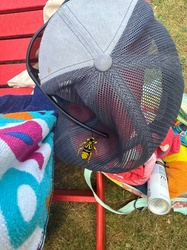
Locust Borer Identification Guide
Identify the wasp-mimicking locust borer by its black-and-yellow zigzag bands and its late-season visits to goldenrod.
Read the full Locust Borer encyclopedia entry →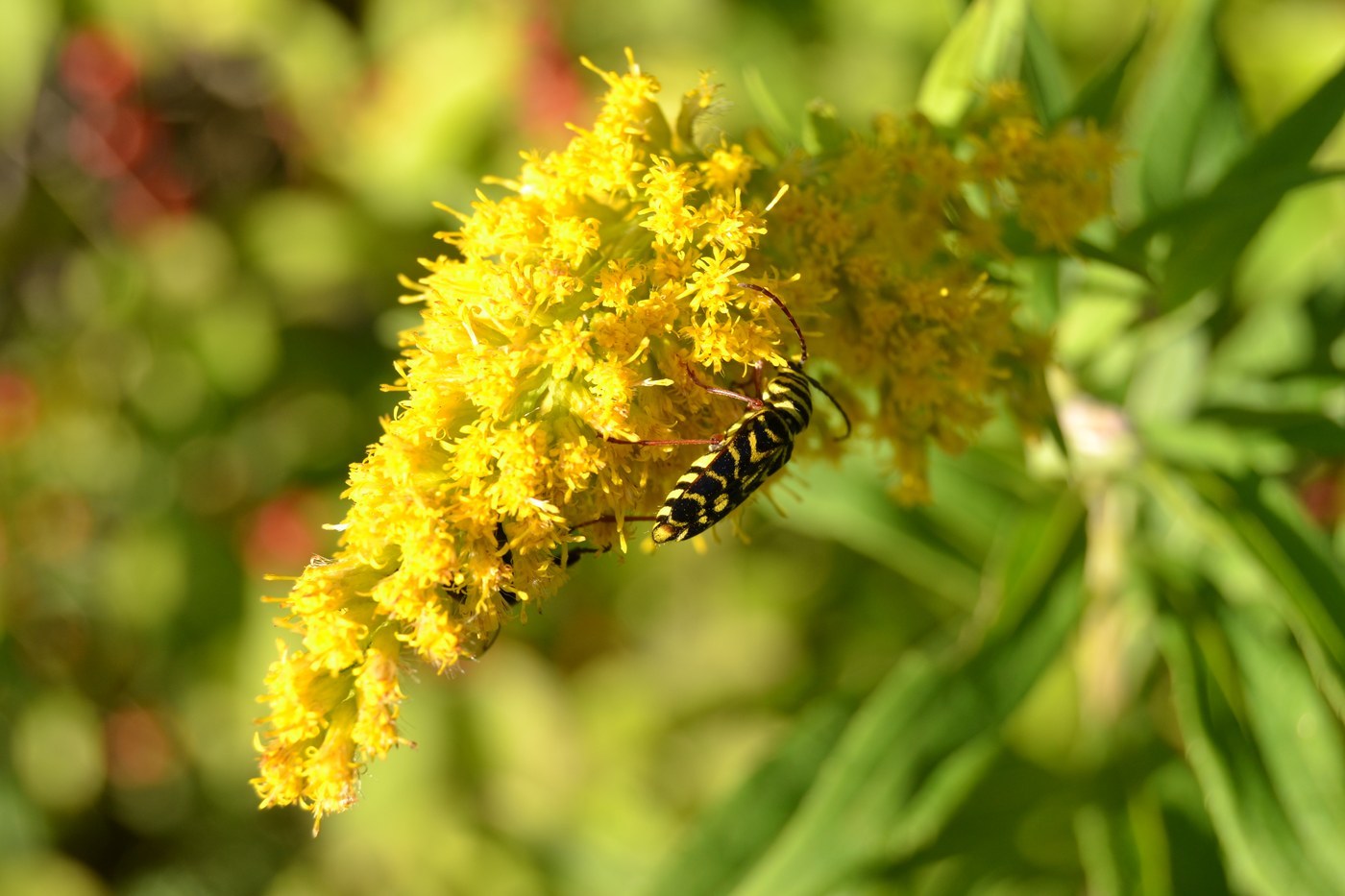
Key Visual Features
The locust borer (Megacyllene robiniae) is a longhorn beetle around 1/2 to 3/4 inch long with a striking black body crossed by bright yellow markings, including a characteristic W-shaped or zigzag band pattern across the wing covers along with additional yellow bands near the head and thorax. The legs are reddish-orange, and the long, banded antennae complete a look that closely mimics a wasp, both in color and in its quick, darting movements. The body is narrow and elongated like other longhorn beetles, tapering slightly toward the rear.
Where and When You'll See Them
Locust borers are closely tied to black locust trees, where larvae bore into the trunk and branches. Adults, however, are most conspicuous away from the tree: they're commonly seen visiting goldenrod flowers to feed on pollen in late summer and early fall, roughly August through October, which is also their peak mating and egg-laying period. Their wasp-like appearance and flower-visiting habit often lead to them being mistaken for stinging insects at a glance, though the resemblance is purely visual mimicry. Adults are typically found in open fields, roadsides, and woodland edges wherever both black locust trees and blooming goldenrod are present nearby, since females need to return to the trees to lay eggs after feeding.
Similar-Looking Bugs
- Painted hickory borer — has a very similar black-and-yellow banded pattern but appears in spring rather than fall and is associated with hickory rather than locust trees.
- Various wasps — the locust borer's coloring and quick movements mimic wasps, but it has chewing mouthparts, long beetle antennae, and hardened wing covers rather than a wasp's narrow waist and membranous wings.
- Other longhorn beetles — none combine the same yellow zigzag wing pattern with reddish-orange legs and a fall goldenrod-visiting habit.
Quick ID Checklist
- Black body with bright yellow zigzag/W-shaped bands, 1/2 to 3/4 inch
- Reddish-orange legs
- Long, banded antennae
- Seen on goldenrod flowers in late summer to early fall
- Associated with black locust trees
Frequently asked questions
How can I tell a locust borer from a wasp?
Despite its wasp-like coloring and movement, the locust borer has hardened beetle wing covers, chewing mouthparts, and long antennae typical of longhorn beetles, rather than a wasp's narrow waist and membranous wings.
When is the best time to spot a locust borer?
Adults are most visible in late summer through early fall, roughly August through October, especially while visiting goldenrod flowers.
What tree is associated with the locust borer?
It's closely tied to black locust trees, where the larvae develop inside the trunk and branches.
How is the locust borer different from the painted hickory borer?
Both share a similar black-and-yellow banded pattern, but the painted hickory borer appears in spring and is associated with hickory, while the locust borer appears in fall and is tied to black locust.
Locust Borer identified by the community
Recent Locust Borer finds identified with Bug Identifier.