Luna Moth Caterpillar Identification Guide
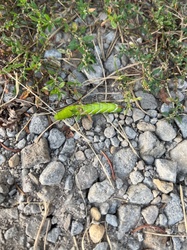
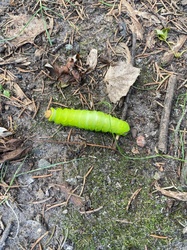
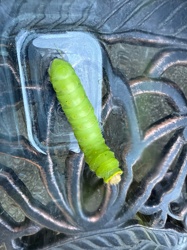
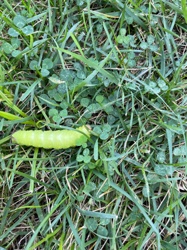
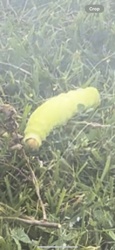
A large, pale green caterpillar with rows of tiny yellow dots and small reddish spots, found on hardwood tree leaves.
Read the full Luna Moth Caterpillar encyclopedia entry →
Key Visual Features
The luna moth caterpillar grows into one of the larger native caterpillars in its range, reaching up to 3.5 inches long at maturity.
- Color: Pale, almost translucent lime green, often with a slightly waxy or satin sheen
- Markings: Rows of small yellow or pale dots run along the sides of each segment
- Tubercles: Short, low tubercles (small raised bumps) tipped with a few fine, sparse hairs — not the dense spine clusters seen in some other moth caterpillars
- Spiracle spots: Small reddish-orange spots mark the spiracles (breathing pores) along the lower sides of the body
- Body shape: Long, thick, and smooth-looking despite the fine hairs and small bumps
Where and When You'll See It
Luna moth caterpillars feed on the leaves of hardwood trees such as walnut, hickory, sweetgum, birch, and persimmon. They are most often found from summer into early fall, resting along a leaf midrib or twig during the day where their green color blends into the foliage. Because luna moths have only one or two generations per year depending on region, caterpillar sightings tend to cluster in specific windows during the warmer months rather than being spread evenly across the whole season.
Similar-Looking Bugs
- Polyphemus moth caterpillar: Similarly green and large, but has more noticeable silver or reflective spots and small red tubercles with short bristles
- Cecropia moth caterpillar: Green with rows of larger, colorful knob-like tubercles (blue, yellow, red) that are far more prominent than luna's small dots and bumps
- Io moth caterpillar: Bright green but densely covered in branching spiny clusters and a bold maroon side stripe, unlike luna's smooth, sparsely dotted look
Quick ID Checklist
- Large, pale green caterpillar up to 3.5 inches long
- Rows of small yellow dots along the sides
- Small reddish spots near the breathing pores
- Sparse, low bumps rather than dense spines
- Found on walnut, hickory, sweetgum, or birch leaves in summer
Frequently asked questions
What makes the luna moth caterpillar different from other green caterpillars?
It has a distinctive combination of small yellow dots along its sides, tiny reddish spots near the breathing pores, and only sparse, low bumps rather than dense spines or large colorful tubercles.
What trees do luna moth caterpillars feed on?
They favor hardwood trees such as walnut, hickory, sweetgum, birch, and persimmon.
How can I tell a luna moth caterpillar from a polyphemus moth caterpillar?
Polyphemus caterpillars tend to show more noticeable silvery, reflective spots and small red tubercles with bristles, while luna caterpillars have a smoother look with fine yellow dots and minimal bumps.
When is the best time to look for luna moth caterpillars?
They are most commonly seen from summer into early fall, resting on host tree leaves or twigs during the day.
Luna Moth Caterpillar identified by the community
Recent Luna Moth Caterpillar finds identified with Bug Identifier.