Luna Moth Identification Guide
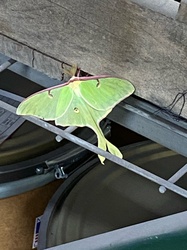
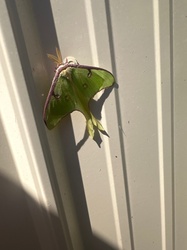
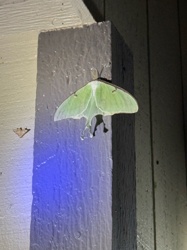
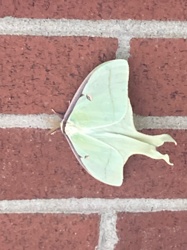
A large pale-green silk moth with long trailing hindwing tails and distinctive eyespots on each wing.
Read the full Luna Moth encyclopedia entry →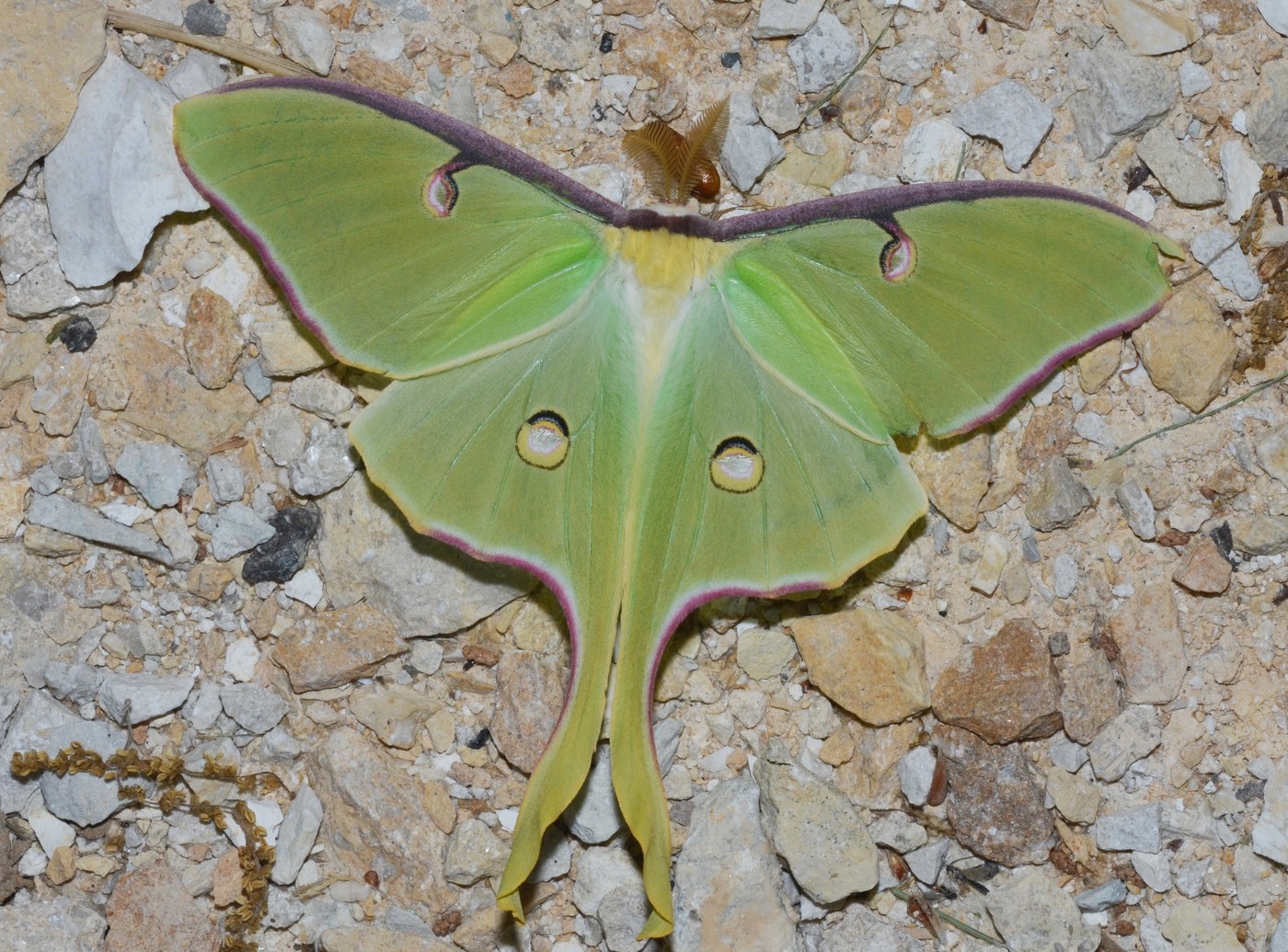
Key Visual Features
- Large moth with a wingspan of roughly 3 to 4.5 inches (7.5-11.5 cm), among the biggest moths in its range.
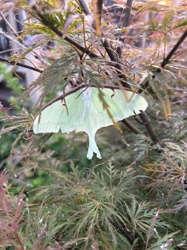
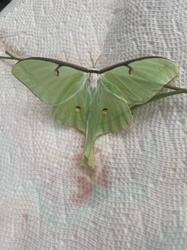
- Wings are a soft, pale lime-green to mint-green color, sometimes fading toward a pale yellow-green with age.
- Each wing bears a small, translucent eyespot outlined in thin dark and reddish-brown lines.
- The hindwings extend into long, graceful, curving tails, often 1.5 inches or more, that are one of its most recognizable traits.
- The front edge of the forewing has a reddish-brown to purplish stripe.
- Body is stout, plush-looking, and covered in white to pale-green fuzzy hair; feathery, comb-like antennae are especially broad and prominent on males.
- Legs are short and fuzzy, mostly hidden by the body hair.
Where and When You'd See It
- Found in deciduous woodlands, especially areas with birch, hickory, walnut, sweetgum, or persimmon trees, which serve as caterpillar host plants.
- Adults are nocturnal and are most often seen at porch lights, windows, or under outdoor lighting during warm months, typically spring through late summer depending on region.
- Adults live only about a week and do not feed, so sightings are often brief and seasonal, tied to one or more broods per year.
- Rarely seen during the day, as they rest motionless on tree trunks or foliage with wings held flat, relying on their pale color to blend in.
Similar-Looking Bugs
- Polyphemus and other silk moths are similarly large and furry-bodied but lack the long trailing tails and are typically brown or tan rather than green.
- Io moths are smaller, more yellow, and have bold black-and-blue eyespots rather than the luna's subtle, thin-rimmed spots.
- Cecropia moths are larger overall with reddish-brown wings and white banding, quite different in color from the pale green luna.
- Green lacewings are sometimes mistaken for luna moths at a glance, but lacewings are far smaller, delicate, and lack tails or eyespots.
Quick ID Checklist
- Pale mint-green wings with long, curved hindwing tails.
- Small, thin-rimmed eyespot on each of the four wings.
- Reddish-purple stripe along the leading edge of the forewing.
- Large, feathery antennae, especially bushy on males.
- Seen resting near lights at night in wooded or suburban areas during warm months.
Frequently asked questions
What makes a luna moth easy to tell apart from other big moths?
Its pale mint-green color combined with the long, curving tails on the hindwings is unique among large moths in its range and is the fastest way to confirm identification.
Why do I only see luna moths at night?
Adults are nocturnal, resting motionless during the day and becoming active after dark, which is why most sightings happen near porch lights or windows at night.
Are the eyespots on a luna moth's wings solid or see-through?
They are typically translucent, thin-rimmed spots rather than bold solid circles, which helps distinguish the luna from moths like the io that have thick, dark eyespots.
Do luna moths look the same throughout their adult life?
Their green color can fade toward pale yellow-green as the moth ages over its short adult lifespan, but the tails and eyespot pattern remain visible.
Luna Moth identified by the community
Recent Luna Moth finds identified with Bug Identifier.