Marbled Orbweaver Identification Guide
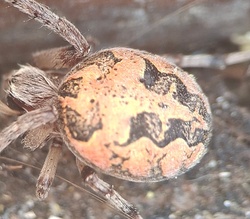
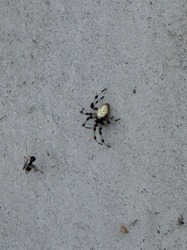
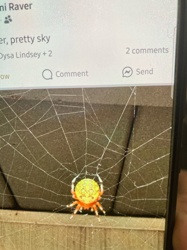
A plump, brightly mottled orb weaver with an orange-and-purple marbled abdomen, often seen hiding at the edge of its web.
Read the full Marbled Orbweaver encyclopedia entry →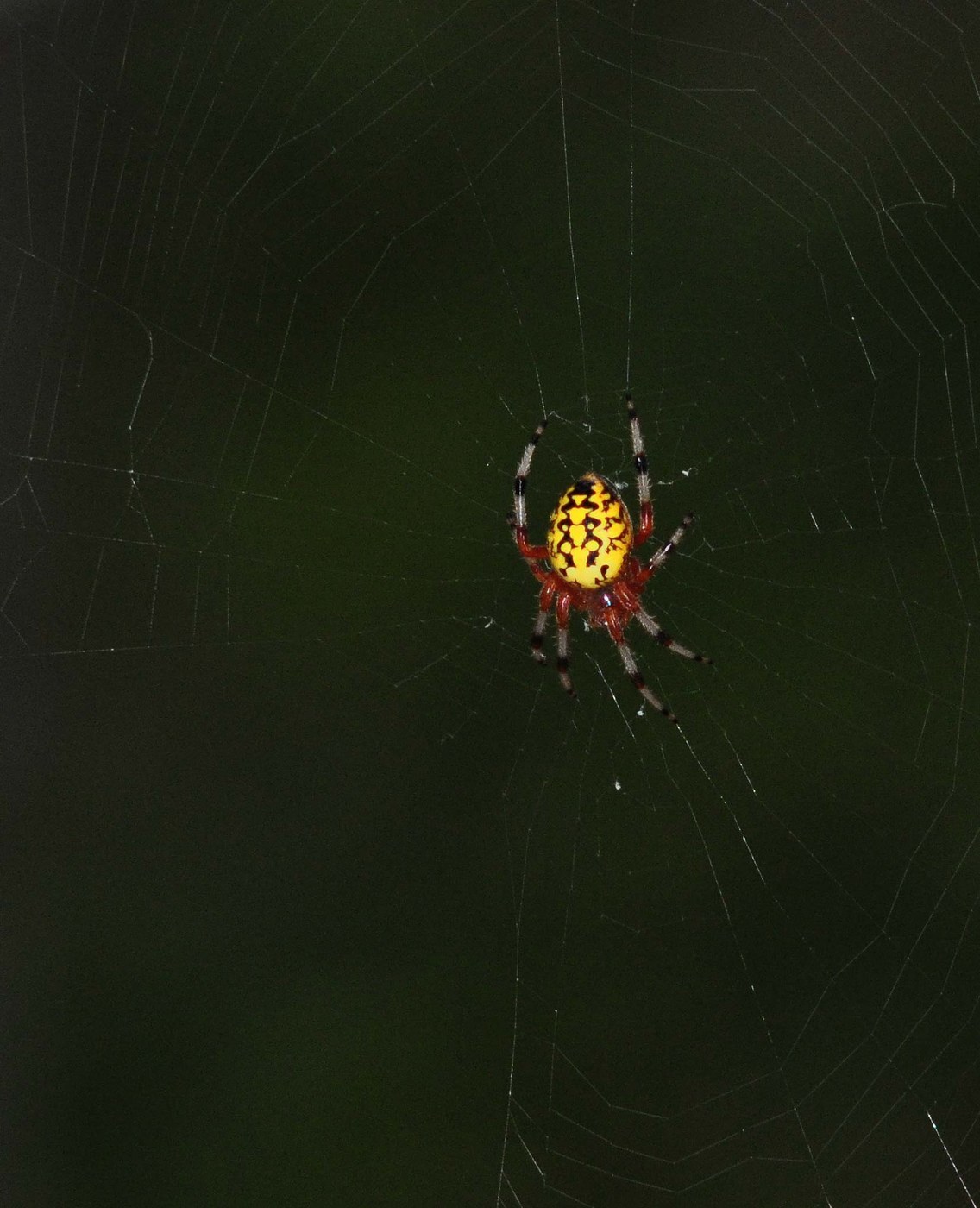
Key Visual Features
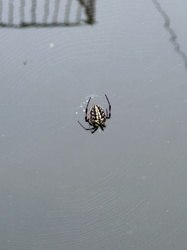
The marbled orbweaver (Araneus marmoreus) is named for the distinctive mottled, marble-like pattern covering its rounded abdomen.
- Size: Body length of about 0.4–0.75 inches (9–20 mm), with females noticeably larger and rounder than males.
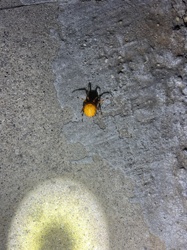
- Color: Highly variable, but the abdomen usually shows a mix of orange, yellow, or cream with purple, brown, or black mottled patches, resembling swirled marble or a jack-o'-lantern pattern.
- Body shape: Large, bulbous, rounded abdomen relative to a smaller cephalothorax — a typical orb weaver silhouette.
- Legs: Banded in orange and brown or black, relatively long compared to the body and used to sense vibrations along web strands.
- Markings: Some individuals show a pale, leaf-like or folium pattern down the center of the abdomen in addition to the marbled mottling.
Where and When You'd See It
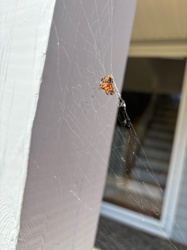
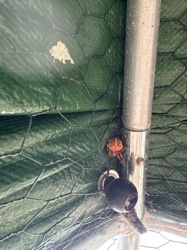
Marbled orbweavers are found across much of North America and Europe, favoring woodland edges, tall grasses, shrubby fields, and areas near water. They build large, vertical orb webs between vegetation, typically overnight, and often retreat to a silk-lined leaf shelter at one corner of the web during the day, emerging to rebuild or wait for prey after dusk. They are most frequently seen in late summer and fall when females reach their largest size.
Similar-Looking Species
- Spiny orb weaver: Has a hard, spiky abdomen rather than the soft, rounded marbled abdomen of this species.
- Shamrock orbweaver: Similar rounded shape but usually shows a more uniform green or tan color rather than heavy marbling.
- Barn spider: Similar size and web-building habit but typically shows more mottled brown-gray coloring rather than vivid orange-purple marbling.
- Cross orbweaver: Also large and web-building, but marked with a pale cross-shaped pattern on the abdomen instead of marbled swirls.
Quick ID Checklist
- Large, rounded abdomen with orange-and-purple (or yellow/brown) marbled pattern
- Banded orange-brown legs
- Retreats to a leaf shelter at the edge of a large vertical orb web during the day
- Found in woodland edges, tall grass, and shrubby areas
- Most noticeable in late summer and fall as females grow larger
Frequently asked questions
What gives the marbled orbweaver its name?
Its rounded abdomen displays a swirling, marble-like mix of colors — often orange, yellow, purple, and brown — that resembles polished marble or a small pumpkin.
Where does a marbled orbweaver usually hide during the day?
It typically retreats to a curled leaf or silk shelter at one edge of its web, staying connected to the web by a signal line so it can detect trapped prey.
How does the marbled orbweaver differ from the spiny orb weaver?
The marbled orbweaver has a soft, rounded, mottled abdomen, while the spiny orb weaver has a hard, flattened abdomen with pointed spines.
When are marbled orbweavers most commonly seen?
They are most noticeable in late summer through fall, when females have grown to their largest size and their webs become more prominent in gardens and woodland edges.
Marbled Orbweaver identified by the community
Recent Marbled Orbweaver finds identified with Bug Identifier.