Meadow Katydid Identification Guide
Identify these small, slender grassland katydids by their slim build and long antennae blending into meadow grasses.
Read the full Meadow Katydid encyclopedia entry →Key Visual Features
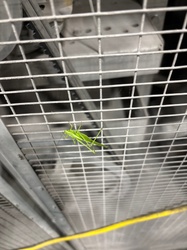
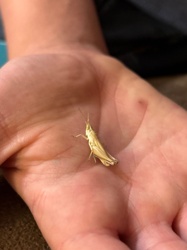
Meadow katydids (genus Conocephalus and related groups) are small, slender katydids, generally 0.5 to 1 inch long, much smaller and more delicate than tree-dwelling or bush katydids.
- Color: Green or brown body, often with darker or lighter longitudinal striping that helps it blend into grass stems and blades.
- Body shape: Narrow and elongated, with a slim, tapered abdomen well suited to slipping between grass stalks.
- Wings: Wing length varies by species and even within species — some individuals have short wings that don't reach the abdomen tip, while others have longer, fully developed wings capable of flight.
- Antennae: Extremely long, thread-like antennae, often several times the length of the body.
- Legs: Long, slender hind legs for jumping through dense grass cover.
Where and When You'll See It
Meadow katydids are found in grassy meadows, wet fields, marsh edges, and roadside grasses, typically staying low within the grass layer rather than climbing into shrubs or trees. They are active both day and night, with peak activity and calling from mid-summer through fall. Their high-pitched, buzzy, or ticking calls can often be heard from within dense grass even when the insect itself stays hidden from view.
Similar-Looking Species
- Conehead katydids: Closely related and similarly sized, but with a distinctly pointed, cone-shaped extension on the front of the head, which meadow katydids lack.
- Bush katydids: Larger and more robust, typically found in shrubs rather than grass, with broader leaf-shaped wings.
- True katydids: Much larger and stouter, living in tree canopies rather than low grassy vegetation.
Quick ID Checklist
- Small, slender body, roughly 0.5-1 inch long
- Green or brown coloring with subtle striping, blending into grass
- Antennae many times longer than the body
- Variable wing length; check whether wings reach the abdomen tip
- Found low in grassy meadows, wet fields, and marsh edges, active day and night in summer and fall
Frequently asked questions
How can I tell a meadow katydid from a conehead katydid?
Look at the front of the head — conehead katydids have a distinct pointed, cone-shaped projection there, while meadow katydids have a more rounded, unmodified head shape.
How big are meadow katydids?
They're quite small compared to other katydids, typically only about 0.5 to 1 inch long.
Where do meadow katydids live?
They stay low within grassy meadows, wet fields, and marsh edges rather than climbing into shrubs or trees like bush katydids or true katydids.
Do all meadow katydids have full-length wings?
No, wing length varies — some individuals have short wings that fall short of the abdomen tip, while others have longer wings capable of flight, even within the same species.
Meadow Katydid identified by the community
Recent Meadow Katydid finds identified with Bug Identifier.