Mining Bee Identification Guide
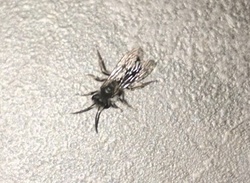
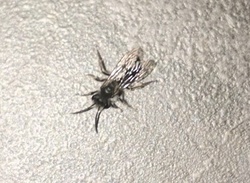
Spot mining bees by their fuzzy, pale-banded abdomens and the small volcano-shaped soil mounds marking their solitary burrows.
Read the full Mining Bee encyclopedia entry →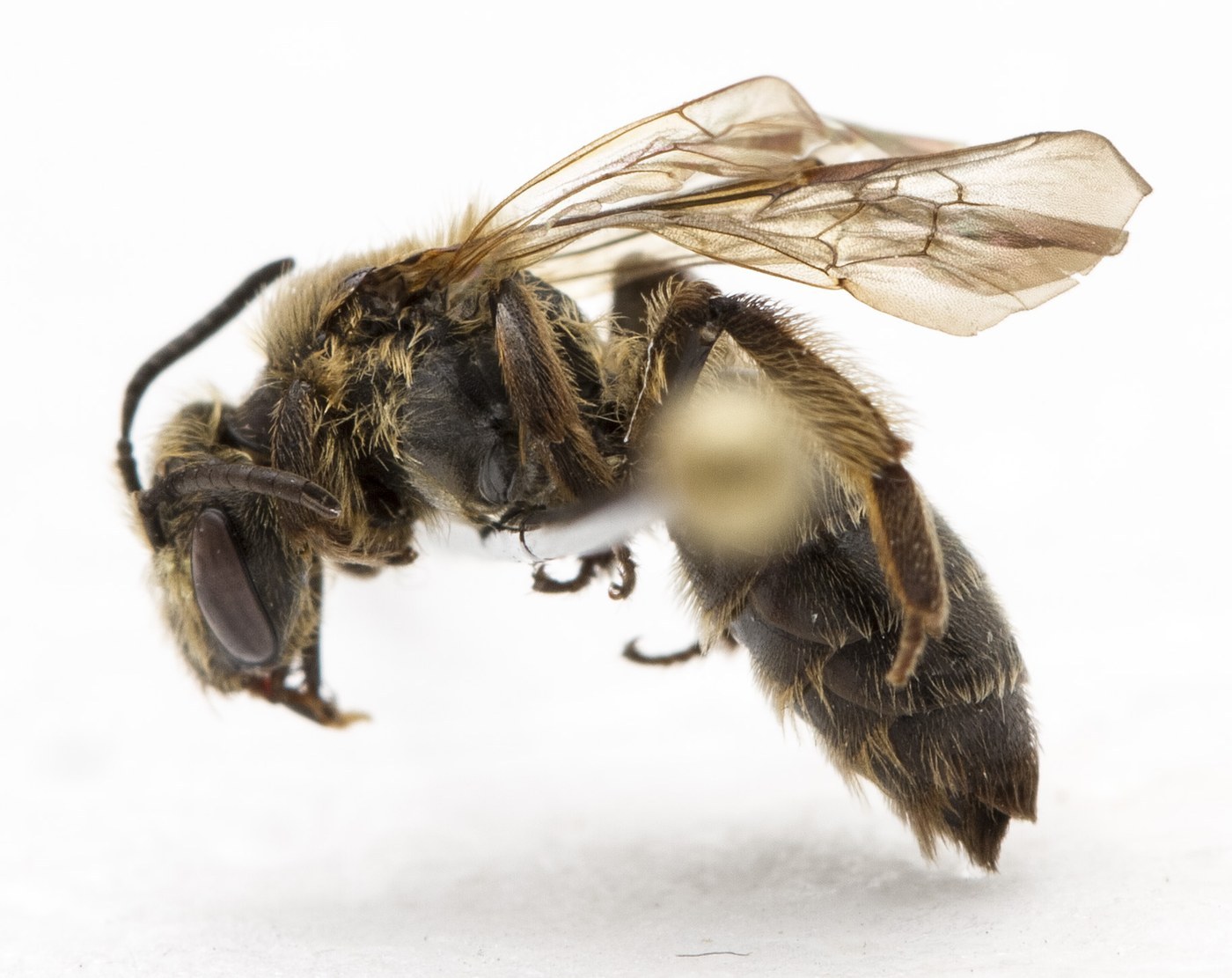
Key Visual Features
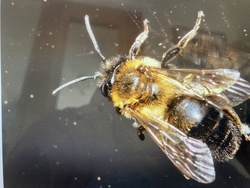
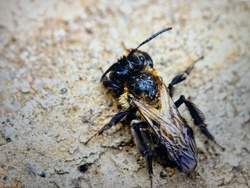
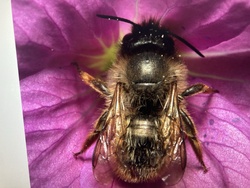
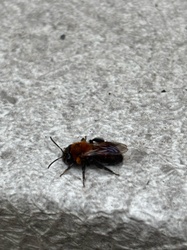
Mining bees (genus Andrena) are common solitary bees with a robust, fuzzy build:
- Small to medium size, roughly 8-17mm depending on species
- Dense hair covering the body, colored black, brown, or rust, often with pale hair bands crossing the abdomen
- Females show velvety hair patches (facial fovea) near the base of the antennae, unique to this group
- Females carry pollen on dense hairs (scopa) on their hind legs, which can look dusted with color when loaded
- Overall a stockier, hairier look than a honey bee
Where and When You'll See Them
Look for mining bees on bare or sparsely vegetated, well-drained soil — lawns, garden beds, and sunny slopes. Because they're solitary, each female digs and provisions her own burrow, but many burrows are often clustered together in loose aggregations, each marked by a small volcano-shaped mound of excavated soil with a central entrance hole. They're most active in early spring, timed with early-blooming trees and shrubs, though some species extend activity into summer.
Similar-Looking Bugs
- Honey bees are more slender, less densely fuzzy, and live in a shared hive rather than individual ground burrows.
- Sweat bees are usually smaller and often show a metallic green or blue sheen that mining bees lack.
- Bumble bees are larger, rounder, and live in social colonies rather than as solitary individuals with their own separate burrow entrances.
Quick ID Checklist
- Fuzzy body with pale hair bands on the abdomen
- Velvety facial hair patches near the antennae bases (females)
- Pollen-loaded hind leg hairs on females
- Small soil mounds with a central hole, often in loose clusters
- Active in early spring, on bare or sparse ground
Frequently asked questions
How do I know if a hole in my lawn belongs to a mining bee?
Mining bee burrows are marked by a small, volcano-shaped mound of loose soil surrounding a central entrance hole, often appearing in loose clusters on bare or sparse ground.
Are mining bees social like honey bees?
No, mining bees are solitary — each female builds and provisions her own individual burrow, even when many burrows are clustered close together.
When are mining bees most active?
They're most commonly seen in early spring, coinciding with the bloom of early flowering trees and shrubs, though some species remain active into summer.
How can I tell a mining bee from a honey bee?
Mining bees are stockier and fuzzier with pale hair bands, and they nest in individual ground burrows rather than a shared hive.
Mining Bee identified by the community
Recent Mining Bee finds identified with Bug Identifier.