Net-winged Beetle Identification Guide
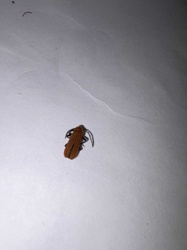
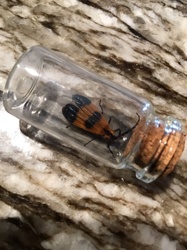
Identify net-winged beetles by the raised, netted ridge pattern on their soft, often orange-and-black wing covers.
Read the full Net-winged Beetle encyclopedia entry →Key Visual Features
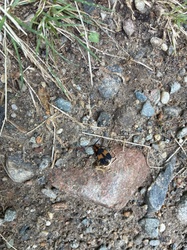
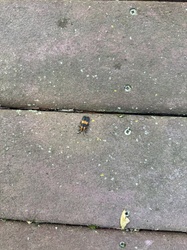
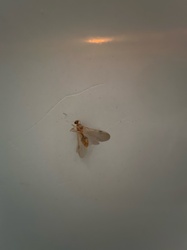
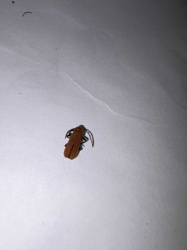
Net-winged beetles (family Lycidae) get their name from the distinctive texture of their wing covers: a network of raised longitudinal ridges connected by smaller crossing veins, creating a netted or reticulated pattern that's visible up close. The body is elongated and somewhat flattened, generally 1/4 to 3/4 inch long, with soft, flexible elytra rather than the hard, glossy shells of many other beetles. Coloring is often bold, commonly orange or red combined with black, sometimes in banded patterns, though some species are more uniformly dark. The head is broad and often partly visible from above, and the antennae are thread-like to slightly serrated. Legs are relatively long and slender for the body size.
Where and When You'll See Them
Net-winged beetles are most often found on flowers, foliage, tree trunks, and decaying wood in wooded or brushy habitats, where adults feed on nectar, pollen, or fluids from decaying plant material, and larvae develop in rotting wood or leaf litter. They're primarily active during the day, unlike many nocturnal beetles, and are most commonly seen in the warmer months from late spring through summer. Their bright coloring often makes them easy to spot resting on leaves or tree bark in daylight.
Similar-Looking Bugs
- Fireflies — similarly soft-bodied, but lack the raised netted ridge pattern on the wing covers and instead have a smooth or finely ridged surface, plus a light-producing organ that net-winged beetles lack.
- Soldier beetles — also soft-bodied and often brightly colored, but their wing covers are smoother and lack the distinct net-like veining.
- Blister beetles — some share bold orange-and-black coloring, but have a narrower head and neck and a harder, smoother body texture.
Quick ID Checklist
- Soft, flattened body, 1/4 to 3/4 inch, often orange/red and black
- Raised, net-like ridge pattern across the wing covers
- Active during the day, unlike many nocturnal beetles
- Found on flowers, foliage, and decaying wood in wooded areas
- Most common in late spring through summer
Frequently asked questions
What gives net-winged beetles their name?
Their wing covers show a raised network of longitudinal ridges connected by smaller cross-veins, creating a distinctive netted or reticulated texture.
How can I tell a net-winged beetle from a firefly?
Net-winged beetles lack a light-producing organ and have a raised, netted ridge pattern on their wing covers, while fireflies have smoother elytra and a glowing abdomen tip.
Are net-winged beetles active during the day or at night?
Unlike many related soft-bodied beetles, net-winged beetles are primarily active during the day.
Where are net-winged beetles usually found?
They're commonly seen on flowers, foliage, tree trunks, and decaying wood in wooded or brushy habitats.
Net-winged Beetle identified by the community
Recent Net-winged Beetle finds identified with Bug Identifier.