Painted Lady Identification Guide
Spot the painted lady by its orange-and-black wings and cobweb-patterned underside.
Read the full Painted Lady encyclopedia entry →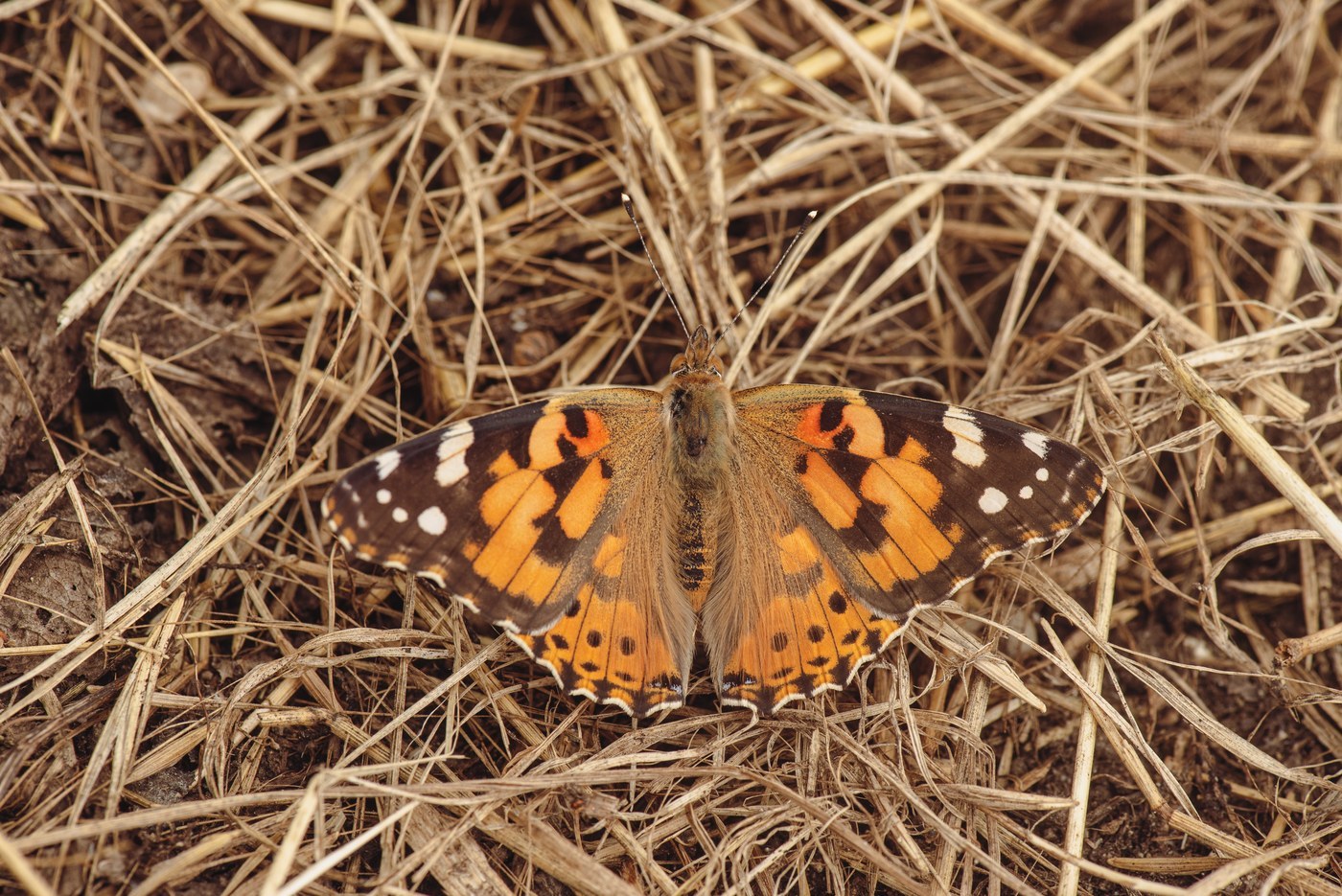
Key Visual Features
The painted lady (Vanessa cardui) is one of the most widely distributed butterflies in the world, recognized by its warm, patchy coloring.
- Size: Wingspan of about 2 to 2 3/4 inches (5–7 cm).
- Color: Upper wings are orange to salmon-pink with black blotches and veining; the forewing tips are black with a scattering of small white spots.
- Body shape: Slender body typical of brush-footed butterflies, with the front pair of legs reduced and brush-like (rarely used for walking).
- Wings: Forewings are somewhat pointed; hindwings are rounded with a row of small black spots near the margin. The underside of the hindwing shows a distinctive mottled, cobweb-like pattern of tan, white, and gray.
- Antennae: Clubbed antennae with a pale tip, typical of most true butterflies.
Where and When You'll See One
Painted ladies are famous for long-distance migrations and turn up almost anywhere: open fields, gardens, roadsides, meadows, and even deserts, on every continent except Antarctica and South America's far south. They favor sunny, open habitats with nectar plants like thistle, aster, and zinnia. Sightings peak from spring through fall, with periodic population booms that can produce large, highly visible migratory flights across a region in a single season.
Similar-Looking Bugs
- American lady: Very similar orange-and-black pattern above, but the underside hindwing has two large eyespots instead of the painted lady's cobweb mottling with a row of four small spots.
- Red admiral: Has bold red-orange bands across mostly black wings rather than an overall orange background — a very different overall look.
- Monarch: Larger, with a more uniform deep orange color and thick black veins, lacking the painted lady's mottled, patchy pattern.
Quick ID Checklist
- Orange-pink wings mottled with black blotches
- Black forewing tips dotted with small white spots
- Underside hindwing shows a cobweb-like tan/gray/white pattern
- Wingspan around 2–2 3/4 inches
- Found in open, sunny habitats nearly worldwide
Frequently asked questions
How do I tell a painted lady from an American lady?
Flip to the underside of the hindwing. Painted ladies show a busy, cobweb-like mottled pattern with a row of small spots, while American ladies show two large, prominent eyespots on the same wing.
Why are painted ladies found on so many continents?
They are strong, far-ranging migrants capable of traveling thousands of miles across generations, which lets their populations spread into an unusually wide range of climates and habitats compared to most butterflies.
What plants attract painted ladies for viewing?
Nectar-rich flowers such as thistle, zinnia, aster, and cosmos commonly draw painted ladies into gardens and open fields where they can be easily observed.
Do painted ladies look different depending on the season?
Coloring can vary slightly in intensity between individuals and regions, but the core pattern of orange-black upperwings with white-spotted black tips and cobweb-mottled underwings stays consistent year-round.
Painted Lady identified by the community
Recent Painted Lady finds identified with Bug Identifier.