Phantom Midge Larva Identification Guide
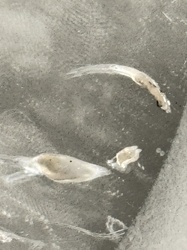
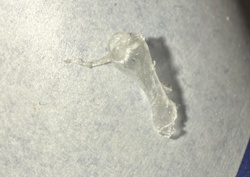
A nearly transparent, glassy larva that hovers motionless in open pond water, betrayed only by two dark pairs of air sacs.
Read the full Phantom Midge Larva encyclopedia entry →Key Visual Features
- Slender, elongated larva typically 0.3-0.5 inches (8-12 mm) long
- Almost completely transparent, glassy body that makes it hard to see against open water
- Two pairs of small, dark, gas-filled air sacs, one pair near the front and one pair near the rear, used for buoyancy control
- Short, hook-like mouth structures at the head used to grasp small prey
- Lacks the fringed swimming hairs or paired prolegs seen in many other aquatic larvae
- Straight, tapering body without obvious external gill filaments
- No legs, consistent with its status as a fly larva rather than a true bug or beetle larva
Where and When You'll See It
Phantom midge larvae are found suspended in the open water of ponds and lakes rather than clinging to plants or the bottom. They hover motionless in the water column, using their paired air sacs to hang nearly weightless, then dart forward suddenly to grab tiny prey drifting nearby. Because they are nearly invisible, they are most easily noticed by the dark specks of their air sacs floating in still water, especially when a light is shone into the water at night when many rise higher in the water column. They are present from spring through fall in still, nutrient-rich ponds and lakes.
Similar-Looking Bugs
- Non-biting midge larva (bloodworm): opaque and typically reddish, living in bottom sediment rather than floating transparently in open water.
- Mosquito larva: opaque and visibly segmented, hangs from the surface film to breathe through a tube rather than floating within the water column.
- Fairy shrimp: has visible legs and a segmented, elongated body, and swims upside down, unlike the legless, glassy phantom midge larva.
- Water flea: much smaller, rounded, and has a visible shell-like carapace, unlike the phantom midge's straight, transparent form.
Quick ID Checklist
- Nearly transparent, glassy body
- Two pairs of small dark air sacs, one near each end
- Hovers motionless in open water rather than clinging to plants or the bottom
- No legs and no obvious external gill filaments
- Found suspended in still ponds and lakes, most visible when illuminated
Frequently asked questions
Why is the phantom midge larva so hard to see?
Its body is almost completely transparent, which helps it avoid detection while suspended in open water; the only easily visible features are its two pairs of small dark air sacs.
What are the dark spots inside a phantom midge larva?
Those are paired gas-filled air sacs, one set near the front and one near the rear of the body, which help the larva control its buoyancy and hang motionless in the water column.
How is it different from a mosquito larva?
Mosquito larvae are opaque and hang from the water surface to breathe through a tube, while phantom midge larvae are transparent and float freely within the open water column rather than at the surface.
Where in a pond would I find phantom midge larvae?
Look in open, still water away from the bottom or plants, since they hover suspended in the water column rather than clinging to surfaces.
Phantom Midge Larva identified by the community
Recent Phantom Midge Larva finds identified with Bug Identifier.