Polyphemus Moth Identification Guide
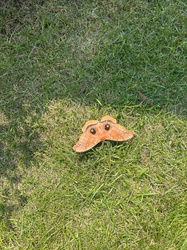
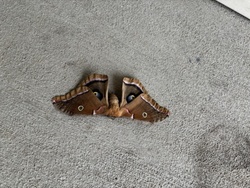
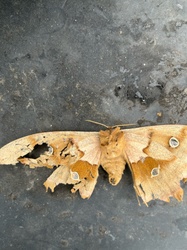
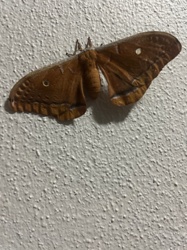
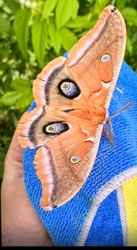
Recognize this giant silk moth by the huge blue-black glassy eyespot on each tan hindwing.
Read the full Polyphemus Moth encyclopedia entry →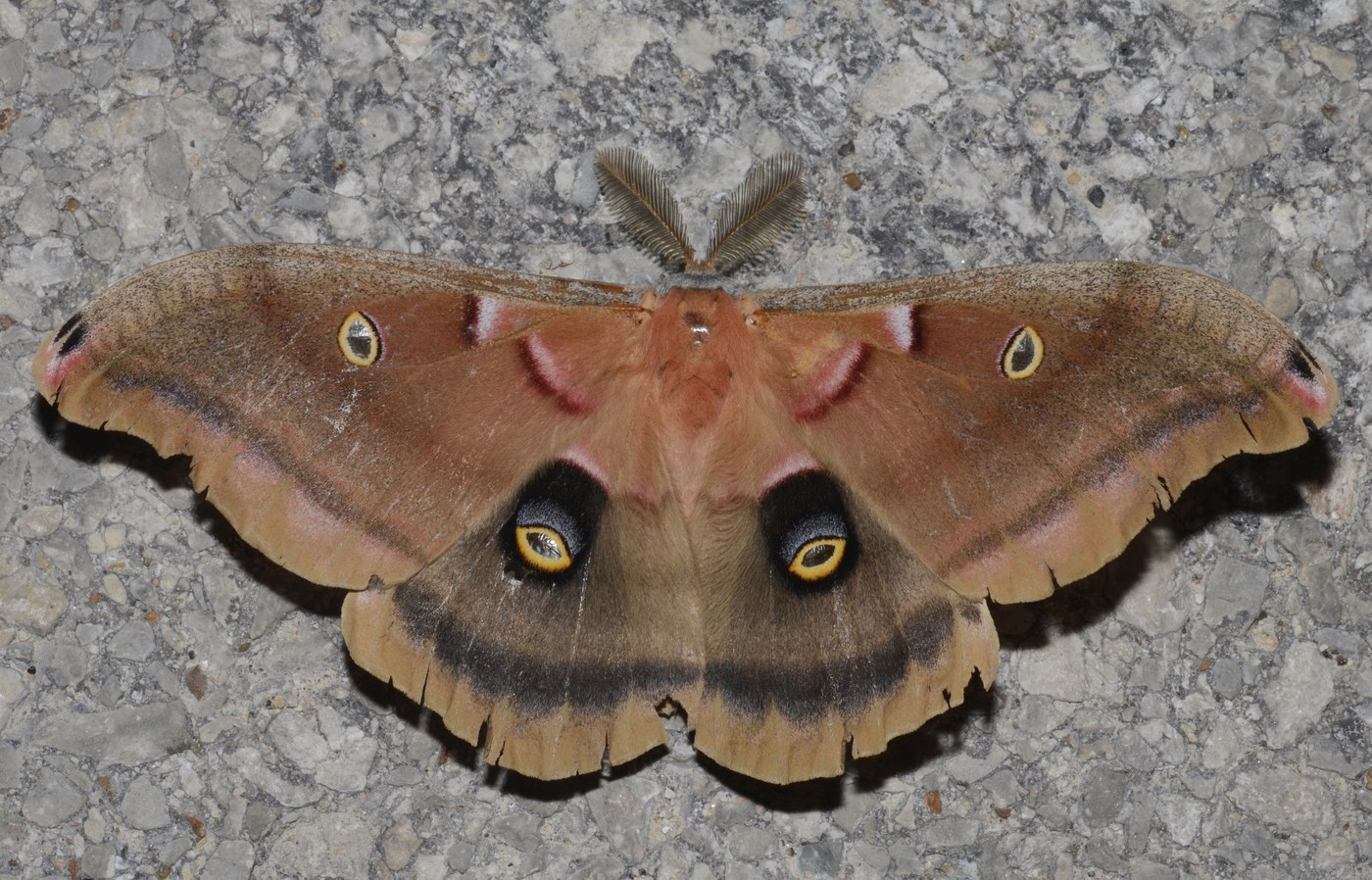
Key Features
- Large moth, wingspan typically 10–15 cm (4–6 inches)
- Wings are tan to reddish-brown overall, with fine wavy lines crossing each wing from the leading edge to the trailing edge
- Each hindwing carries a large, striking transparent "eyespot" ringed in yellow, blue, and black, resembling a big blue-black eye — the source of the moth's name, referencing the one-eyed giant Polyphemus of Greek myth
- Forewings also show smaller eyespots or dark crescent markings near the leading edge, along with a pale, wavy band running across the wing
- Stout, furry tan body; broad, feathery antennae, more developed in males and used to track female pheromone trails
- No functional mouthparts as an adult, so it does not feed and relies on reserves built up as a caterpillar
Where & When to Spot One
- Widespread across North America, from southern Canada through the United States into Mexico
- Found in deciduous forests, woodland edges, parks, and suburban areas with host trees like oak, maple, and birch
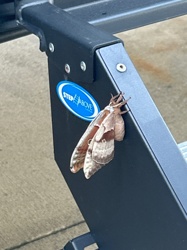
- Nocturnal, commonly attracted to porch lights and streetlights; also found resting on tree bark or walls during the day near light sources it visited the night before
- Adults fly from late spring through summer, with one or two generations depending on climate, and overwinter as a cocoon attached to a twig or hidden in leaf litter
Similar Species
- Io Moth also has hindwing eyespots but is smaller, with males bright yellow and females reddish-brown rather than uniformly tan
- Cecropia Moth is similarly large but has crescent-shaped white markings and a red-and-white banded body instead of large clear eyespots
- Luna Moth is pale green with long tails, making it easy to distinguish from any tan or brown giant silk moth
- The large, glassy blue-black eyespots on tan wings are the most reliable feature separating Polyphemus from other giant silk moths
Quick ID Checklist
- Large tan-brown wings with fine wavy lines
- Big transparent blue-black eyespot on each hindwing
- Broad, feathery antennae
- Nocturnal, drawn to outdoor lights
- Found in wooded and suburban areas across North America in summer
Frequently asked questions
What's the meaning behind the name "Polyphemus"?
It references the one-eyed giant from Greek mythology, inspired by the large eyespots on the moth's hindwings.
How can I tell it apart from an Io Moth?
Polyphemus is larger and uniformly tan-brown in both sexes, while Io Moths are smaller with males bright yellow and females reddish-brown.
When are Polyphemus Moths active?
They fly at night from late spring through summer and are commonly seen near outdoor lighting.
Do Polyphemus Moths eat as adults?
No, like other giant silk moths, adults lack functional mouthparts and live only long enough to mate and reproduce.
Polyphemus Moth identified by the community
Recent Polyphemus Moth finds identified with Bug Identifier.