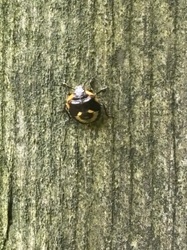
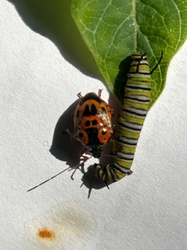
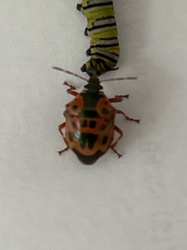
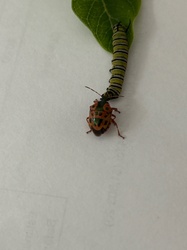
Predatory Stink Bug Identification Guide
Distinguish beneficial predatory stink bugs from plant-feeding species by their sharp beak and slimmer profile.
Read the full Predatory Stink Bug encyclopedia entry →Key Visual Features
Predatory stink bugs belong to the same broad shield bug family as plant-feeding stink bugs but have evolved to hunt other insects instead. Spined soldier bugs are the most familiar example in North American gardens.
- Size: Typically 1 to 1.7 centimeters long, similar to common plant-feeding stink bugs.
- Body shape: Classic shield or shield-of-armor outline, broad across the shoulders and tapering to a point at the rear, but often slightly narrower and more angular than plant-feeding relatives.
- Color: Mottled brown, tan, or grayish-yellow, sometimes with darker speckling, providing camouflage against bark and foliage.
- Shoulders: Many predatory species have pronounced, sharp, pointed "shoulder" spines projecting from the sides of the thorax — a key distinguishing feature.
- Mouthparts: A stout, curved beak (proboscis) used for piercing prey; in predatory species this beak is often noticeably thicker and more curved than the straighter beak of plant feeders.
- Legs and antennae: Five-segmented antennae and moderately long legs suited to walking over foliage while stalking prey.
Where and When You'd See Them
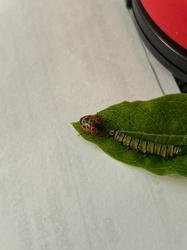
Predatory stink bugs are found in gardens, farm fields, orchards, and meadows throughout the warm growing season, from late spring through fall. They are usually spotted on leaves and stems where soft-bodied insects such as caterpillars and beetle larvae are present, since they actively hunt these prey rather than feeding on plant tissue. Look for them resting motionless in ambush postures or moving deliberately across foliage.
Similar-Looking Bugs
- Plant-feeding stink bugs: Nearly identical shield shape and coloring, but they lack pronounced spined shoulders and their beak is thinner and straighter, used for piercing plant tissue rather than prey.
- Assassin bugs: Also predatory, but have a narrower, more elongated body, a distinctly curved beak held tucked under the head, and lack the broad shield outline of a stink bug.
- Squash bugs: Longer and narrower than a shield bug, with a flatter back and duller brown-gray coloring, and no shoulder spines.
- Leaf-footed bugs: Recognizable by flattened, leaf-like expansions on the hind legs, absent in predatory stink bugs.
Quick ID Checklist
- Shield-shaped body with pointed, spined shoulders
- Mottled brown or tan camouflage coloring
- Thick, strongly curved beak used to pierce prey rather than plants
- Found stalking or ambushing soft-bodied insects on foliage
- Active late spring through fall in gardens and fields
Frequently asked questions
What is the easiest way to tell a predatory stink bug from a plant-feeding one?
Look at the shoulders and beak: predatory species usually have pointed, spine-like shoulder projections and a thicker, more strongly curved beak than plant-feeding stink bugs.
Do predatory stink bugs look like assassin bugs?
Not really — assassin bugs have a narrower, more elongated body and a beak tucked under the head, while predatory stink bugs keep the broad shield outline typical of the group.
Where are predatory stink bugs usually found?
On foliage in gardens, fields, and orchards, wherever soft-bodied prey insects such as caterpillars are present.
What color are predatory stink bugs?
Most are mottled brown, tan, or grayish-yellow, which helps them blend in against bark and leaves while they wait for prey.
Predatory Stink Bug identified by the community
Recent Predatory Stink Bug finds identified with Bug Identifier.