Psyllid Identification Guide
Identify a psyllid by its tiny cicada-like shape, powerful jumping legs, and the waxy or curled leaf damage it leaves behind.
Read the full Psyllid encyclopedia entry →Key Visual Features
Psyllids, sometimes called jumping plant lice, are tiny insects that resemble miniature cicadas.
- Size: Very small, typically 0.08-0.2 inch (2-5 mm) long.
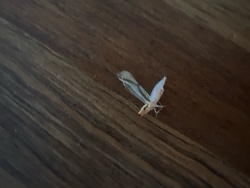
- Body shape: Compact, wedge-shaped body tapering toward the head, similar in outline to a tiny cicada.
- Coloring: Varies by species — green, brown, yellow, orange, or mottled, sometimes changing color as the insect matures.
- Wings: Two pairs of clear or lightly patterned wings held roof-like (tent-shaped) over the body at rest.
- Legs: Strong, enlarged hind legs adapted for jumping, giving them a flea-like escape response when disturbed.
- Antennae: Long, thread-like antennae, often as long as or longer than the body.
- Nymphs: Flattened, scale-like, and often produce white, waxy filaments or a sticky residue while feeding on the underside of leaves.
Where and When You'll See It
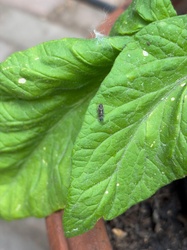
Psyllids are found on the leaves and new growth of host plants, especially in spring and early summer when new shoots are tender. Each species tends to favor a specific plant group, so their presence is often tied closely to a particular tree or shrub. Adults are agile fliers and jumpers, quick to hop or fly away when a leaf is disturbed, while nymphs remain stationary, clustered on leaf undersides or in curled leaf pockets. Signs of psyllid activity include leaf curling, cupping, or small pits, along with white waxy specks left by nymphs.
Similar-Looking Bugs
- Aphids: Soft-bodied and pear-shaped with weaker legs; aphids do not jump, while psyllids spring away readily when disturbed.
- Leafhoppers: Longer and more slender, with a more elongated wedge shape and typically faster, more erratic movement across leaf surfaces.
- Whiteflies: Smaller, moth-like with powdery white wings held flat, and they flutter rather than jump when disturbed.
Quick ID Checklist
- Tiny, cicada-shaped insect under a quarter-inch long
- Strong hind legs that allow jumping when disturbed
- Long thread-like antennae
- Wings held tent-like over the body
- Nymphs are flat, scale-like, and often coated in white waxy threads on leaf undersides
Frequently asked questions
How can I tell a psyllid from an aphid?
Psyllids have strong hind legs and jump readily when disturbed, while aphids are soft-bodied, slow-moving, and cannot jump.
What do psyllid nymphs look like compared to adults?
Nymphs are flat and scale-like, often producing white waxy filaments, and lack the wings and jumping ability of adults.
Why does a psyllid resemble a tiny cicada?
Psyllids are related to cicadas and share the same wedge-shaped body outline and tent-like wing posture, just at a much smaller scale.
What plant signs suggest psyllids are present?
Curled or cupped new leaves along with small white waxy flecks on the leaf underside are common signs of psyllid feeding activity.
Psyllid identified by the community
Recent Psyllid finds identified with Bug Identifier.