Red-spotted Purple Identification Guide
A large, iridescent blue-black butterfly that mimics the toxic pipevine swallowtail but lacks its tails.
Read the full Red-spotted Purple encyclopedia entry →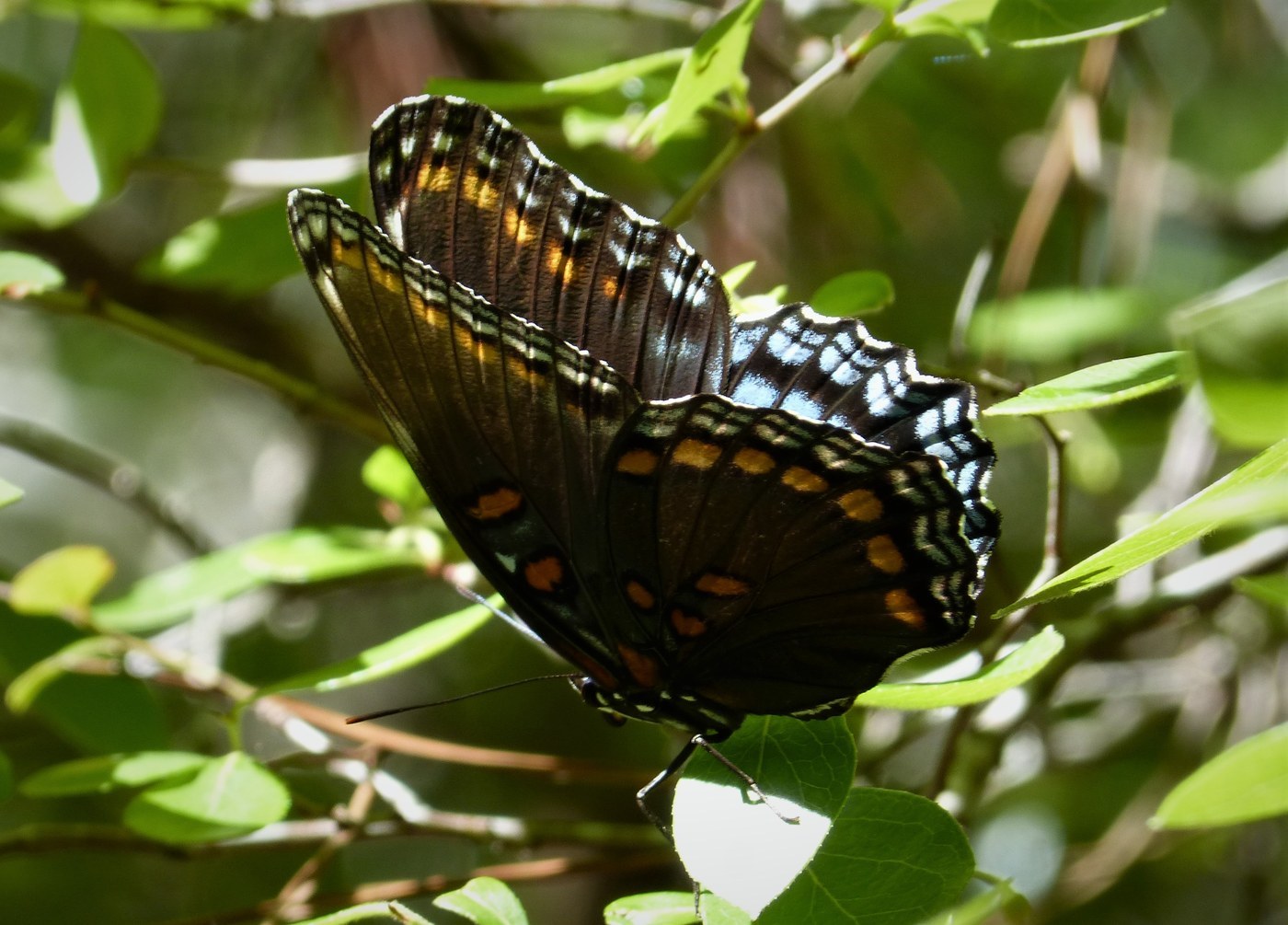
Key Features
The red-spotted purple (Limenitis arthemis astyanax) is a large butterfly with a wingspan of about 3 to 3.5 inches. Distinguishing features include:
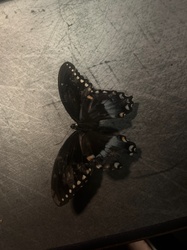
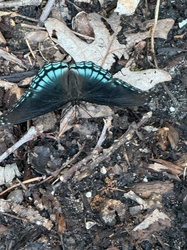
- Upperside is a deep blue-black with a strong iridescent blue-green sheen, especially prominent across the hindwing when caught in sunlight.
- Unlike its northern relative the white admiral, this form has no white band crossing the wings.
- A row of small orange-red spots is visible near the outer wing margins, more prominent on the underside and along the wing edges.
- Underside is brown to orange-brown with rows of orange spots and blue-tinted markings, adding to the colorful pattern when wings are closed.
- Wings are rounded with no tails, which is a key difference from a similarly colored swallowtail it resembles.
Where and When to Spot It
This butterfly is found in deciduous woodlands, forest edges, and adjacent open areas across the southern and eastern United States, with caterpillars feeding on wild cherry, willow, poplar, and related trees. It is active from spring through fall with multiple generations in warmer parts of its range, and adults are often seen puddling on damp soil, gravel, or animal droppings, as well as gliding along wooded trails and edges.
Similar Species
- Pipevine swallowtail: Similar blue-black iridescent coloring, but has prominent tails on the hindwing, which the red-spotted purple lacks entirely.
- White admiral: The same species as the red-spotted purple but representing the northern form, which shows a bold white band across the wings.
- Diana fritillary (female): Also has blue-black coloring but is larger with a different wing shape and pattern of markings.
Quick ID Checklist
- Large, iridescent blue-black butterfly with no tails
- No white band across the wings (unlike the white admiral form)
- Row of orange-red spots near the wing margins
- Found in deciduous woodlands and edges
- Often seen puddling on damp soil or gravel
FAQs
Frequently asked questions
How can I tell a red-spotted purple from a pipevine swallowtail?
The red-spotted purple lacks tails on its hindwings, while the pipevine swallowtail has prominent tails, despite both sharing similar blue-black iridescent coloring.
Is the red-spotted purple the same species as the white admiral?
Yes, they are the same species, Limenitis arthemis, with the red-spotted purple representing the southern form lacking the white band and the white admiral representing the northern, banded form.
What trees do red-spotted purple caterpillars feed on?
Wild cherry, willow, poplar, and related deciduous trees serve as the primary caterpillar host plants.
Where is the best place to observe this butterfly?
Deciduous woodland edges and trails, particularly near damp soil or gravel where adults puddle, offer good viewing opportunities.
Red-spotted Purple identified by the community
Recent Red-spotted Purple finds identified with Bug Identifier.