Rhinoceros Beetle Identification Guide
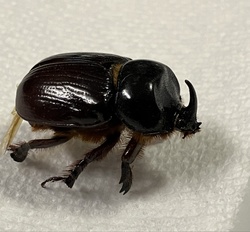
Recognize this powerfully built beetle by the prominent horn many males carry on the head or thorax.
Read the full Rhinoceros Beetle encyclopedia entry →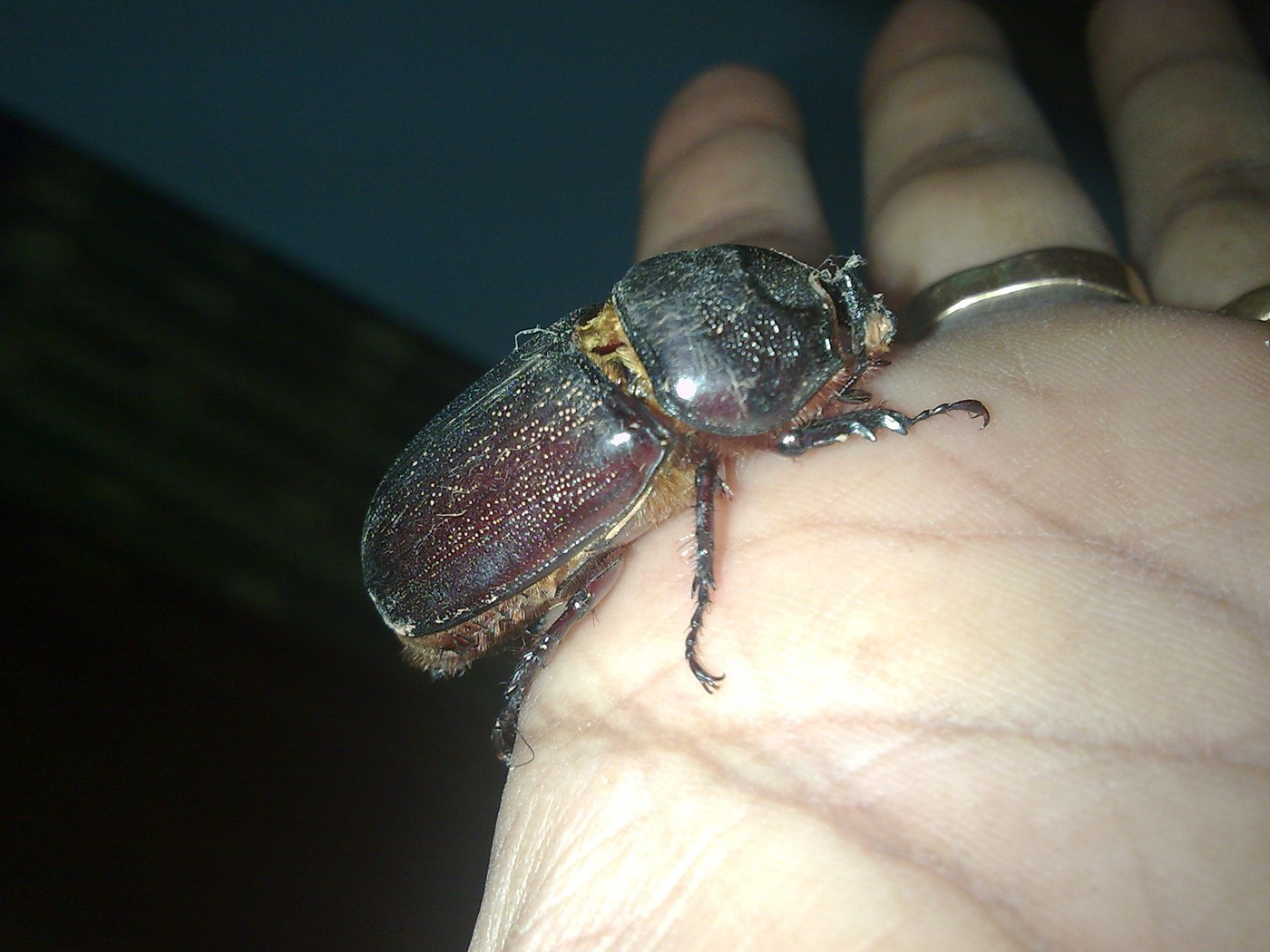
Key Visual Features
Rhinoceros beetles (subfamily Dynastinae) are among the largest and most robust beetles, named for the prominent horn found on many males:
- A large, forward-curving horn on the head in many species, sometimes paired with a smaller horn on the thorax, used in pushing contests with rival males
- Females typically lack a horn or have only a small bump, and instead have a more rounded, smoother head
- Shiny, hard exoskeleton, usually black, dark brown, or deep reddish-brown, sometimes with a slight metallic sheen
- Very large, heavy-bodied build, with some species reaching 4–17 cm (1.6–6.7 inches) depending on the species, making them among the bulkiest beetles in the world
- Short, sturdy legs with strong claws, well suited for gripping bark and pushing against obstacles or rivals
- Clubbed, elbowed antennae, typical of scarab beetles, tucked close to the head
Where and When You'd See It
Rhinoceros beetles are found across tropical, subtropical, and some temperate regions worldwide, favoring forests, woodlands, and gardens with access to decaying wood, compost, and leaf litter, which their larvae rely on for development. Adults are most active at night and are frequently attracted to outdoor lighting, making evenings during the warm season the most likely time to encounter them. Larvae, large curved white grubs, live hidden underground or within decaying wood and compost piles for extended periods, sometimes over a year, before emerging as adults.
Similar-Looking Bugs
- Stag beetles: males have paired, branched, antler-like mandibles rather than the single forward-curving head horn of a rhinoceros beetle
- Dung beetles: generally smaller and more rounded, with shorter or less pronounced horns compared to the large, curved horn of many rhinoceros beetle species
- Other large scarab beetles: check specifically for the presence and shape of a head horn, along with overall body bulk, to confirm a rhinoceros beetle identification
Quick ID Checklist
- Large, forward-curving horn on the head (in males)
- Shiny black, brown, or reddish-brown exoskeleton
- Very large, heavy, robust body
- Short, strong legs with sturdy claws
- Found near decaying wood, compost, and leaf litter; active mainly at night
Frequently asked questions
How can I tell a male from a female rhinoceros beetle?
Males typically have a large, forward-curving horn on the head, sometimes with a smaller thoracic horn, while females usually lack a horn or have only a small bump.
What is the difference between a rhinoceros beetle and a stag beetle?
Rhinoceros beetles have a single curved horn on the head, while male stag beetles instead have paired, branched, antler-like mandibles.
When is the best time to see a rhinoceros beetle?
They are mostly active at night and are commonly attracted to outdoor lighting, so evenings during the warm season offer the best chance of spotting one.
Where do rhinoceros beetle larvae develop?
Larvae are large white grubs that develop underground or within decaying wood and compost piles, sometimes over a year, before emerging as adult beetles.
Rhinoceros Beetle identified by the community
Recent Rhinoceros Beetle finds identified with Bug Identifier.