Rose Chafer Identification Guide
Identify this slender, tan-colored beetle by its long spindly orange legs and habit of clustering on rose blossoms.
Read the full Rose Chafer encyclopedia entry →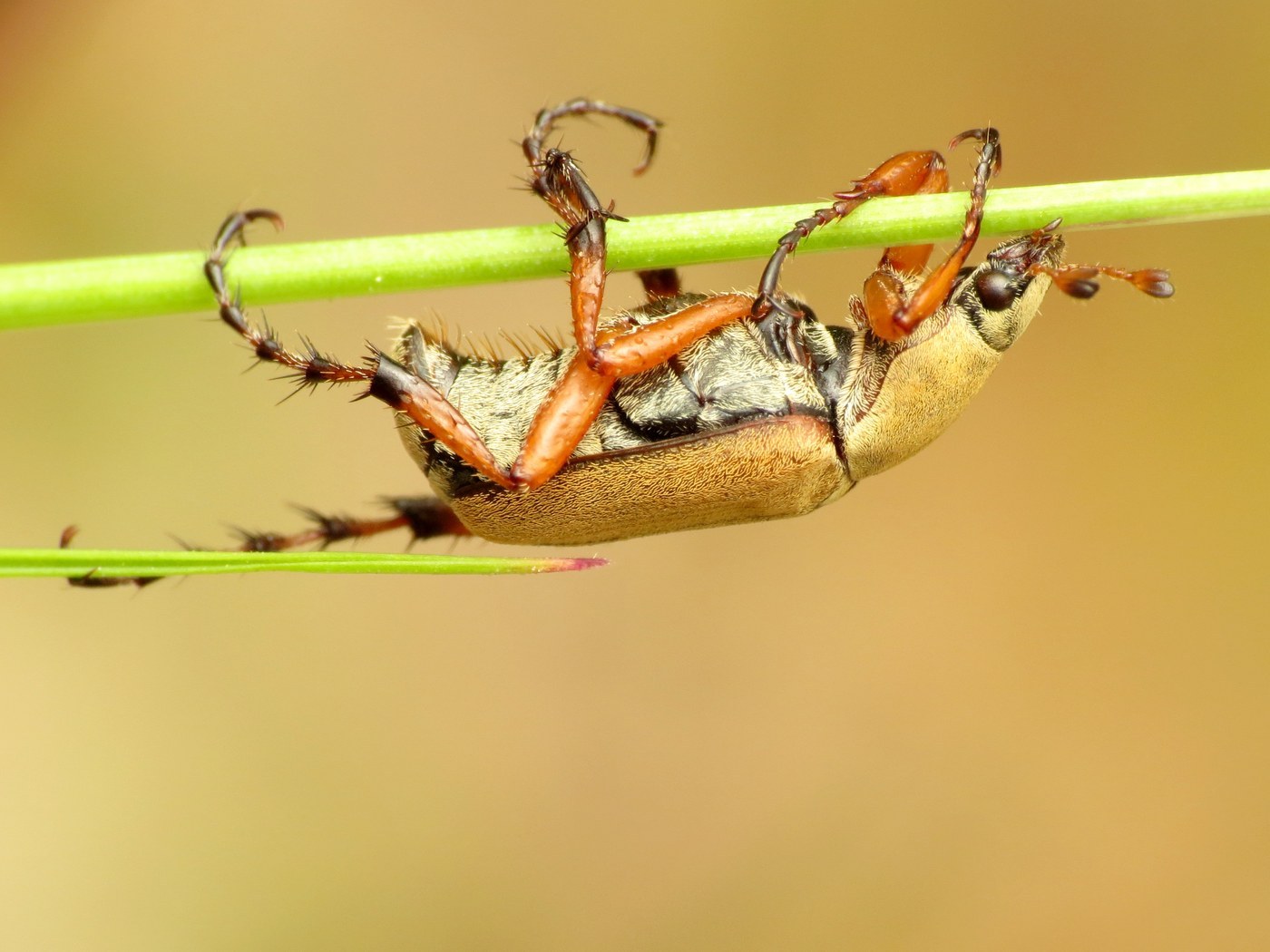
Key Visual Features
The rose chafer (Macrodactylus subspinosa) is a slim, understated beetle quite different in build from bulkier scarab relatives:
- Size: A slender body about 0.4-0.5 inches (10-12mm) long.
- Coloring: An overall tan, fawn, or light grayish-brown color covering the body, without bright or metallic tones.
- Legs: Notably long, thin, spindly legs with a reddish-orange tint, longer in proportion to the body than most other scarab beetles.
- Body shape: Narrow and elongated compared to the rounder shape of many other scarabs, giving it a more delicate appearance.
- Wings: Hardened elytra that taper slightly toward the rear, covering the abdomen.
Where and When You'll See One
Rose chafers are found across much of North America, especially in areas with sandy or well-drained soil. Adults emerge in late spring to early summer and are diurnal, often seen clustering in groups on flower blossoms, particularly roses, peonies, and other light-colored or fragrant flowers, as well as on foliage of various plants. Their appearance is typically brief, lasting only a few weeks each year.
Similar-Looking Bugs
- European rose chafer (Cetonia aurata): Shares the common name but looks quite different, with a shiny, iridescent metallic green body rather than the North American species' plain tan coloring; ranges do not overlap since this species is native to Europe.
- Japanese beetle: Similarly sized and also found on flowers, but has a shinier metallic green thorax with coppery-brown wing covers and small white hair tufts along the abdomen, unlike the rose chafer's dull tan coloring and long spindly legs.
- Green June beetle: Much bulkier and colored a dull velvety green, quite different from the slender tan-bodied rose chafer.
Behavior Notes
Rose chafers are typically found in loose groups on a single flower or cluster of blossoms rather than as solitary individuals, feeding side by side for the short window in which adults are active each year. Because of their preference for sandy soil for egg-laying, populations tend to be more concentrated near sandy fields, dunes, or well-drained garden beds than in areas with heavier clay soils.
Quick ID Checklist
- Slender, narrow body about half an inch long
- Overall tan, fawn, or light grayish-brown coloring
- Long, thin, reddish-orange legs
- Often found clustered on rose or other light-colored flower blossoms
- Active during the day in late spring to early summer
Frequently asked questions
How can I tell a North American rose chafer from the European rose chafer?
The North American rose chafer (Macrodactylus subspinosa) is plain tan or fawn colored, while the European rose chafer (Cetonia aurata) has a shiny, iridescent metallic green body; the two do not naturally overlap in range.
What flowers are rose chafers most often found on?
They are frequently seen clustering on rose blossoms, peonies, and other light-colored or fragrant flowers, as well as on the foliage of various garden and wild plants.
When during the year are rose chafers active?
Adults typically appear for a few weeks in late spring to early summer, after which their above-ground activity tapers off for the year.
What is the most distinctive physical feature of a rose chafer?
Its unusually long, thin, spindly reddish-orange legs stand out compared to the shorter, stockier legs of most other scarab beetles.
Rose Chafer identified by the community
Recent Rose Chafer finds identified with Bug Identifier.