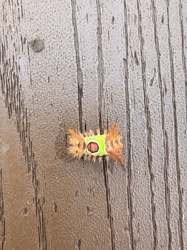
Saddleback Caterpillar Identification Guide
Recognize the unmistakable green "saddle" marking and spiny horns that make this caterpillar one of the most distinctive in North America.
Read the full Saddleback Caterpillar encyclopedia entry →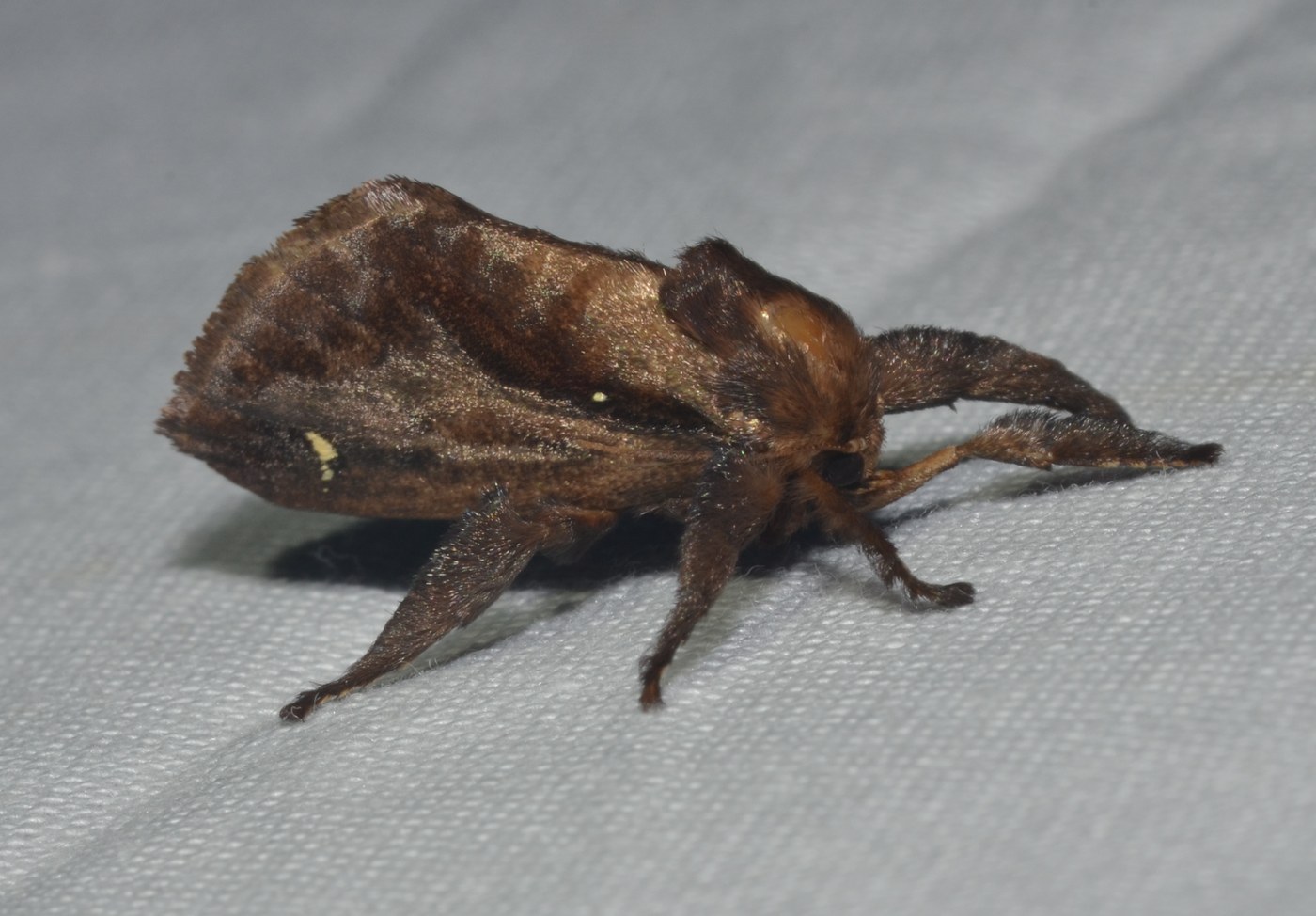
Key Visual Features
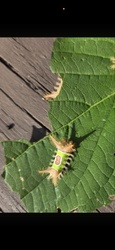
- Stout, slug-like body with a bright green oval "saddle" marking outlined in white sitting on a brown background — resembling an actual saddle
- A pair of large, fleshy spine-covered horns projecting from the front end and another pair from the rear end, plus smaller spiny protrusions along the sides
- Each spine tuft is tipped with tiny bristles, giving the whole body a bristly, ornamented look
- Compact body shape, growing to only about 1 inch long at full size
- Brown coloring on both ends of the body, contrasting sharply with the central green saddle patch
- Moves in a slow, gliding, slug-like crawl rather than the rippling crawl of typical caterpillars
Where and When You'd See Them
- Found on a wide variety of trees and shrubs, including oak, maple, dogwood, and many garden plants
- Most commonly seen from late summer into early fall when caterpillars reach full size
- Usually found singly on the undersides of leaves rather than in groups
- Ranges across much of the eastern and southeastern regions in wooded areas, gardens, and landscaping
Similar-Looking Bugs
- Puss caterpillars are covered edge to edge in dense, soft-looking hair that hides the body shape entirely, unlike the saddleback's exposed green-and-brown pattern with distinct horns.
- Io moth caterpillars are bright green overall with rows of spiny tufts along the whole body, lacking the saddleback's contrasting brown-and-green saddle patch.
- Slug caterpillars in general share the flattened, gliding body style, but few have the saddleback's specific white-rimmed green oval marking.
- Hag moth caterpillars have irregular, curling hairy lobes rather than the saddleback's compact horned shape and clean saddle pattern.
Quick ID Checklist
- Bright green, white-rimmed oval "saddle" on a brown body
- Prominent spiny horns at both front and rear ends
- Compact, slug-like body about 1 inch long
- Slow, gliding crawl rather than a typical rippling motion
- Found singly on leaf undersides of many tree and shrub species
Frequently asked questions
What is the easiest way to identify a saddleback caterpillar?
Look for the bright green, white-outlined oval patch on its back that looks like a saddle sitting on a brown body — this marking is unique among common caterpillars.
What kind of body shape does a saddleback caterpillar have?
It has a compact, slug-like body that glides along leaves rather than the typical rippling crawl of most caterpillars, and it grows to only about an inch long.
Where on a plant would I find a saddleback caterpillar?
They are usually found alone on the undersides of leaves on trees and shrubs such as oak, maple, and dogwood, rather than in groups.
When during the year are saddleback caterpillars most often seen?
They are most frequently spotted from late summer into early fall as they reach full size before pupating.
Saddleback Caterpillar identified by the community
Recent Saddleback Caterpillar finds identified with Bug Identifier.