
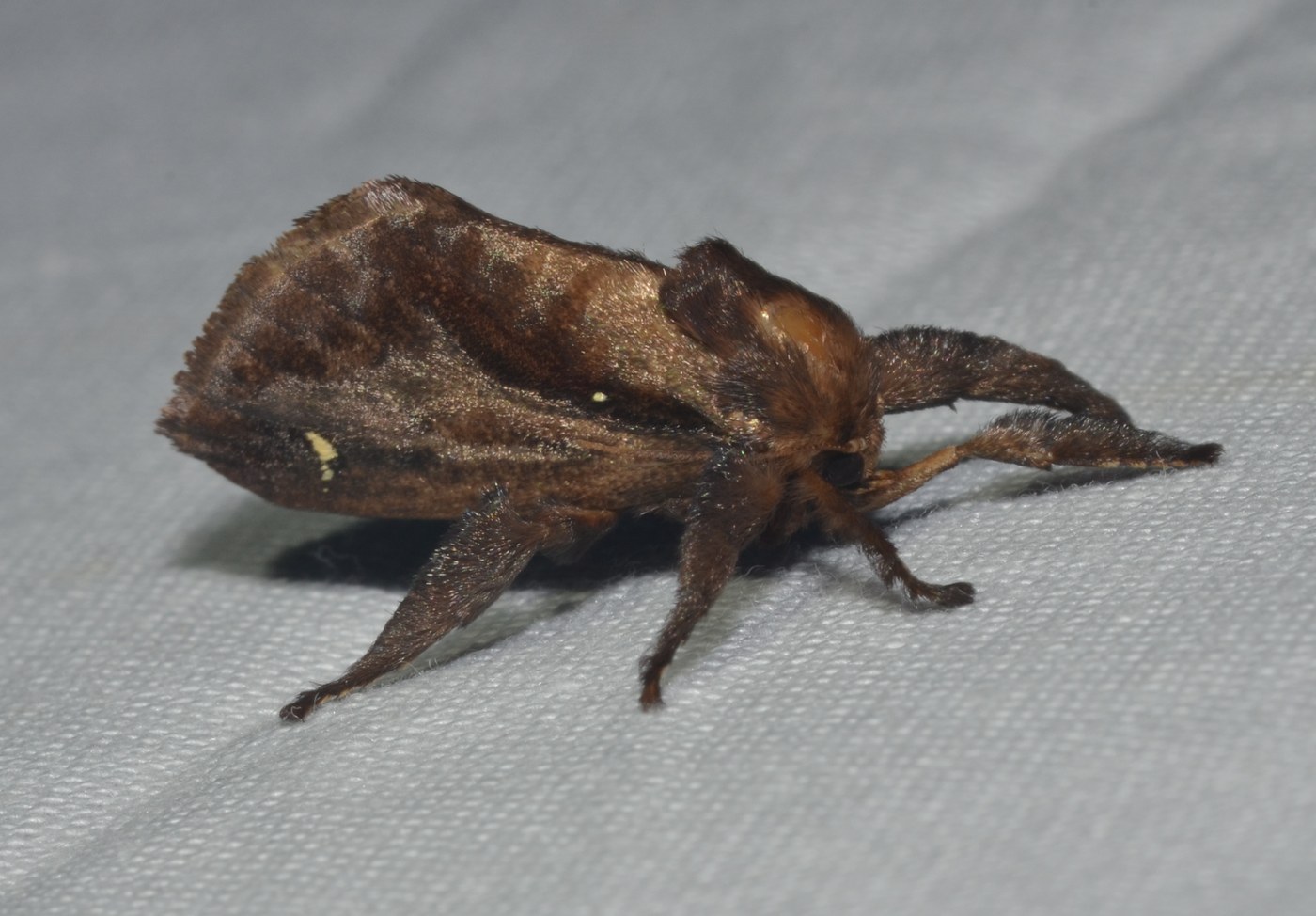
Saddleback Caterpillar
Acharia stimulea
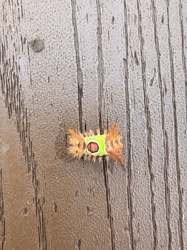
An unmistakable stout caterpillar with a bright green saddle-shaped patch on a brown back, bristling with clusters of spines along its stocky body.
- Size
- 2-2.5 cm (0.8-1 in) long
- Habitat
- Deciduous trees and shrubs in eastern and southern North America
- Danger
- Stings
Spotted a bug like this?
Identify any bug or insect from a photo, free.
Overview
The saddleback caterpillar is one of the most visually striking stinging caterpillars in North America, easily recognized by the vivid green, saddle-shaped marking outlined in white or purple that sits atop an otherwise brown body. It is the larval form of a slug moth in the family Limacodidae, a group known for caterpillars with reduced prolegs that move with a smooth, gliding motion rather than the typical crawling gait of most caterpillars.
Beneath its bold coloration, the saddleback caterpillar bears fleshy, horn-like protuberances at both ends of its body, each armed with clusters of stinging spines that serve as a defense against predators. It remains a normal part of the diet of many parasitic wasps and predatory insects that have evolved ways to overcome or avoid its spines.
How to Identify
- Stout, slug-like body, brown at both ends with a bright green oval "saddle" patch outlined in white or purple across the middle of the back
- Prominent fleshy horns tipped with clusters of stinging spines at both the front and rear of the body
- Smaller tufts of spines along the sides as well
- Moves with a smooth, gliding crawl typical of slug moth caterpillars, with reduced, inconspicuous prolegs
- Adults reach about 2-2.5 cm in length
- Distinguished from other stinging caterpillars by the bold green saddle marking on brown body ends
Habitat & Range
Found throughout the eastern and southern United States, from as far north as New England west to the Great Plains, saddleback caterpillars feed on a wide variety of deciduous trees and shrubs, as well as some garden plants like corn and cannas. They are typically encountered on the undersides of leaves from midsummer into fall.
Behavior & Diet
Saddleback caterpillars are generalist folivores, feeding on the foliage of many tree and shrub species without strong host specificity. They rely almost entirely on their spined horns for defense rather than fleeing, remaining exposed on leaf surfaces where their bold coloration may also serve as a warning signal to visually hunting predators. As with other slug moth caterpillars, they play a minor role as folivores in forest and garden food webs and provide prey for specialized parasitoid wasps that are adapted to attack them.
Life Cycle
Eggs are laid in small clusters on host plant leaves, and the caterpillars feed and grow through several instars over the summer, becoming most conspicuous by late summer and early fall. At the end of larval development, the caterpillar spins a tough, oval brown cocoon, often attached to bark or plant debris, in which it overwinters before pupating and emerging as an adult slug moth the following spring or summer. Depending on region, one or two generations may occur per year.
Frequently asked questions
How do I recognize a saddleback caterpillar?
Look for the bright green, saddle-shaped patch on a brown body with prominent spined horns at both ends.
Can a saddleback caterpillar sting?
Yes, it carries clusters of spines on fleshy horns that can sting in defense if the caterpillar is touched.
What plants do saddleback caterpillars feed on?
They are generalist feeders found on a wide variety of trees, shrubs, and some garden plants.
What kind of moth does a saddleback caterpillar become?
It develops into an adult slug moth in the family Limacodidae after overwintering as a cocoon.
Saddleback Caterpillar guides
In-depth guides for identifying, understanding, and living alongside Saddleback Caterpillar.
Saddleback Caterpillar identified by the community
Real finds identified with Bug Identifier.
Other bugs you may enjoy
Bagworm
Trees and shrubs, especially conifers and ornamental landscaping
Armyworm
grasslands, pastures, and cereal crop fields
Zebra Longwing Caterpillar
Tropical and subtropical hammocks with passionflower vines
Tomato Hornworm
Gardens and fields with tomato, pepper, and other nightshade plants
Tent Caterpillar
Deciduous trees such as cherry, apple, and other rosaceous species
Tobacco Hornworm
tobacco, tomato, and pepper plants in gardens and fields
Woolly Bear Caterpillar
Gardens, meadows, roadsides, and woodland edges across North America
Sod Webworm
Turfgrass lawns, golf courses, pastures
Spiny Oak-slug Caterpillar
Deciduous forests and woodland edges with oak and other hardwoods
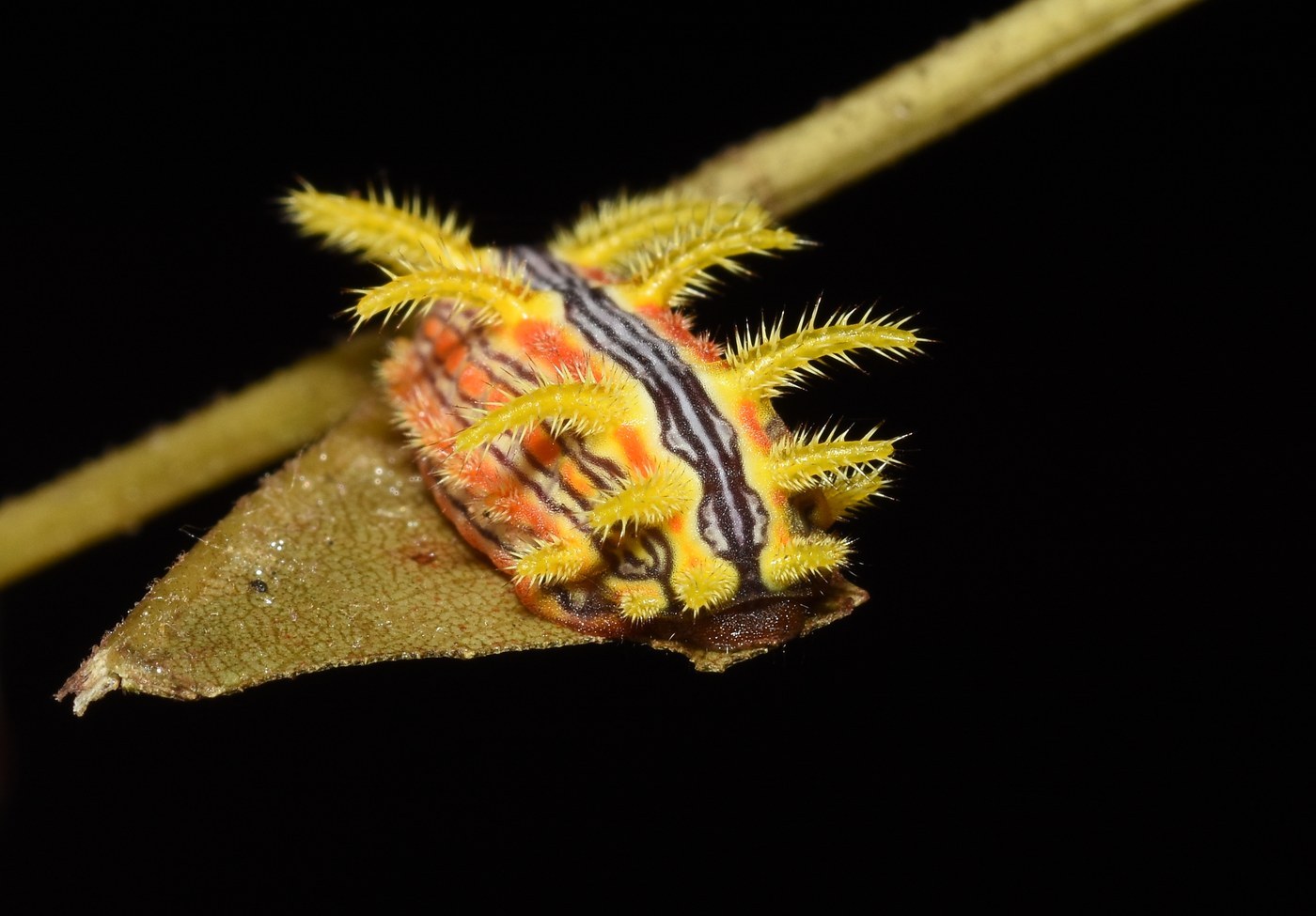
Stinging Rose Caterpillar
Gardens and woodlands with rose, dogwood, or oak
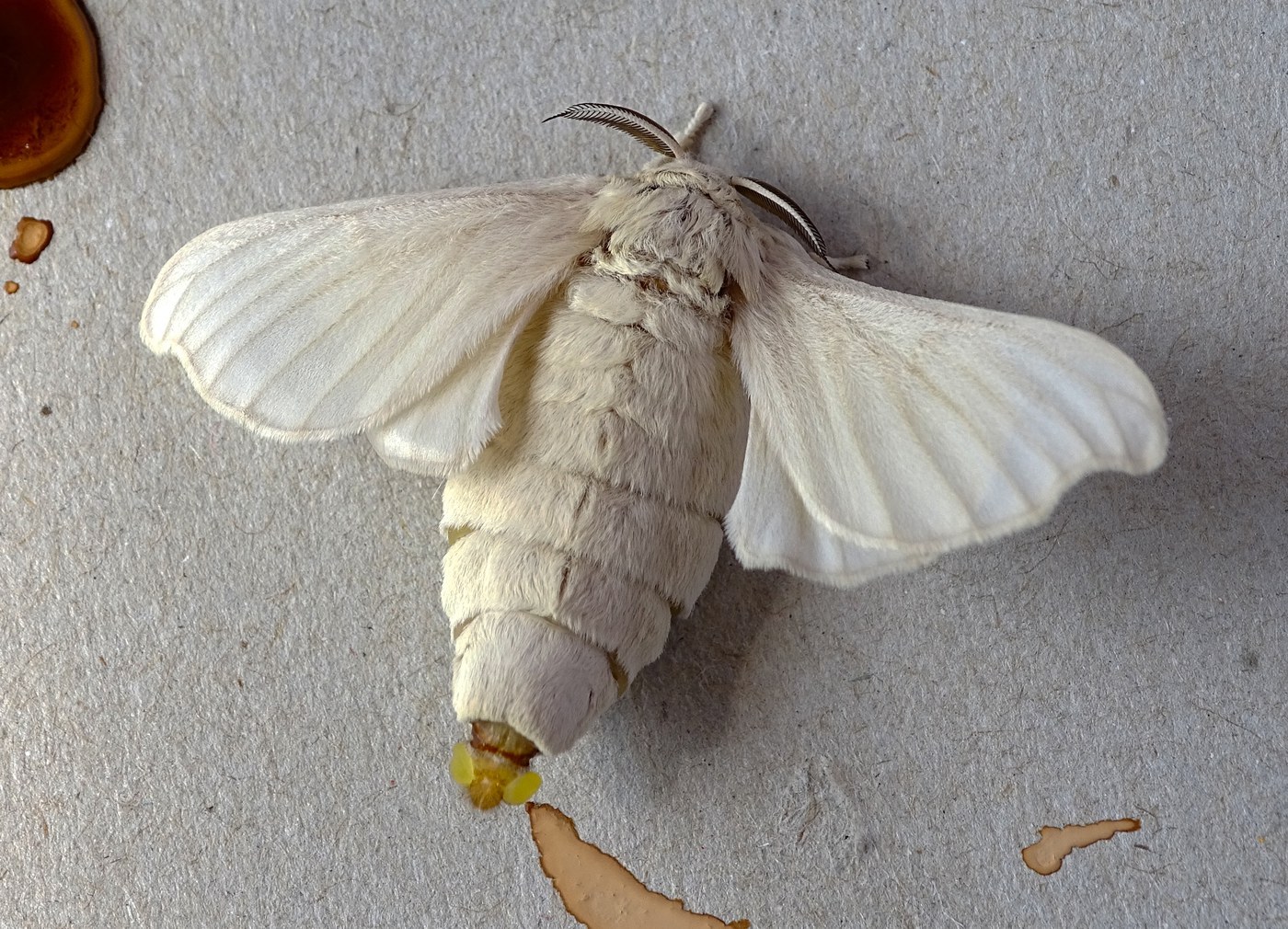
Silkworm
Reared exclusively in captivity on mulberry leaves; no independent wild population
Spicebush Swallowtail Caterpillar
Woodlands and thickets with spicebush or sassafras