Salt Marsh Moth Identification Guide
A furry tiger moth with striking sexual differences - spotted cream forewings paired with bright orange or plain white hindwings.
Read the full Salt Marsh Moth encyclopedia entry →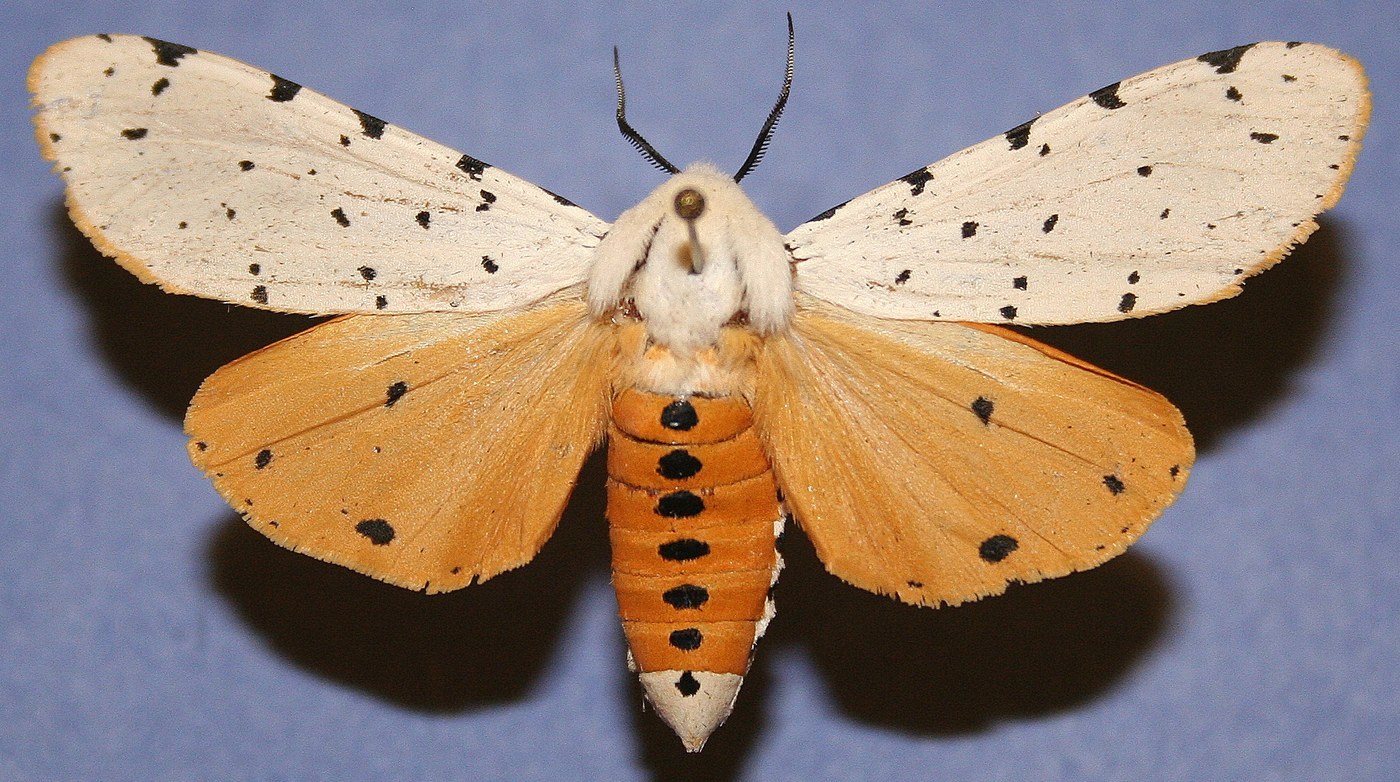
Key Visual Features
The Salt Marsh Moth is a medium to large tiger moth with a wingspan of roughly 40-60mm and marked differences between the sexes.
- Males: Cream to white forewings marked with scattered black spots, paired with bright yellow-orange hindwings that also carry dark spots - a striking color combination visible mainly in flight.
- Females: Forewings are plain white with few or no spots; hindwings are white to pale yellow, generally much less colorful than the male's.
- Body: Stout and furry, white overall with black spots and patches of yellow-orange coloring on the abdomen.
- Legs and antennae: Legs often show dark banding; antennae are simple threads in females and slightly feathery in males.
Where and When You'll See It
This moth is widespread in open habitats such as fields, meadows, gardens, and - true to its name - salt marshes and other coastal grassy areas. Adults are nocturnal and come readily to lights. In warmer parts of its range multiple generations can occur, so adults may be seen from early summer through early fall, with peak activity in mid-to-late summer.
Similar-Looking Species
- Virginia Tiger Moth - wings are almost entirely white with little to no spotting, and it has distinctly orange-yellow forelegs; overall much less contrast between the sexes than in the Salt Marsh Moth.
- Fall Webworm Moth - smaller and more delicately built, plain white, and lacking the bright orange hindwing color seen in male Salt Marsh Moths.
- Other Estigmene relatives - similar spotted pattern; best distinguished by subtle differences in spot density and hindwing color intensity.
Life Cycle & Behavior
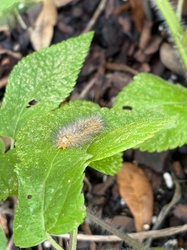
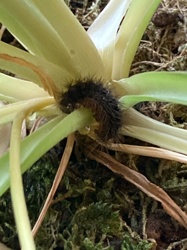
Caterpillars are densely hairy and vary from pale tan to nearly black, feeding on a broad range of low plants through summer and into autumn. In cooler parts of the range there is typically one generation a year, with the species overwintering as a pupa in a loose cocoon at or near ground level; in warmer regions, two or more overlapping generations can occur, extending the adult flight period considerably.
Quick ID Checklist
- Furry, medium-large moth with black-spotted cream to white forewings
- Males show bright yellow-orange hindwings with dark spots; females are mostly white
- Stout white body with black spots and orange-yellow abdominal patches
- Found in fields, meadows, gardens, and coastal marshy habitats
- Nocturnal, active mid-summer through early fall, drawn to lights
Frequently asked questions
How do male and female Salt Marsh Moths differ?
Males have bright yellow-orange hindwings with dark spots, while females have much plainer white to pale yellow hindwings with less overall spotting.
What's the best way to distinguish this from a Virginia Tiger Moth?
The Salt Marsh Moth typically shows more black spotting on the forewings and, in males, bright orange hindwings, while the Virginia Tiger Moth is nearly all white with distinctly orange forelegs.
Despite the name, is this moth only found in salt marshes?
No, while it does occur in coastal salt marshes, it is also common in a wide range of open habitats including fields, meadows, and gardens well away from the coast.
When are Salt Marsh Moths most likely to be seen?
They are most active at night from mid-summer through early fall, and are frequently attracted to outdoor lighting.
Salt Marsh Moth identified by the community
Recent Salt Marsh Moth finds identified with Bug Identifier.