
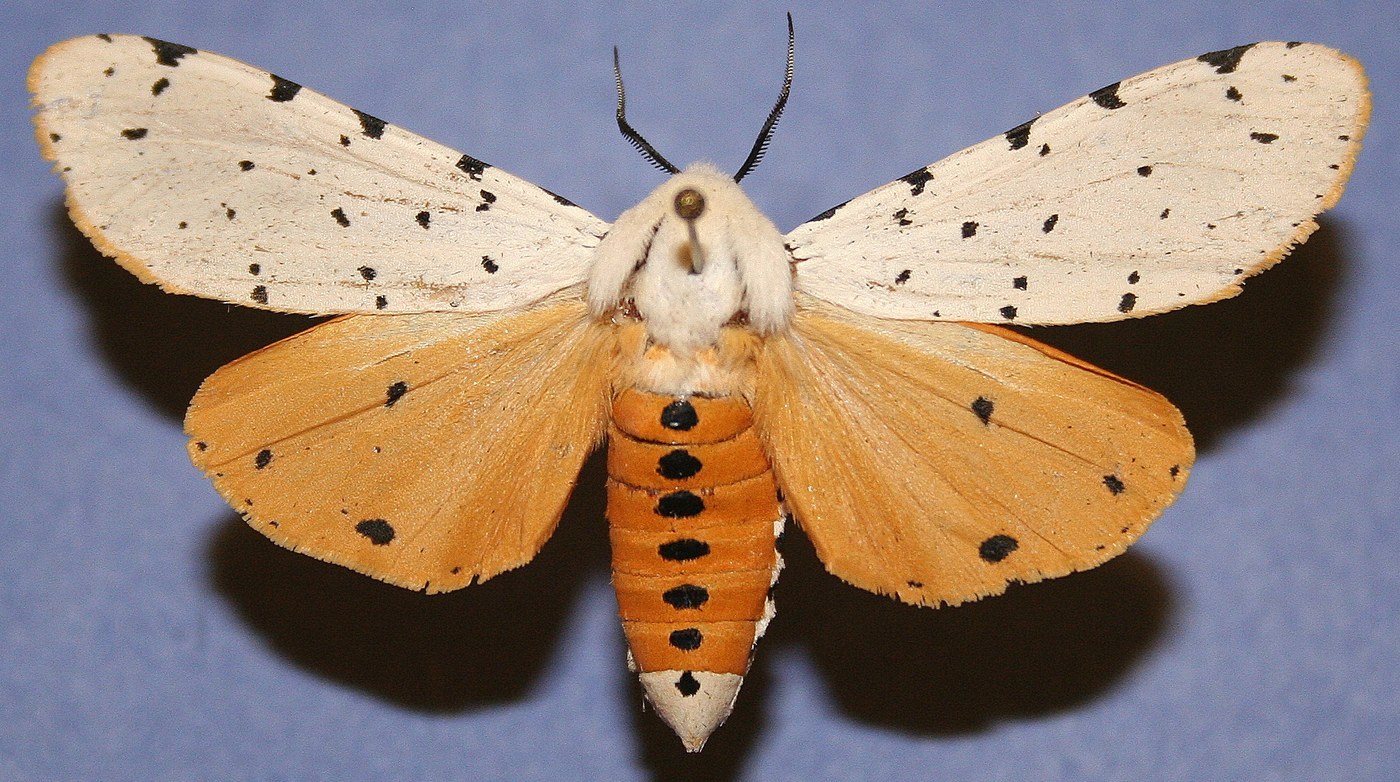
Salt Marsh Moth
Estigmene acrea
A fluffy white tiger moth with black-speckled forewings and an orange-and-black abdomen, best known through its fast-moving, densely bristled caterpillar that wanders widely in late summer.
- Size
- 1.4–2.2 in wingspan
- Habitat
- Fields, marshes, gardens, coastal grasslands
- Danger
- Harmless
Spotted a bug like this?
Identify any bug or insect from a photo, free.
Overview
The salt marsh moth is a member of the tiger moth subfamily (Arctiinae) within the larger owlet moth family Erebidae. Despite the name, it is not restricted to coastal salt marshes and is in fact one of the most widespread and commonly encountered tiger moths across North America, found in habitats ranging from farm fields to suburban gardens.
Its caterpillar, often called the salt marsh caterpillar, is a generalist feeder capable of consuming an unusually broad range of plants, which sometimes brings it to attention as it migrates across open ground searching for food or a place to pupate. The adult moth itself is a soft, powdery white insect that is far less conspicuous than its bristly, mobile larva.
This species is notable to naturalists for its extreme dietary flexibility as a caterpillar and its role as a food source for birds and other predators, illustrating how generalist insect herbivores can thrive across many different ecosystems.
How to Identify
- Adult forewings are white to cream, often peppered with small black dots or spots.
- Hindwings are white in males and can show a yellowish or orange tinge in females, sometimes with faint black spots.
- The abdomen is orange or yellow with a row of black dots running down the back.
- Body is stout and covered in fine white hair-like scales; antennae are feathery in males, thread-like in females.
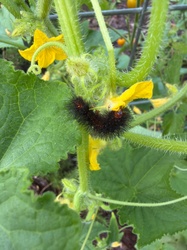
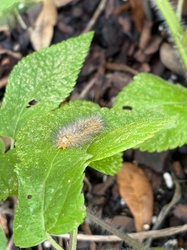
- The caterpillar is densely covered in long hairs that range from pale golden to blackish, and is easily confused with other "woolly" caterpillars, though its hair color is more variable and less banded than the woolly bear.
Habitat & Range
Found throughout most of the United States, southern Canada, and into Mexico, in open habitats such as fields, meadows, roadsides, gardens, and, as the name suggests, coastal salt marshes. Adults are active at night from spring through fall, with caterpillars most conspicuous in late summer and early autumn as they wander in search of food or overwintering sites.
Behavior & Diet
Adults are nocturnal and attracted to lights, while the caterpillars are active by day and night, feeding on an exceptionally wide range of herbaceous plants and crops as generalist herbivores. When mature, larvae often leave their food plant and travel across open ground looking for a sheltered spot to pupate, a behavior that makes them noticeable crossing sidewalks and driveways. Both larvae and adults serve as prey for birds, parasitic wasps, and other insectivores within the food web.
Life Cycle
Females lay clusters of pale eggs on host plant leaves. The hairy caterpillars pass through several molts, growing longer and bushier with each stage, before spinning a loose cocoon incorporating their own body hairs, often in leaf litter or soil. Pupae overwinter in colder regions, and adults emerge in spring; in warmer areas two or more generations occur per year.
Frequently asked questions
Is the salt marsh moth only found near the ocean?
No, despite its name it lives in a wide variety of inland habitats including fields and gardens, not just coastal marshes.
How is it different from other white tiger moths?
Its black-speckled forewings combined with an orange, black-spotted abdomen help distinguish it, though close relatives can look similar and often require close inspection.
Why do I see fuzzy caterpillars crossing sidewalks in late summer?
Mature salt marsh caterpillars often leave their food plants to wander and find a sheltered spot to pupate, which brings them into the open.
What do the caterpillars eat?
They are generalist feeders on a very wide range of low-growing plants, garden vegetables, and weeds.
Salt Marsh Moth guides
In-depth guides for identifying, understanding, and living alongside Salt Marsh Moth.
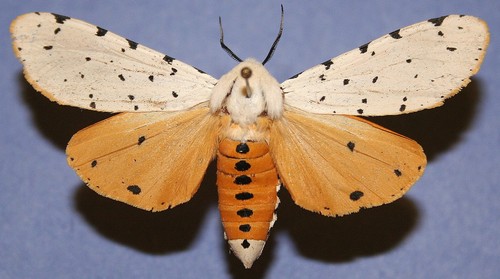
Salt Marsh Moth identified by the community
Real finds identified with Bug Identifier.
Other bugs you may enjoy
Bagworm Moth
Coniferous and deciduous trees, shrubs, hedges
Antheraea Silkmoth
Deciduous forests, woodland edges, orchards
Ailanthus Silkmoth (Cynthia Moth)
Urban parks, wastelands, and woodland edges with tree-of-heaven; native to Asia, introduced in North America and Europe
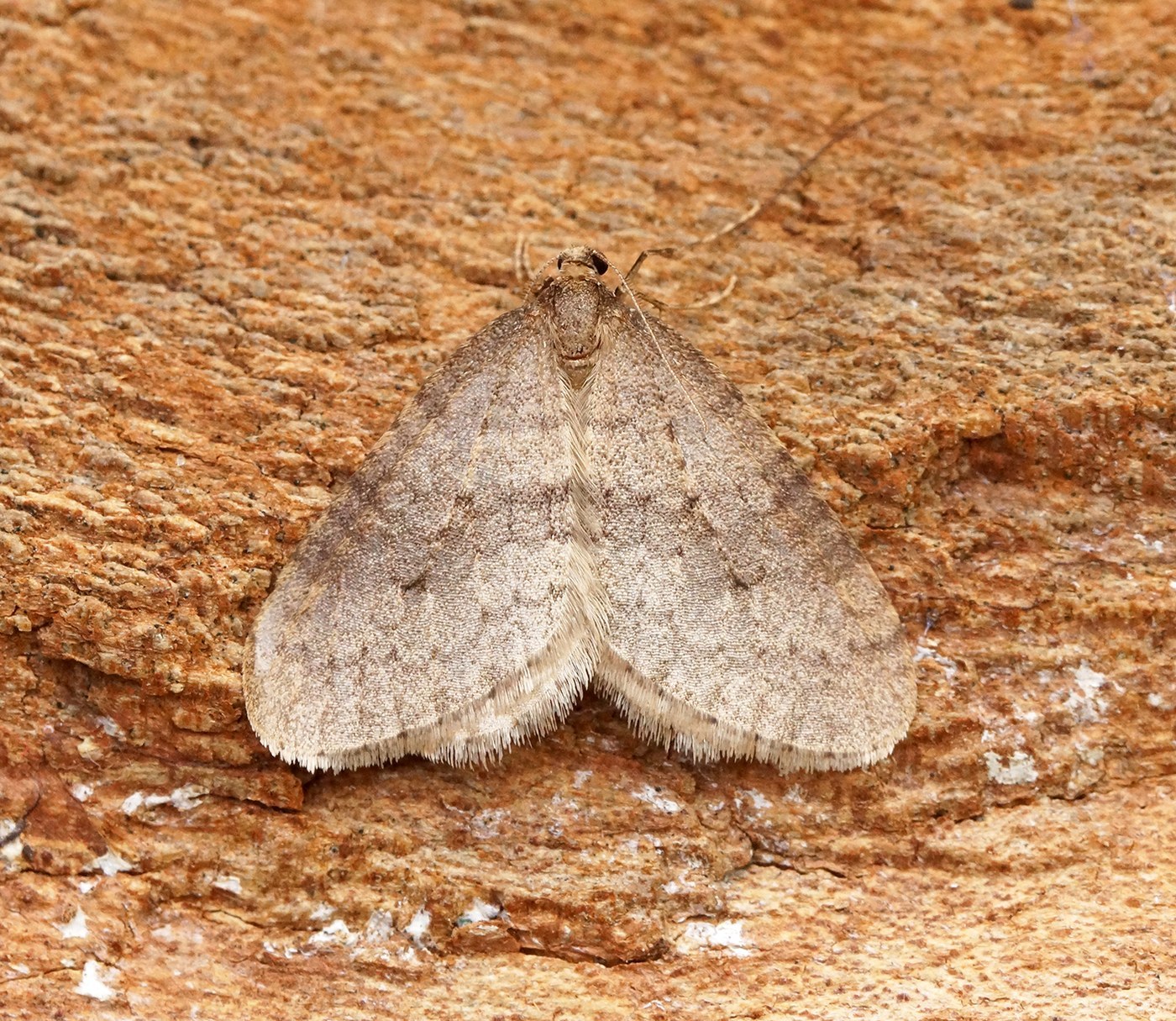
Winter Moth
Deciduous woodland, orchards, gardens, hedgerows
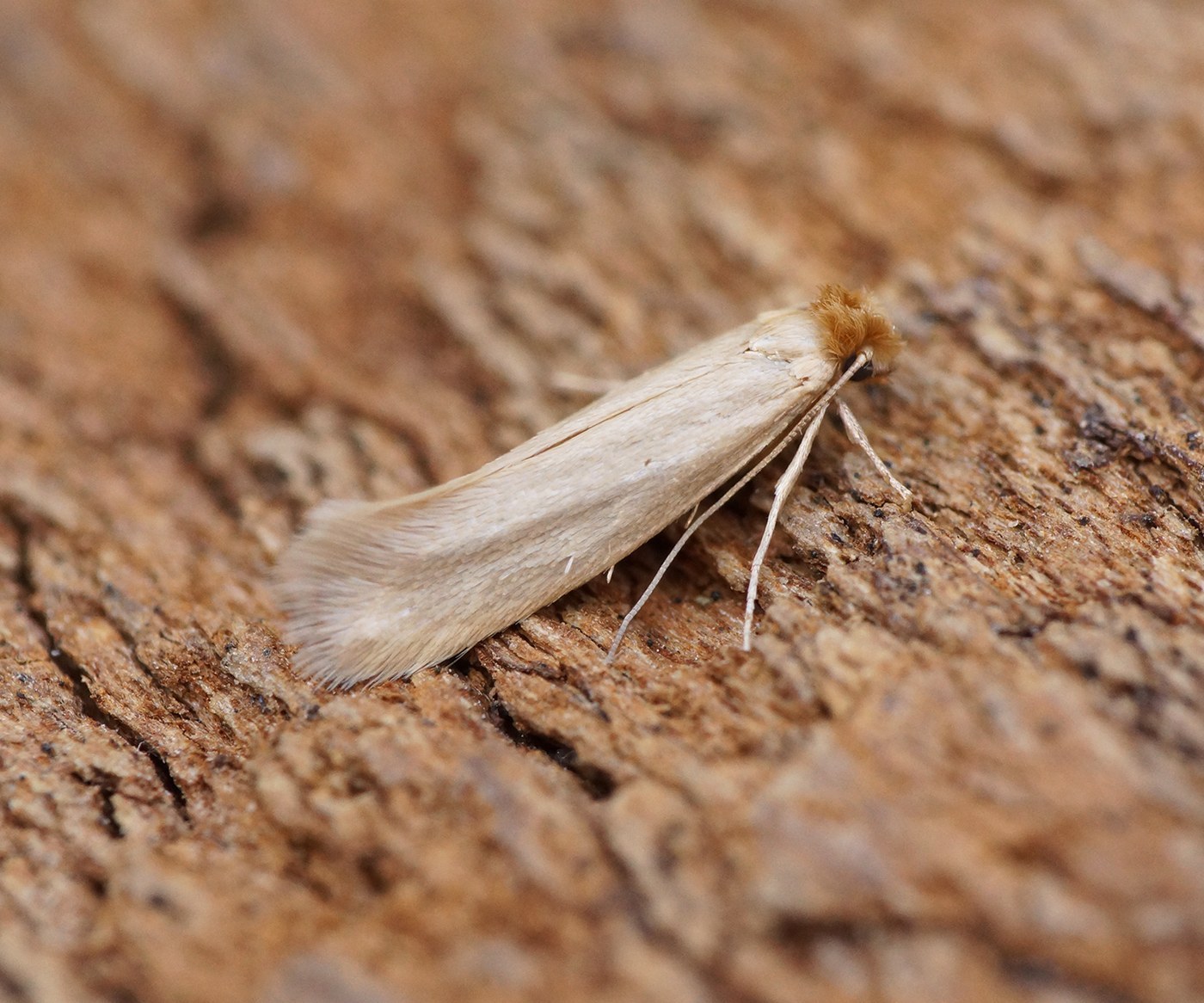
Webbing Clothes Moth
Dark closets, storage areas, and animal nests worldwide
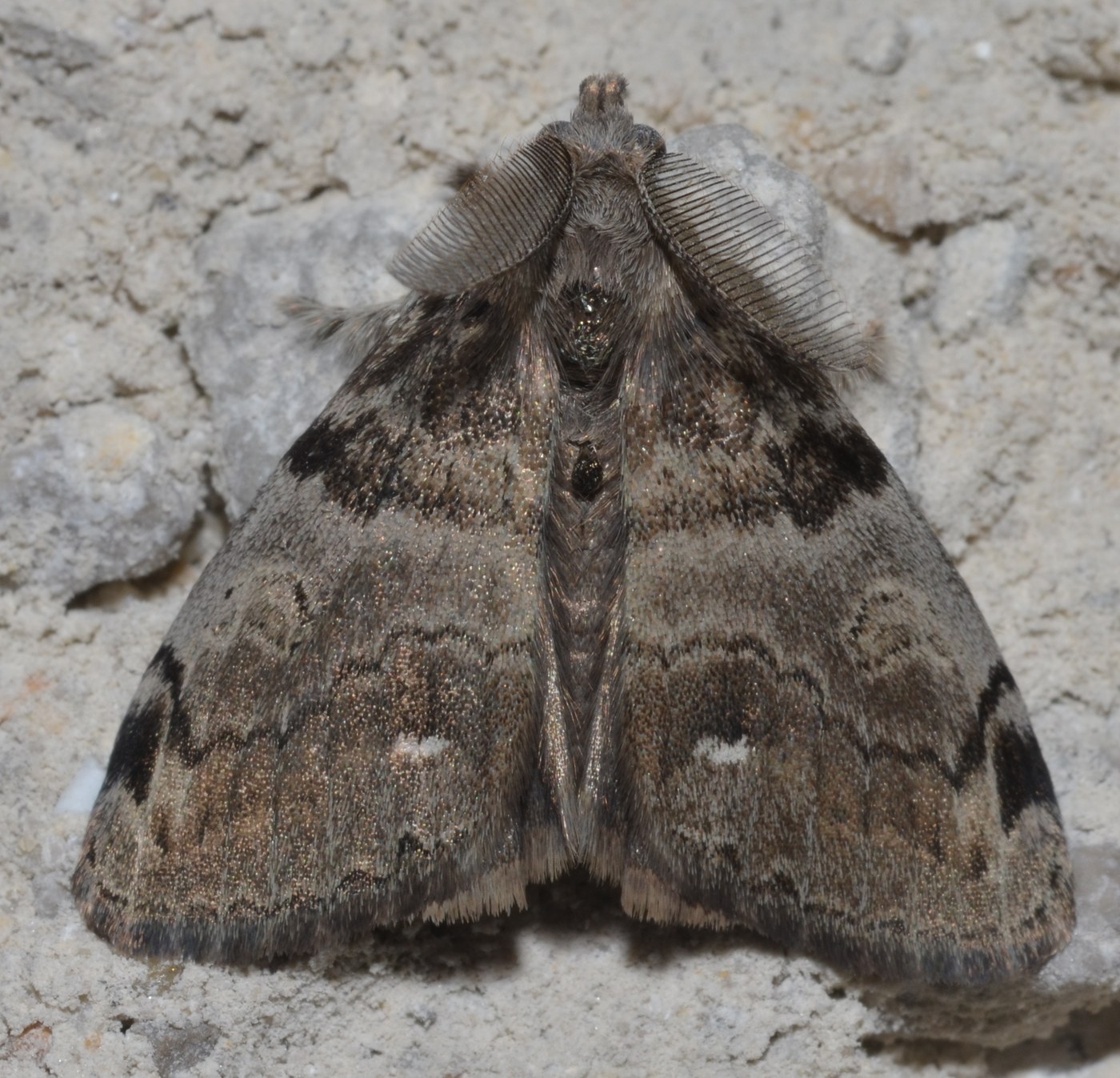
Tussock Moth
Deciduous forests, parks, gardens
Wax Moth
Beehives, apiaries, stored beeswax and comb
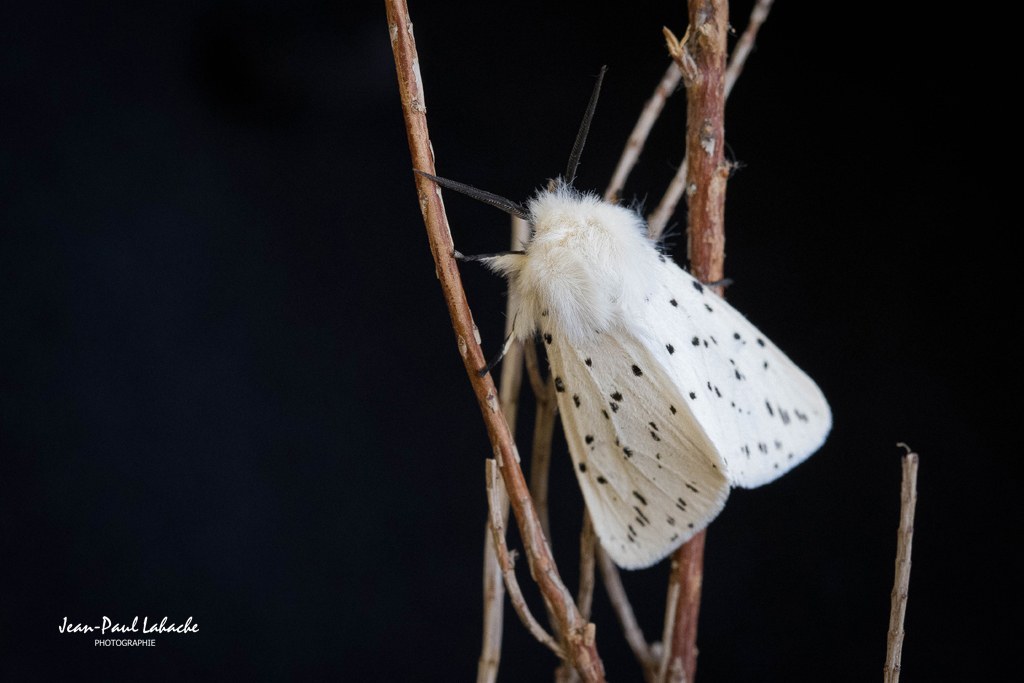
White Ermine Moth
Gardens, meadows, hedgerows
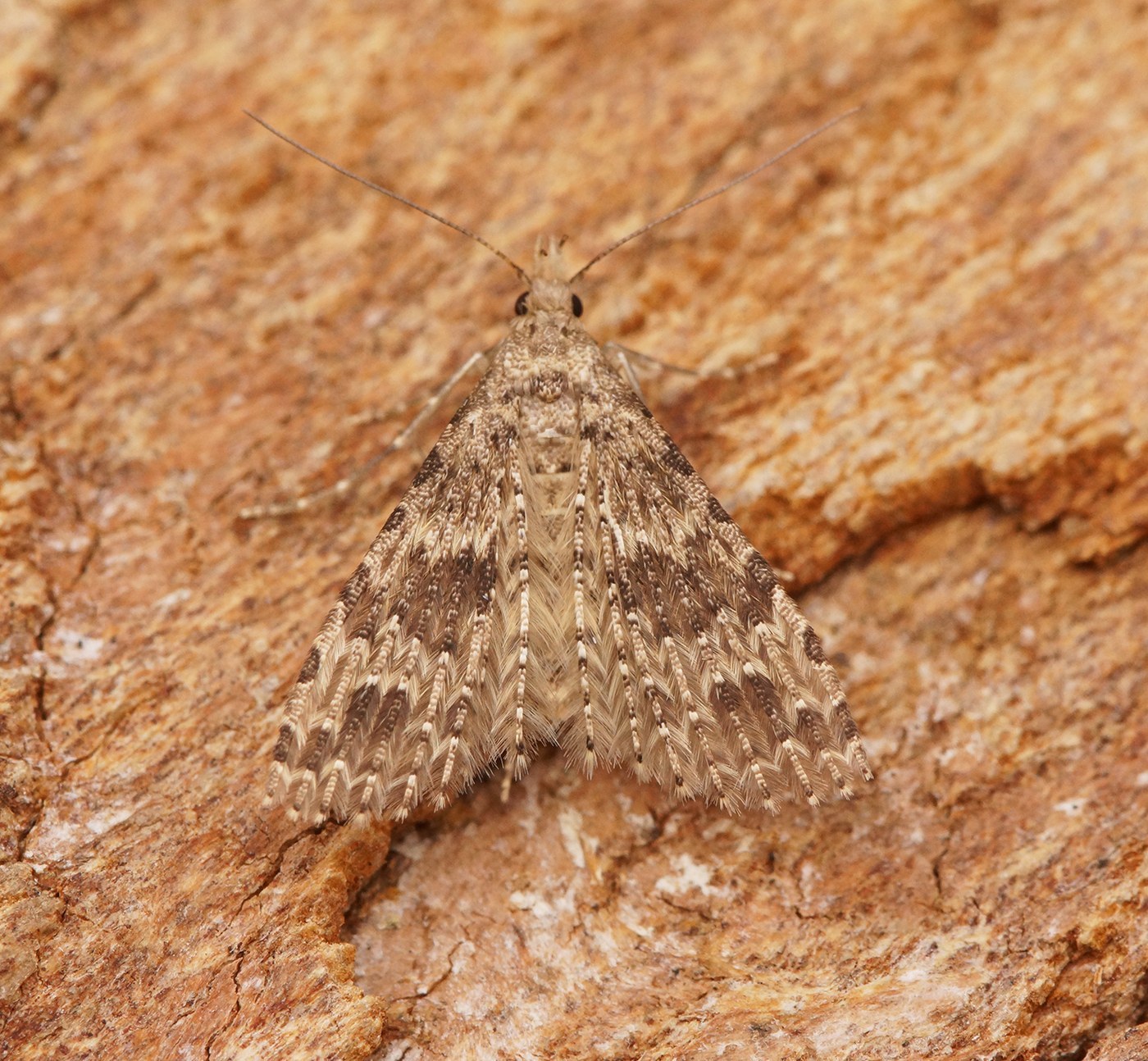
Twenty-plume Moth
Gardens, hedgerows, near honeysuckle
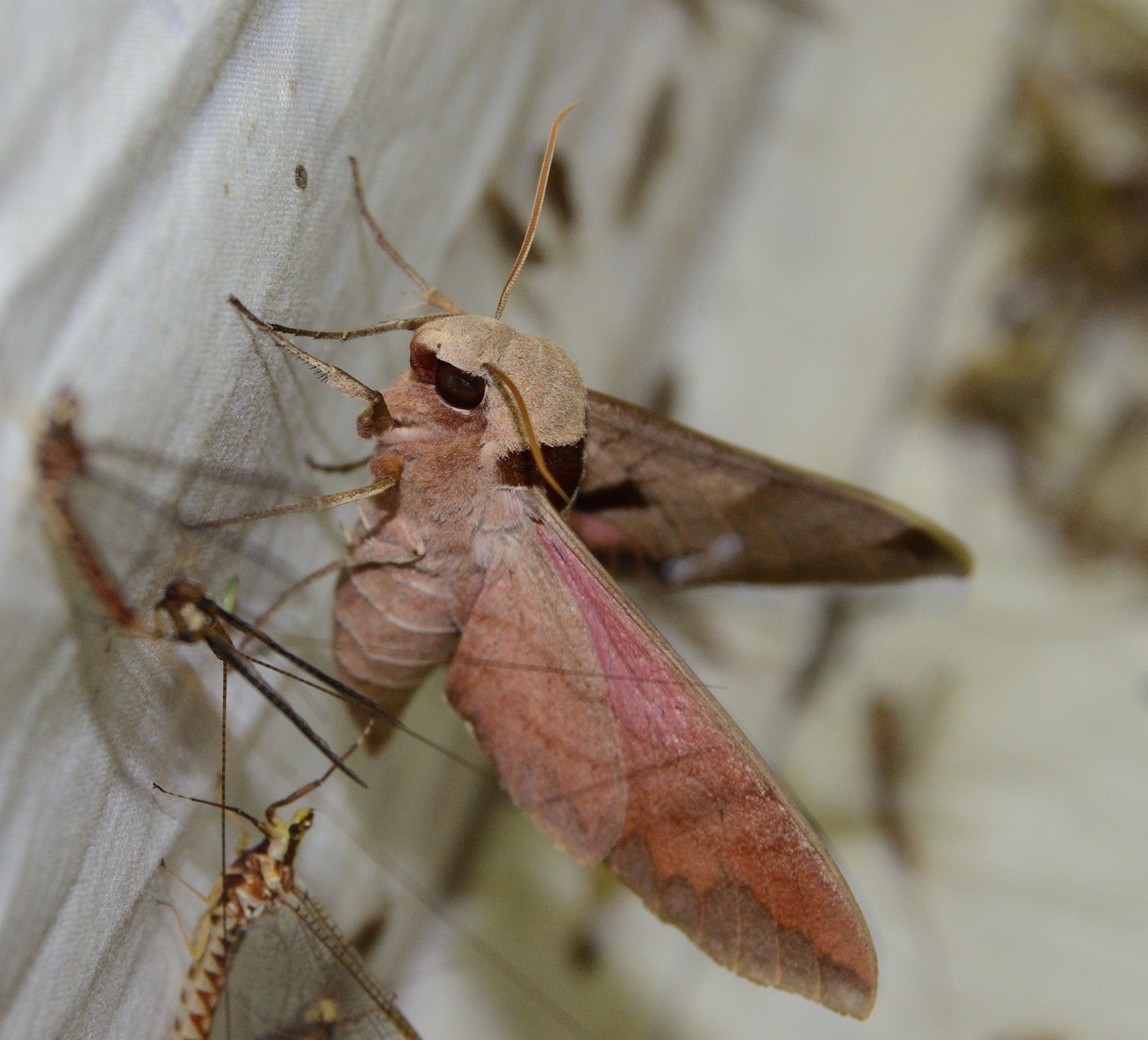
Achemon Sphinx Moth
Vineyards, woodland edges, gardens with wild grape
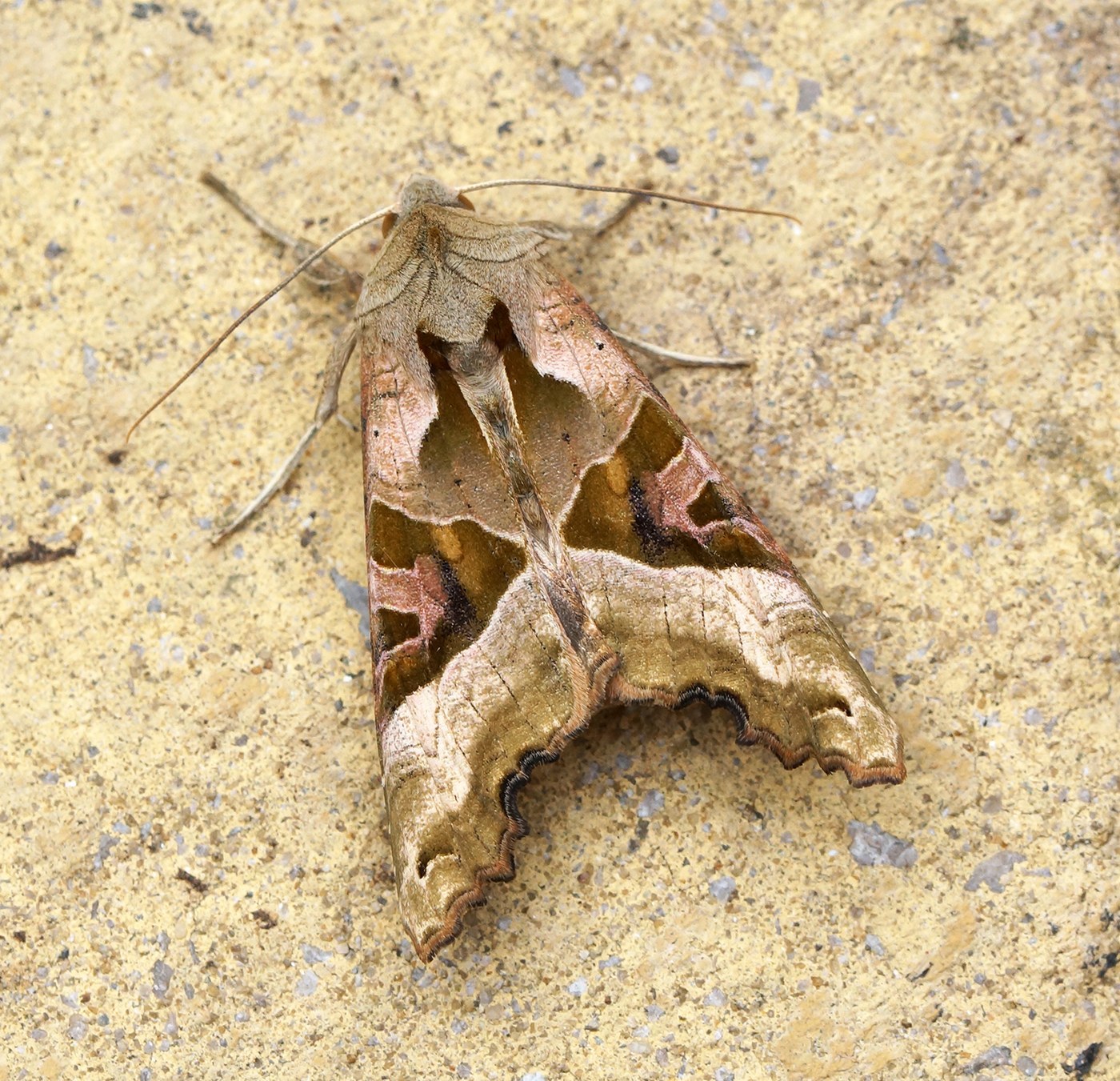
Angle Shades Moth
Gardens, hedgerows, woodland edges, urban parks
Atlas Moth
Tropical and subtropical lowland forests of Southeast Asia