Sand Wasp Identification Guide
A guide to identifying the compact, ground-burrowing wasps commonly seen hovering low over sandy patches on sunny days.
Read the full Sand Wasp encyclopedia entry →Key Visual Features
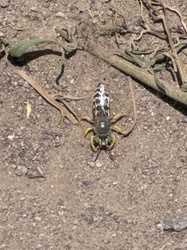
Sand wasps are a diverse group of solitary, ground-nesting wasps, generally recognized by their stocky build and pale banding.
- Size: Medium, roughly 12–20 mm (0.5–0.8 inches), varying by species.
- Color: Typically black or dark brown with contrasting bands or patches of yellow, cream, or white across the abdomen; some species have pale, greenish eyes that stand out on the face.
- Body shape: Stout and compact compared to many other wasps, with a moderately short waist rather than an extreme thread-like constriction.
- Wings: Clear to lightly smoky, folded flat at rest.
- Legs: Sturdy and often spined, built for digging in loose soil.
- Antennae: Short to medium length, dark, and thread-like.
Where and When You'll See One
True to their name, sand wasps are tied closely to sandy or loose-soil habitats.
- Look for them on sunny, bare or sparsely vegetated ground: sand dunes, dry stream banks, sandy garden patches, and disturbed soil.
- Numerous small round burrow entrances close together often mark a nesting aggregation, even though each female provisions her own burrow independently.
- Adults are most active on warm, sunny days from late spring through summer, often seen hovering low and fast over the sand before darting into a burrow.
- Some species are notably active in the heat of midday when other insects seek shade.
Similar-Looking Bugs
- Great golden digger wasp: Larger, with a solid rust-orange thorax and legs against a black abdomen, rather than the sand wasp's banded pattern.
- Yellowjackets: Similar black-and-yellow banding, but yellowjackets are social, nest in larger concealed cavities, and show more aggressive group defense at the nest.
- Sweat bees: Can nest in similar sandy ground but are usually more metallic or slimmer, with distinctly different flight behavior and pollen-collecting hairs.
- Spider wasps: Have longer, more spindly legs and a more pronounced thread waist, and hunt on foot rather than hovering over burrow entrances.
Quick ID Checklist
- Stocky, compact body with black and pale (yellow/cream/white) banding
- Fast, low hovering flight over open sandy ground
- Numerous small burrow holes clustered in bare, sun-exposed soil
- Sturdy, spined legs suited for digging
- Most active during the hottest, sunniest parts of the day
Frequently asked questions
Are sand wasps aggressive toward people nearby?
They are solitary ground-nesters generally focused on digging and hunting rather than group nest defense, and they tend to ignore people who aren't disturbing their burrows.
Why are there so many burrows close together?
Sand wasps often nest in loose aggregations where many females dig individual, separate burrows near each other in the same favorable patch of sandy soil, even though each nest is independently owned.
How do sand wasps differ from yellowjackets?
Sand wasps are solitary ground-nesters with fast, low hovering flight over open sand, while yellowjackets are social, build a shared paper nest, and show coordinated group activity around a single nest entrance.
What time of day are sand wasps most active?
They are typically most active during warm, sunny conditions, often including the hottest part of the midday sun when many other insects are less active.
Sand Wasp identified by the community
Recent Sand Wasp finds identified with Bug Identifier.