Scale Insect Identification Guide
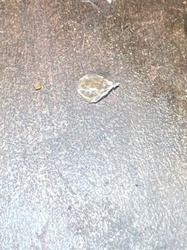
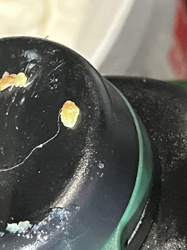
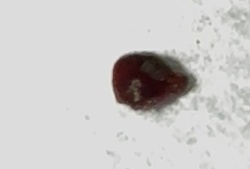
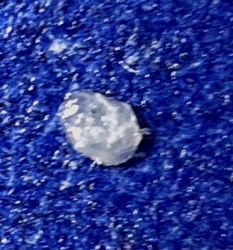
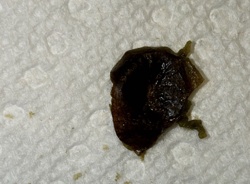
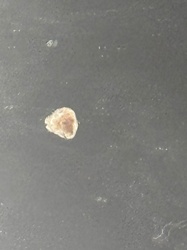
Recognize scale insects by their small, dome- or shell-like waxy bumps that look almost like part of the plant rather than a living bug.
Read the full Scale Insect encyclopedia entry →Key Visual Features
Scale insects are tiny, often immobile insects, generally 1/16 to 1/4 inch across, that cover themselves with a hard or waxy shell-like covering, making them look more like small bumps or blemishes than living insects.
- Body: Adult females are typically wingless and legless in appearance, hidden entirely beneath a round, oval, or oyster-shaped waxy or armored covering.
- Covering: Can be smooth and shiny (soft scale), or hard, ridged, and shell-like (armored scale), in colors ranging from brown and gray to white, yellow, or black.
- Shape: Domed, flattened, or slightly raised bumps, often clustered in rows along stems, twigs, or leaf veins.
- Movement: Adult females are stationary and remain fixed in place once settled; only the tiny, mobile "crawler" nymph stage moves to find a new feeding spot.
- Size: Individually small, but often numerous, forming crusty patches on bark or leaves.
Where and When You'd See It
Scale insects are found attached to stems, twigs, branches, and the undersides of leaves on trees, shrubs, and houseplants. They can appear year-round on indoor plants, while outdoor populations are most active and visible from spring through fall, with crawlers emerging in warm weather to spread to new growth. Because adults barely move, they are easiest to identify by looking for rows or clusters of small waxy or shell-like bumps rather than by watching for insect activity.
Similar-Looking Bugs
Scale insects are frequently mistaken for:
- Mealybugs – Mealybugs have a soft, cottony wax coating and a segmented body visible on close inspection, while scale insects have a hard or smooth shell with no visible body parts.
- Plant galls – Galls are plant tissue growths, usually larger and irregular, whereas scale insects are uniformly small, rounded bumps that can be gently lifted off the surface.
- Bark texture or lichen – Natural bark bumps and lichen patches are firmly attached and irregular, while scale coverings are more uniformly shaped and can be scraped off to reveal a soft insect body underneath.
- Aphids – Aphids are mobile, soft-bodied, and pear-shaped, unlike the stationary, shell-covered scale insect.
Quick ID Checklist
- Small, dome- or shell-shaped bumps on stems, twigs, or leaves
- Hard, waxy, or armored covering rather than a visible insect body
- Stationary; does not move or flee when disturbed
- Often found in rows or clusters along plant veins and bark
- Can be scraped off with a fingernail to reveal a soft body underneath
Frequently asked questions
How do I know if a bump on my plant is a scale insect and not just plant tissue?
Try gently scraping the bump with a fingernail; a scale insect will lift off relatively easily and reveal a soft body underneath, while natural bark texture or galls remain firmly attached.
Why don't scale insects seem to move?
Adult female scale insects settle in one spot and form a protective covering, remaining stationary for the rest of their life; only the young crawler stage is mobile.
What's the difference between soft scale and armored scale?
Soft scale has a smooth, often shiny, flexible covering fused to the body, while armored scale has a separate, hard, shell-like plate that can be lifted away from the insect underneath.
Can scale insects be confused with mealybugs?
Yes, but mealybugs have a fluffy, cottony white coating and a visible segmented body, while scale insects have a smooth or hard shell-like covering with no obvious body parts.
Scale Insect identified by the community
Recent Scale Insect finds identified with Bug Identifier.