Scorpionfly Identification Guide
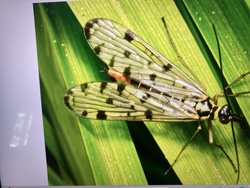
Tell this insect apart by its elongated beak-like face and, in males, an upturned tail resembling a scorpion's.
Read the full Scorpionfly encyclopedia entry →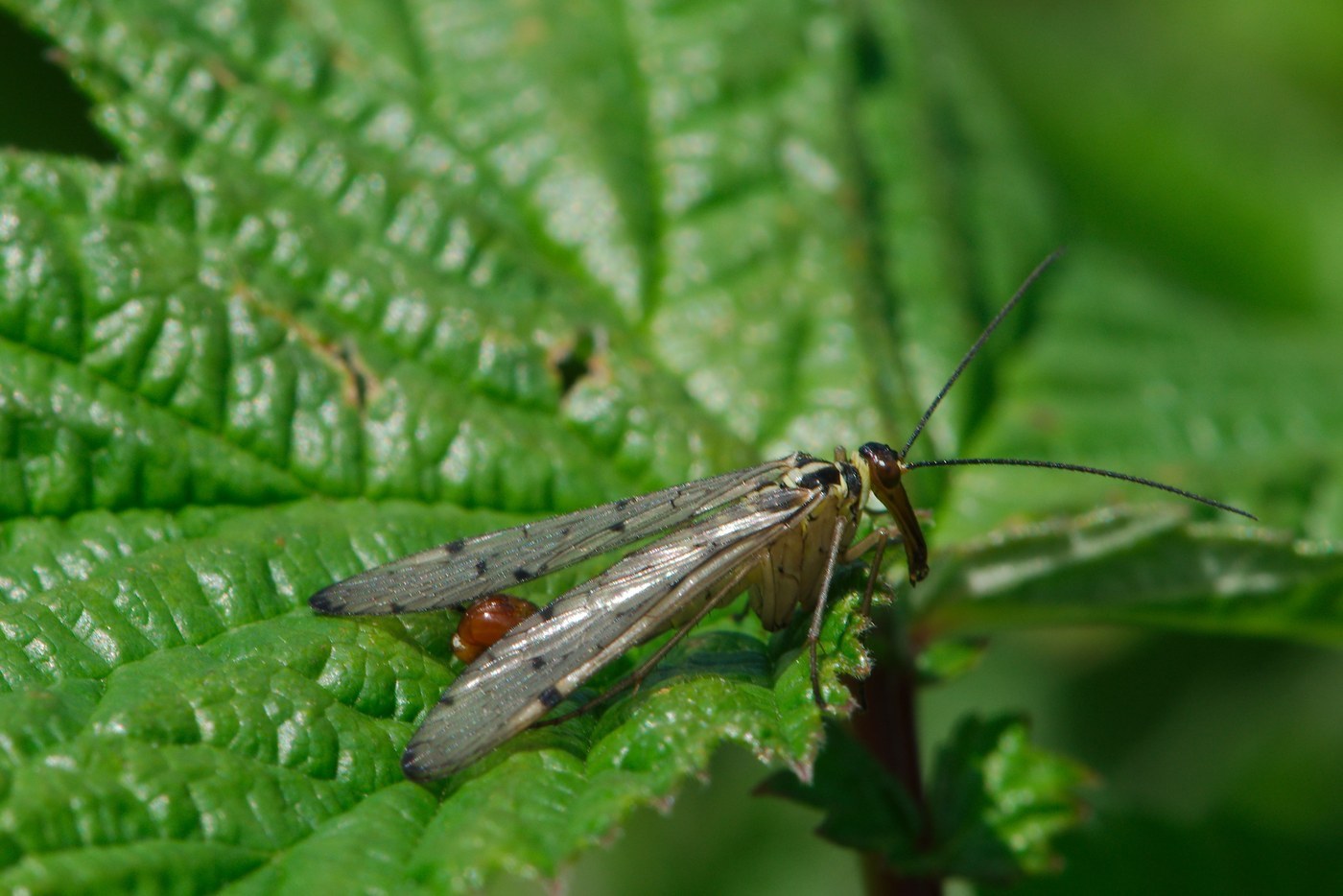
Key Visual Features
Scorpionflies are unmistakable once you know the two key traits to look for:
- An elongated, downward-pointing face that forms a beak-like extension, with chewing mouthparts at the tip
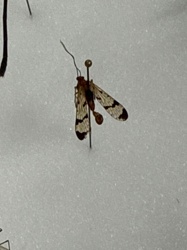
- In males, an enlarged, bulbous tip to the abdomen that curls upward over the back, resembling a scorpion's stinger (this is a genital structure, not a stinger, and females lack this upturned tail)
- A slender body around 0.5 to 0.9 inches long
- Two pairs of long, narrow, clear to smoky wings, often marked with dark bands or spots, held flat and outstretched at rest
- Long legs and thread-like antennae
- Coloring typically brownish-black to reddish-brown
Where and When You'd See It
Scorpionflies favor shaded, moist habitats such as woodland edges, hedgerows, and areas with dense low vegetation, leaf litter, or shrubby undergrowth. They are most active from late spring through summer. Look for them resting on leaves in shaded, humid spots, often low to the ground in dappled woodland light. They tend to fly only in short, weak bursts between perches rather than roaming far from cover.
Similar-Looking Bugs
- Crane flies have a superficially long body and legs but have only one pair of wings and a straight, unremarkable face without the beak-like extension.
- Robber flies have large forward-facing eyes and a bristly face but lack the elongated downturned beak and the patterned, outstretched wing posture.
- Hangingflies, close relatives, look similar but have proportionally longer legs used for hanging from vegetation and lack the curled tail seen in male scorpionflies.
Quick ID Checklist
- Elongated, beak-like downturned face
- Male's abdomen tip curled upward, scorpion-tail-like
- Two pairs of long, narrow wings with dark spotting or banding
- Found in shaded, moist woodland edges and undergrowth
- Active late spring through summer
Frequently asked questions
Does the curled tail on a male scorpionfly mean it can sting?
No, the upturned tail tip is simply part of the male's abdomen and reproductive structure; it only resembles a scorpion's tail in shape and is not a stinger.
What is the single most reliable identifying feature of a scorpionfly?
The elongated, downward-pointing beak-like face is present in both sexes and is the most consistent identifying trait.
How can I tell males and females apart?
Males have a bulbous, upward-curled abdomen tip, while females have a straight, tapering abdomen without the curled structure.
What habitat should I check to find a scorpionfly?
Look in shaded, moist spots such as woodland edges, hedgerows, and low undergrowth, particularly on leaves out of direct sun.
Scorpionfly identified by the community
Recent Scorpionfly finds identified with Bug Identifier.