Seven-spotted Ladybird Identification Guide
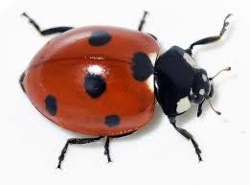
Identify a seven-spotted ladybird by its exact seven black spots and glossy red shell.
Read the full Seven-spotted Ladybird encyclopedia entry →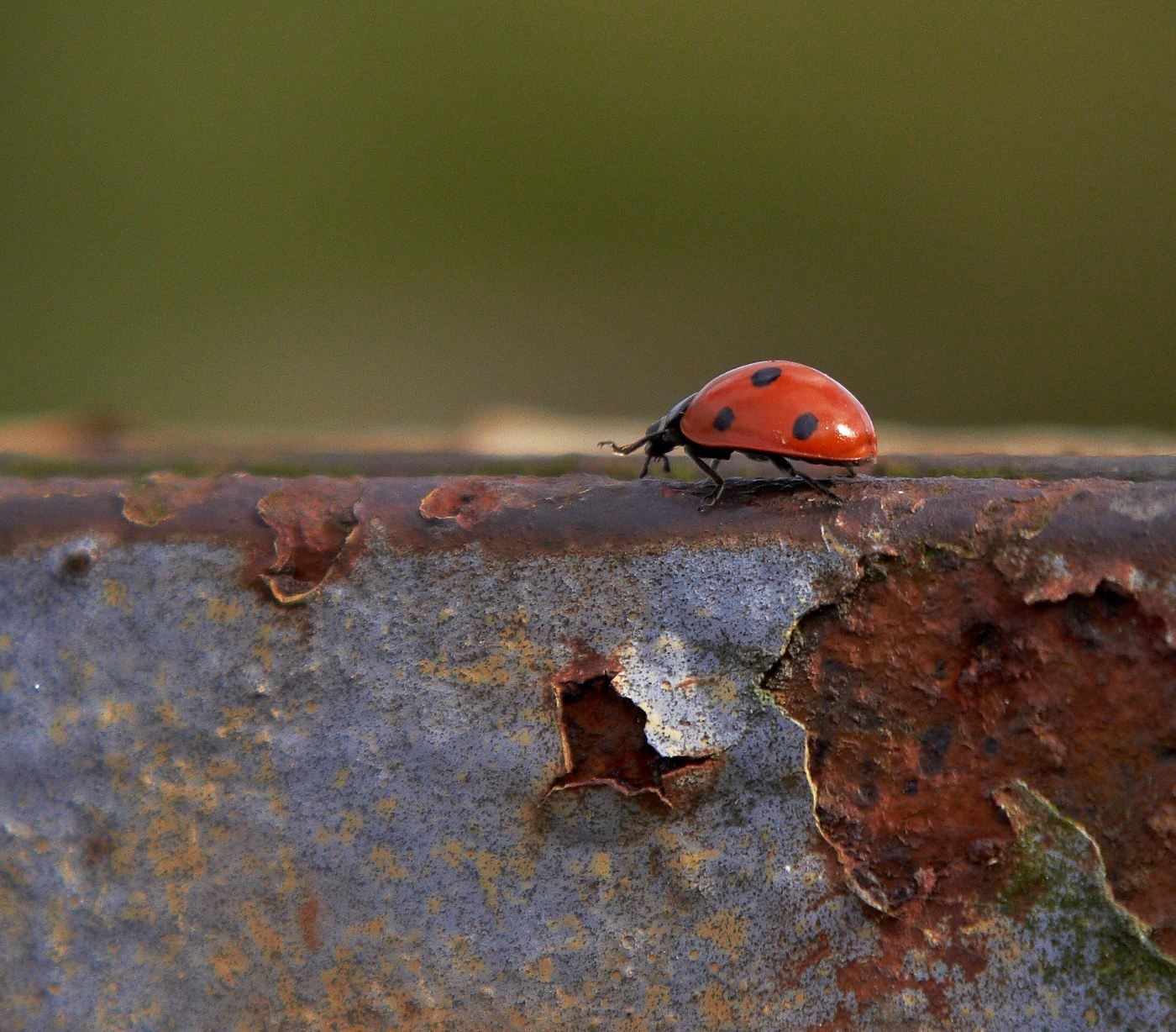
Key Visual Features
- Adult about 1/4 to 3/8 inch, oval, domed, and rounded in shape, matching the classic "ladybug" silhouette
- Bright red to orange-red wing covers marked with exactly seven black spots - one shared spot split across the midline where the wing covers meet, plus three spots on each side
- Black head and pronotum with two small white or cream patches near the front corners
- Short black antennae and dark legs
- Glossy, smooth shell surface that reflects light noticeably compared to duller-shelled look-alikes
- Consistent body proportions and coloring make it one of the more recognizable ladybird species
Where and When You'll See Them
- Found in gardens, meadows, fields, and hedgerows across much of North America (where it was introduced from Europe) as well as its native range across Europe and Asia
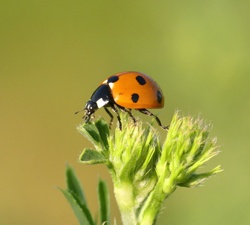
- Present wherever aphid prey is abundant, since it relies heavily on aphids as a food source
- Active from spring through fall, often seen on low vegetation and flowering plants
- Overwinters in leaf litter or sheltered plant debris, sometimes in small groups tucked into protected spots
- One of the most widely recognized and studied lady beetle species due to its abundance and consistent markings
Similar-Looking Bugs
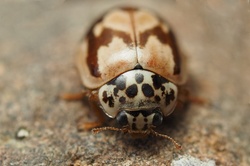
- Distinguished from the Asian lady beetle by its fixed, reliable seven-spot pattern, compared to the highly variable 0-19 spots of the Asian lady beetle, and by lacking the black M/W pronotum marking
- Distinguished from the convergent ladybird beetle by spot count (seven versus twelve) and by lacking converging pronotum lines
- Overall, it has a more consistent, textbook "ladybug" look than many of its more variable relatives
Quick ID Checklist
- Bright red-orange body with exactly 7 black spots, one split at the midline
- Two pale patches on an otherwise black pronotum
- Glossy, smooth, domed shell
- About 1/4 to 3/8 inch long
Frequently asked questions
Why is the spot count considered reliable for this species?
Unlike the Asian lady beetle, the seven-spotted ladybird consistently shows seven spots, making it a dependable identification trait.
Is it native to North America?
No, it was introduced from Europe and Asia and has since become widespread and common there.
How do I tell it apart from other seven-spot-like beetles?
Check for the two pale patches on an otherwise black pronotum along with the exact seven-spot layout, including one spot straddling the midline.
What draws it to gardens?
It's a predator of aphids and other small soft-bodied insects, so it's commonly found wherever aphid colonies occur.
Seven-spotted Ladybird identified by the community
Recent Seven-spotted Ladybird finds identified with Bug Identifier.