Sod Webworm Identification Guide
Spot sod webworm moths and their larvae by their snout-like profile, folded wings, and telltale lawn damage patterns.
Read the full Sod Webworm encyclopedia entry →Key Visual Features
Sod webworm refers to the larval stage of small moths in the subfamily Crambinae, often called "lawn moths" or "close-wing moths."
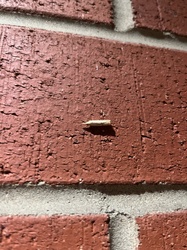
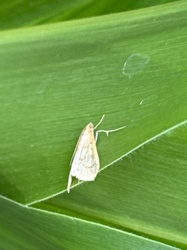
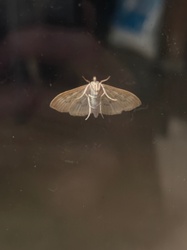
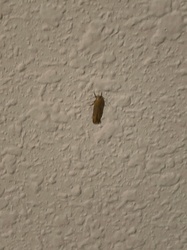
- Adult moths: about 1/2 to 3/4 inch long, tan to grayish-brown, with narrow wings that fold tightly around the body when at rest, giving a tube-like silhouette.
- Snout: adults have elongated mouthparts (palpi) that project forward like a small snout, a distinctive family trait.
- Larvae: caterpillars up to 3/4 inch long, tan to greenish-brown with small dark spots scattered across each segment, and a brown head capsule.
- Body shape: larvae are smooth and cylindrical, tapering slightly at both ends.
- Wings: adult forewings often show faint mottled or streaked patterning; hindwings are pale and mostly hidden at rest.
Where and When You'd See It
- Larvae live in silk-lined tunnels in thatch and soil at the base of turfgrass.
- Adult moths are most often seen at dusk, flying low in short zigzag patterns over lawns before dropping back into the grass.
- Larval feeding activity and visible moth flights peak in warm months, typically late spring through late summer.
- Common in lawns, golf courses, and other turfgrass areas.
Similar-Looking Bugs
- Armyworms: larvae are larger and often show more distinct longitudinal stripes running the length of the body compared to the spotted pattern of sod webworms.
- Cutworms: thicker-bodied caterpillars that curl into a tight C-shape when disturbed, unlike sod webworm larvae which stay straight.
- Other grass moths: many small tan moths in turf look similar; the forward-pointing snout and tube-like resting posture help confirm a webworm.
Behavior Notes
During the day, sod webworm moths rest low in the grass canopy and flush out in short bursts when the turf is walked across or mowed, only to settle again a short distance away. Larvae feed at night near the soil surface and retreat into their silken tunnels by day, which makes daytime turf inspection focused on tunnel entrances and chewed grass blades more reliable than looking for the larvae themselves.
Quick ID Checklist
- Tan to gray moth with wings folded tightly around body at rest
- Forward-projecting snout-like palpi
- Low, zigzag flight at dusk over grass
- Larva tan to greenish with small dark spots, smooth cylindrical body
- Silk-lined tunnels found in thatch near larvae
Frequently asked questions
How do I recognize an adult sod webworm moth versus other small moths?
Look for the tube-like resting shape with wings wrapped around the body and a forward-pointing snout formed by the palpi.
When are sod webworm moths most active?
They are most visible at dusk during warm months, flying low over lawns in short zigzag bursts.
What does a sod webworm larva look like?
A smooth, tan to greenish-brown caterpillar up to about 3/4 inch long with small dark spots on each body segment.
Where do sod webworm larvae hide during the day?
They stay in silk-lined tunnels within the thatch layer and upper soil near the base of grass blades.
Sod Webworm identified by the community
Recent Sod Webworm finds identified with Bug Identifier.